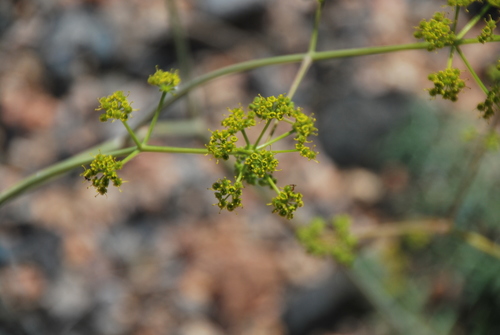
Foeniculum vulgare var. azoricum
(Mill.) Thell.
Florence fennel, Fennochio, Finnochio
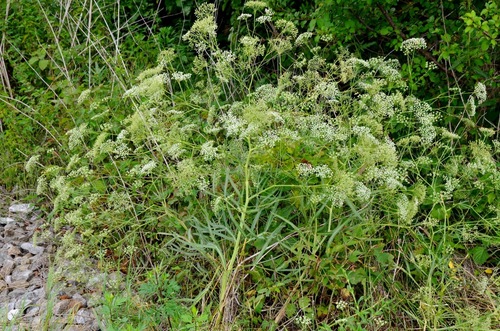
iNaturalist· cc-by-nc
(c) surfersoph22, some rights reserved (CC BY-NC)
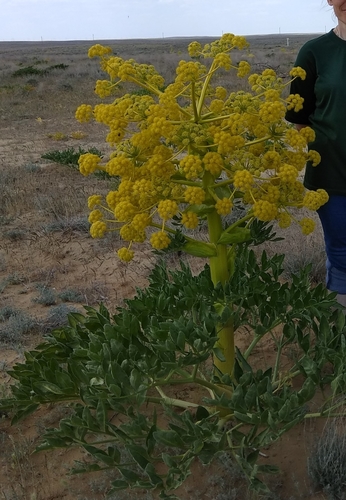
iNaturalist· cc-by-nc
(c) fwto, some rights reserved (CC BY-NC)
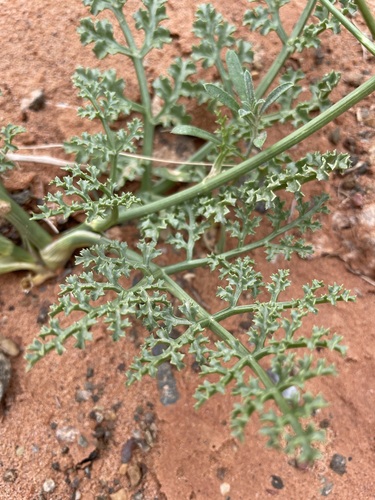
iNaturalist· cc-by-nc
(c) sstudebaker, some rights reserved (CC BY-NC)
Description
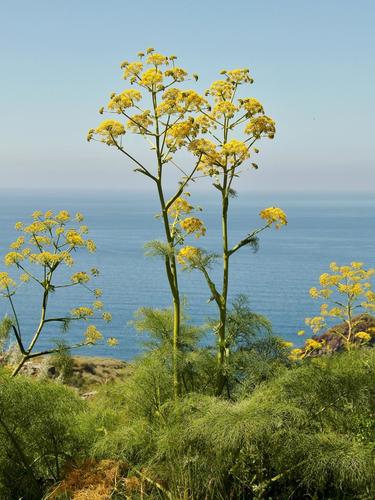
A small herb. It grows up to 90 cm high. It has soft celery like stems. The leaves are like fronds and light green. This gives the plant a feather like appearance. It has broad overlapping leaf bases. The bulb is firm and white. The flowers are bright yellow and form an umbrella shape. The fruit are pale green. The leaves have a smell like anise. The seeds are 5-7 mm long. They are yellow with a green tinge when dried. There are several named cultivated varieties.
Edible Uses
The fresh leaves are used in sauces, and the blanched leaf stalks are eaten raw in salads or fried, baked, and used in soups and pasta. The bulb can be separated into rings and added to salads, or cut in half and cooked as a vegetable. The seeds are added to soups, bread, sausages and other dishes as flavouring.
Traditional Uses
They are best used fresh. The fresh leaves are used in sauces. The bulb can be separated into rings and added to salads. They can be cut in half and cooked as a vegetable. The seeds are added to soups, bread, sausages and other dishes as a flavouring. The blanched leaf stalks are eaten raw in salads. They are also fried, baked or used in soups and pasta.
Distribution
It is a temperate plant. It suits plant hardiness zones 5-10.
Where It Grows
Australia, Europe, Italy, Mediterranean, Spain, Tasmania,
Cultivation
Plants are grown from seed.
Production
Seed are usually harvested in the morning or evening when moisture prevents the seeds from shattering. The plants are cut and dried before threshing. Whole fennel seeds can keep their flavour for 3 years.
Other Information
It is a commercially cultivated vegetable.
Notes
There is only one Foeniculum species.
Dangerous Lookalikes
This plant can be confused with the following toxic species. Always verify identification carefully before consuming any wild plant.
Poison Hemlock
Conium maculatum
MPF
Florence fennel
Foeniculum vulgare var. azoricum
(c) surfersoph22, some rights reserved (CC BY-NC)
Poison Hemlock: Foul musty smell, white flowers, smooth stems with purple/red blotches.
Florence fennel: Strong licorice/anise smell, yellow flowers, no purple blotches on stem.
Nutrition
| Part | Moisture | kJ | kcal | Protein | Vit A | Vit C | Iron | Zinc |
|---|---|---|---|---|---|---|---|---|
| Leaf base | 79 | 19 | 1.4 | — | — | — | — | — |
Synonyms
References (16)
- Bianchini, F., Corbetta, F., and Pistoia, M., 1975, Fruits of the Earth. Cassell. p 102
- Blamey, M and Grey-Wilson, C., 2005, Wild flowers of the Mediterranean. A & C Black London. p 157
- Cheifetz, A., (ed), 1999, 500 popular vegetables, herbs, fruits and nuts for Australian Gardeners. Random House p 126
- Facciola, S., 1998, Cornucopia 2: a Source Book of Edible Plants. Kampong Publications, 19
- G. Hegi, Ill. Fl. Mitt.-Eur. 5(2):1287. 1926
Show all 16 references Hide references
- Hemphill, I, 2002, Spice Notes Macmillan. p 174
- Kays, S. J., and Dias, J. C. S., 1995, Common Names of Commercially Cultivated Vegetables of the World in 15 languages. Economic Botany, Vol. 49, No. 2, pp. 115-152
- Plants for a Future database, The Field, Penpol, Lostwithiel, Cornwall, PL22 0NG, UK. http://www.scs.leeds.ac.uk/pfaf/
- Schneider, E., 2001, Vegetables from Amaranth to Zucchini: The essential reference. HarperCollins. p 275
- Smith, K., 1998. Growing Uncommon Fruits and Vegetables. New Holland. p 118
- Terra, G.J.A., 1973, Tropical Vegetables. Communication 54e Royal Tropical Institute, Amsterdam, p 46
- Tronickova, E. & Krejcova, Z., 1987, Ortaggi, Instituto Geografico de Agostini, Cecoslovacchia. p 114
- USDA, ARS, National Genetic Resources Program. Germplasm Resources Information Network - (GRIN). [Online Database] National Germplasm Resources Laboratory, Beltsville, Maryland. Available: www.ars-grin.gov/cgi-bin/npgs/html/econ.pl (10 April 2000)
- van Wyk, B., 2005, Food Plants of the World. An illustrated guide. Timber press. p 196
- Wiersema, J. H. & Leon, B., 2013, World Economic Plants. A Standard Reference CRC Press. 2nd Ed. p 309
- Zeven, A. C. & de West, J. M. J., 1982, Dictionary of cultivated plants and their regions of diversity. Wageningen. p 119