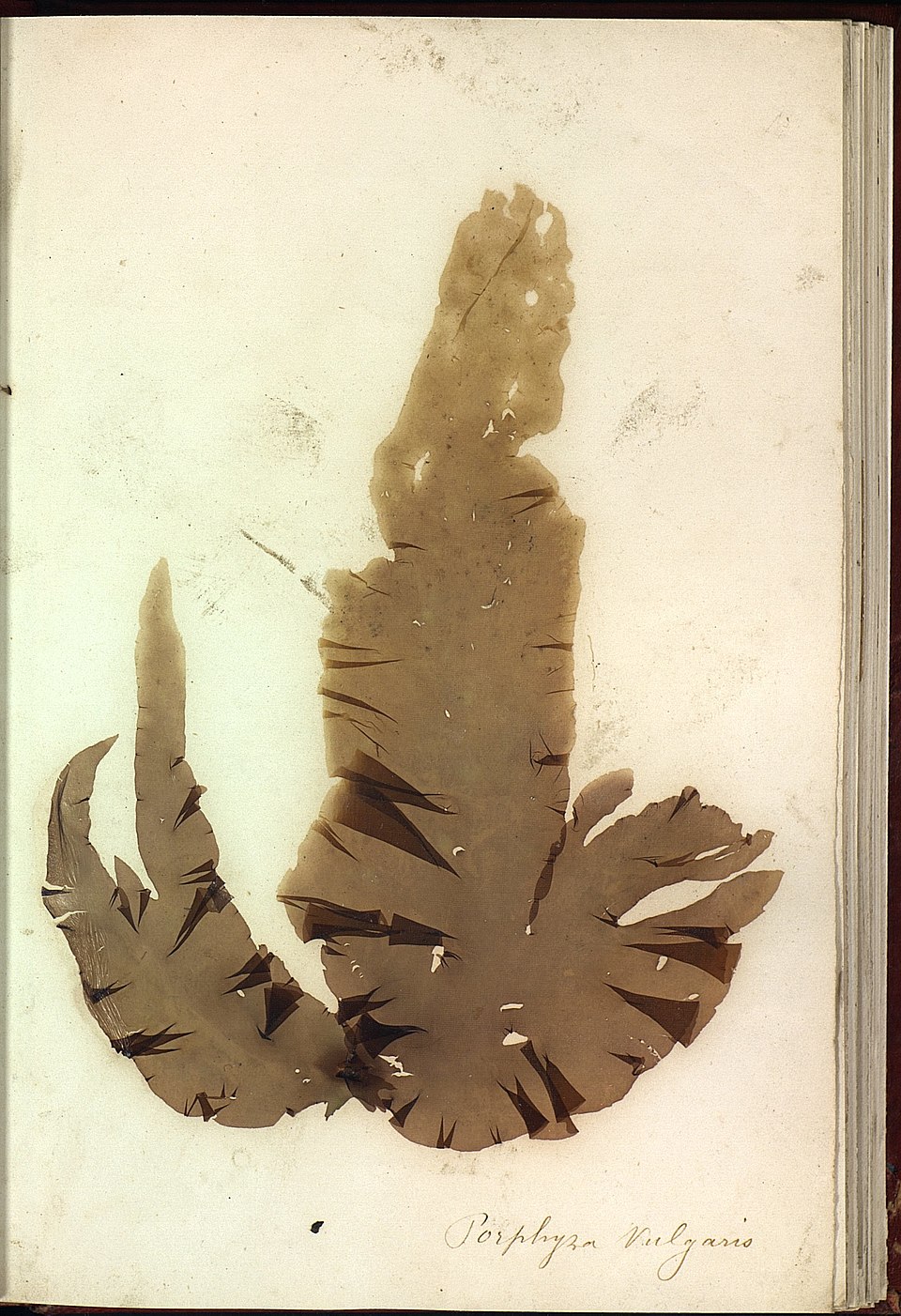
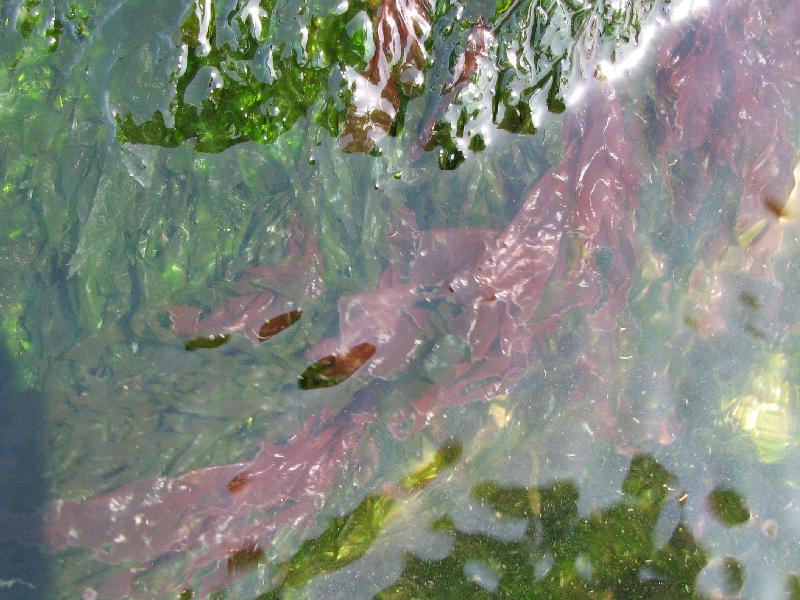
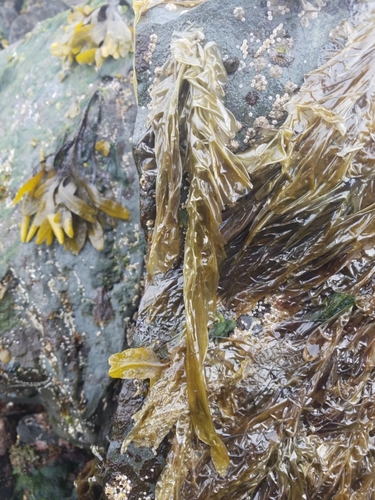
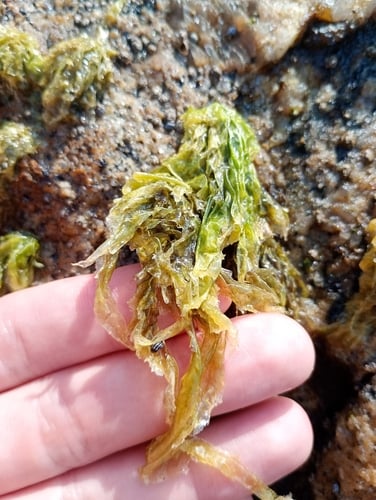
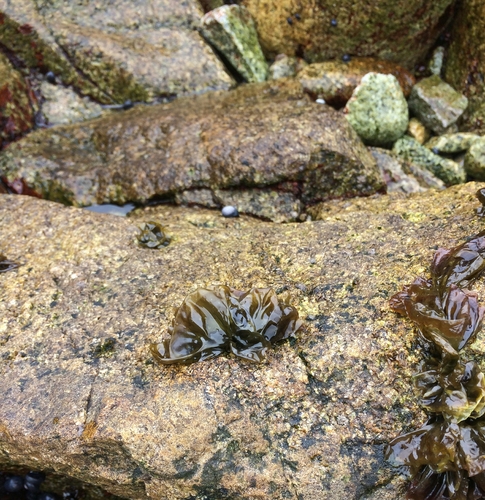
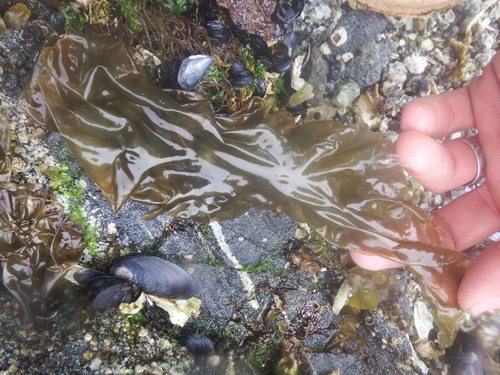
Porphyra tenera
Kjellman
Nori
wikimedia· cc-by-sa
Wikimedia Commons - Momo1873
wikimedia· cc0
Wikimedia Commons - Emile Wuitner
Description
A temperate seaweed in the Bangiaceae family, widely cultivated and commercially sold, rich in protein. It is the primary species used to wrap sushi.
This description is brief — help expand it
Edible Uses
The dried fronds are pretoasted and used to wrap sushi with vinegared rice, or seasoned and eaten in various forms. It is added to sea vegetable soups and used as a gel in cooking. It is sold in flaked form in bottles.
Traditional Uses
It is used for wrapping sushi (vinegared rice). It can be dried and pretoasted, seasoned, and prepared in other forms. It is eaten in sea vegetable soups. It is used as a gel in cooking.
Distribution
It is a temperate plant.
Where It Grows
Asia, China, Europe, Japan, Korea, Spain,
Other Information
It is sold in flaked form in bottles. It is a cultivated food plant.
Notes
It is rich in protein.
Also Known As
Keem, Asakusa nori, Awanori, Ama-nori, Sushi nori
References (15)
- Crowe, A., 1997, A Field Guide to the Native Edible Plants of New Zealand. Penguin. p 148
- Facciola, S., 1998, Cornucopia 2: a Source Book of Edible Plants. Kampong Publications, p 258
- Fujiwara-Arasaki, T. et al, 1984, The protein value in human nutrition of edible marine algae in Japan. Hydrobiologia 116/117, 513-516
- http://www.seavegetables.com
- Hu, Shiu-ying, 2005, Food Plants of China. The Chinese University Press. p 261
Show all 15 references Hide references
- Kiple, K.F. & Ornelas, K.C., (eds), 2000, The Cambridge World History of Food. CUP p 238, 1799
- Lee, B., 2008, Seaweed Potential as a marine vegetable. RIRDC Publication No. 08/009
- Pereira, L., 2011, A Review of the Nutrient Composition of Selected Edible Seaweeds. In Seaweed. Pomin V. H., (Ed.) Nova Science Publishers, Inc
- Pillay, T. V. R. & Kutty, M. N., 2005, Aquaculture Principles and Practices. 2nd edition. Blackwell. p. 580
- Ruperez, P. et al, 2001, Dietary fibre and physicochemical properties of edible Spanish seaweeds. Eur. Food Res. Technol. 212: 349-354
- Solomon, C., 2001, Encyclopedia of Asian Food. New Holland. p 335
- Subba Rao, G.N., 1965, Uses of seaweed directly as human food. Indo-Pacific Fisheries Council Regional Studies 2:1-32
- Teas, J. et al, 2004, Variability of Iodine Content in Common Commercially Available Edible Seaweeds. Thyroid. Vol. 14, No. 10
- Xia, B., and Abbott, I.A., 1987, Edible seaweeds of China and their place in the Chinese diet. Economic Botany 41:341-53
- Zemke-White, W. L. & Ohno, M., 1999, World seaweed utilisation: An end-of-century summary. Journal of Applied Phycology 11: 369-376