Porphyra laciniata
(Lightfoot) Agardh.
Laver
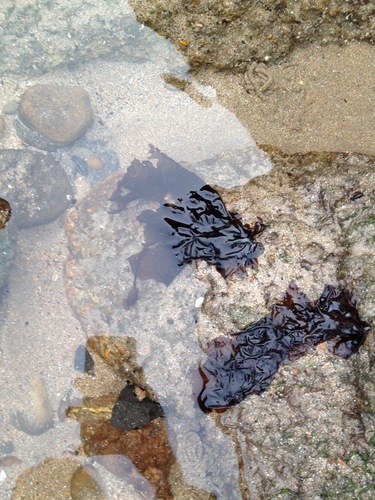
iNaturalist· cc-by-nc
(c) amaliafage, some rights reserved (CC BY-NC)
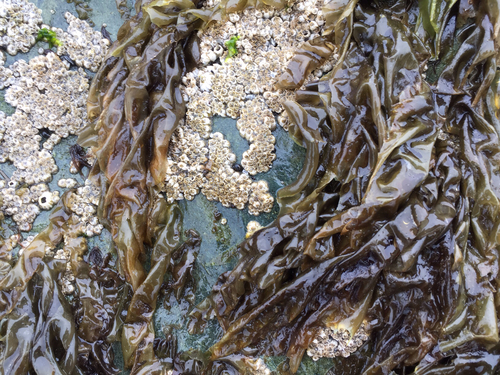
iNaturalist· cc-by-nc
(c) clara_brito, some rights reserved (CC BY-NC)
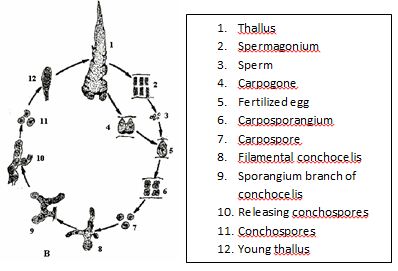
wikimedia· cc0
Wikimedia Commons - Anna Atkins
Description
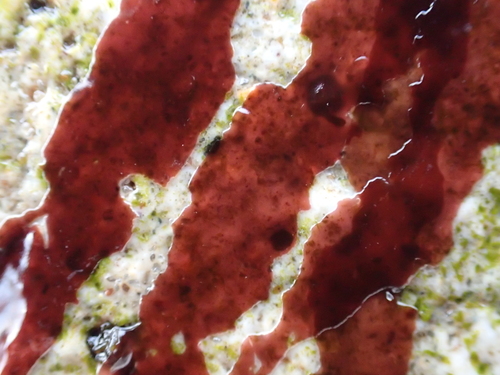
A seaweed. It is a long narrow frond. It is about 25 cm long and 3-5 cm wide. It has wavy edges. Probably now Erythroglossum laciniatum (LIghtfoot) Maggs & Hommersand;
Edible Uses
The fronds are eaten baked or raw, used in fish stews and soups, stewed with lemon juice, and dried and chopped for storage.
Traditional Uses
It is eaten baked and raw. It is used in fish stews and soups. It is stewed and served with lemon juice. The leaves are dried chopped, dried and eaten. It is also stored.
Distribution
It is a cold temperate plant. It grows on rocks along the coastline.
Where It Grows
Alaska, Britain, Europe, Hawaii, North America, Pacific, South Africa, USA,
Nutrition
| Part | Moisture | kJ | kcal | Protein | Vit A | Vit C | Iron | Zinc |
|---|---|---|---|---|---|---|---|---|
| Seaweed dried | 9.7 | 1304 | 312 | 1.3 | — | — | 7.8 | — |
Synonyms
Also Known As
Thalkush, Slokam, Sloke
References (8)
- Beckstrom-Sternberg, Stephen M., and James A. Duke. "The Foodplant Database." http://probe.nalusda.gov:8300/cgi-bin/browse/foodplantdb.(ACEDB version 4.0 - data version July 1994)
- Crowe, A., 1997, A Field Guide to the Native Edible Plants of New Zealand. Penguin. p 149
- Hedrick, U.P., 1919, (Ed.), Sturtevant's edible plants of the world. p 512
- Heller, C. A., 1962, Wild Edible and Poisonous Plants of Alaska. Univ. of Alaska Extension Service. p 66
- Johnston, H.W., 1966, The biological and economic importance of algae. Part 2. Tuatoria 14:30-63
Show all 8 references Hide references
- Kiple, K.F. & Ornelas, K.C., (eds), 2000, The Cambridge World History of Food. CUP p 238, 1799
- Moerman, D. F., 2010, Native American Ethnobotany. Timber Press. p 433
- Yanovsky, E., 1936, Food Plants of the North American Indians. United States Department of Agriculture Miscellaneous Publication No 237. Washington, D.C.