Polystichum aculeatum
(L.) Roth.
Christmas fern, Hard shield fern, Prickly shield fern, Kuthiore, Kuthurka
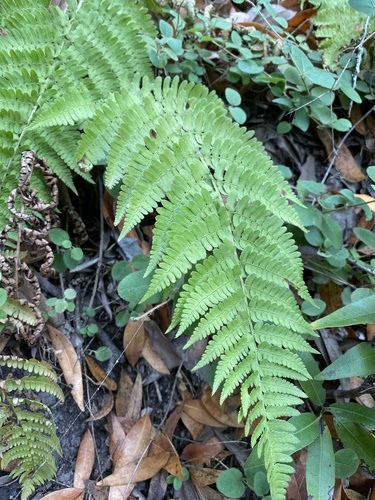
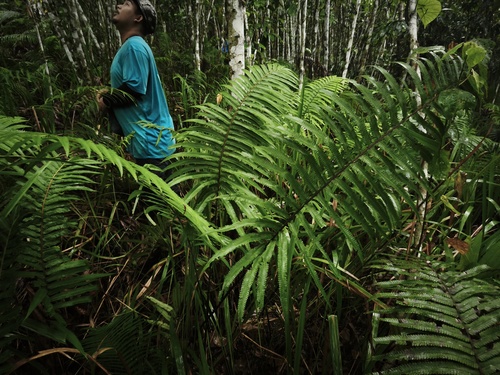
iNaturalist· cc-by-sa
(c) Erwin Gruber, some rights reserved (CC BY-SA)
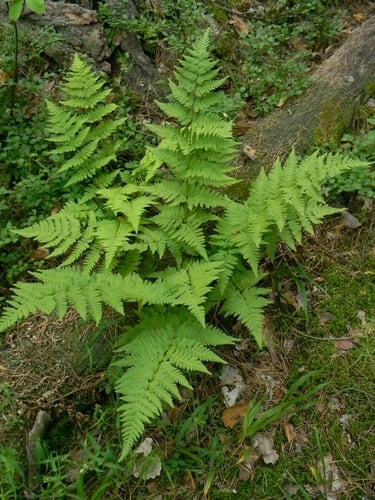
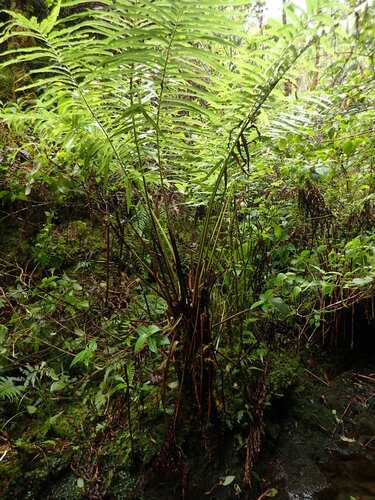
iNaturalist· cc-by-sa
(c) Erwin Gruber, some rights reserved (CC BY-SA)
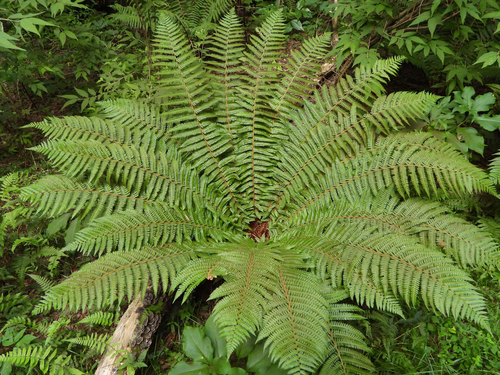
iNaturalist· cc-by-sa
(c) Ryan Somma, some rights reserved (CC BY-SA)
Summary
Source: WikipediaPolystichum aculeatum, the hard shield-fern, is an evergreen fern native to Europe. It is most abundant in upland regions of the British Isles and western France, where it benefits from the combination of mild winters and moist summers, but also occurs more locally across most of Europe except northern Scandinavia, northern Russia; in the Mediterranean region it is confined to high altitudes. It grows on steep slopes in woodlands. it is sometimes considered an indicator of the presence of ancient woodlands.
Description
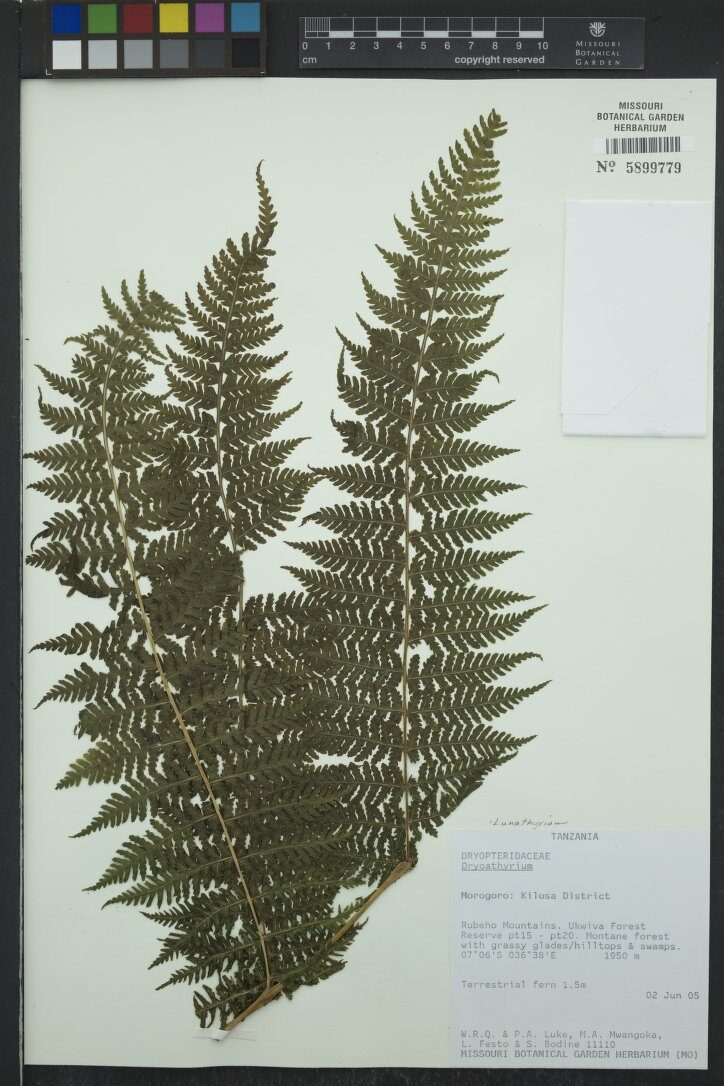
A medium sized fern. It grows 60-90 cm high and 30-74 cm wide. The rhizome is tufted. It has broad, arching, vase shaped shuttlecocks. These are formed by the narrow, sword shaped, divided fronds. The fronds are leathery and dark green. They produce clear rows of brown spores underneath.
Edible Uses
This fern is eaten in curries. No further details are recorded, though it is likely the young leaves that are used, possibly the root.
Traditional Uses
The tender parts are used as a vegetable. They are used in curries.
This uses section is brief — help expand it
Medicinal Uses
None known.
Distribution
It is a temperate plant. It is frost hardy. It grows in damp rocky country. In NW China it grows in Picea forests at about 1,900 m above sea level.
Where It Grows
American Samoa, Asia, Australia, Britain, Central Asia, China, Europe, Himalayas, India, Indonesia, Luxembourg, SE Asia, Tajikistan,
Propagation
Sow spores on the surface of humus-rich sterilized soil as soon as they are ripe, though spring sowing is also possible. Keep the compost moist, preferably by covering the pot with a plastic bag. Pot on small clumps of plantlets once large enough to handle and keep humid until well established. Do not plant outside until the ferns are at least 2 years old, and then only in a very well sheltered position. Division is best done in spring.
Other Uses
Plants can be grown as ground cover, spaced approximately 60cm apart each way.
Notes
There are about 200 Polystichum species.
Synonyms
Also Known As
Pakis perisai keras, Quathode
References (11)
- Ambasta, S.P. (Ed.), 2000, The Useful Plants of India. CSIR India. p 483
- Brickell, C. (Ed.), 1999, The Royal Horticultural Society A-Z Encyclopedia of Garden Plants. Convent Garden Books. p 819
- Goudey, C.J., 1988, A Handbook of Ferns for Australia and New Zealand. Lothian. p 146
- GUPTA,
- Hibbert, M., 2002, The Aussie Plant Finder 2002, Florilegium. p 238
Show all 11 references Hide references
- Islam, M., 1983, Utilisation of Certain Ferns and Fern Allies in the North-Eastern Region, India. J.Econ. Tax. Bot. Vol.4.No.3 pp 861-
- Joyce, D., 1998, The Garden Plant Selector. Ryland, Peters and Small. p 336
- Mehta, P. S. et al, 2010, Native plant genetic resources and traditional foods of Uttarakhand Himalaya for sustainable food security and livelihood. Indian Journal or Natural products and Resources. Vol 1(1), March 2010 pp 89-96
- Plants for a Future database, The Field, Penpol, Lostwithiel, Cornwall, PL22 0NG, UK. http://www.scs.leeds.ac.uk/pfaf/
- Slocum, P.D. & Robinson, P., 1999, Water Gardening. Water Lilies and Lotuses. Timber Press. p 131
- www.eFloras.org Flora of China