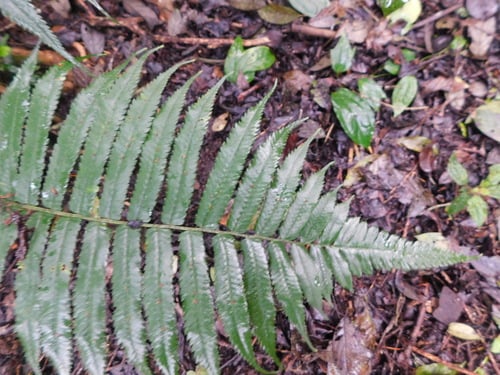
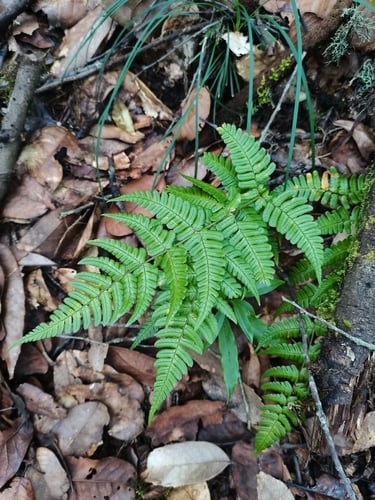
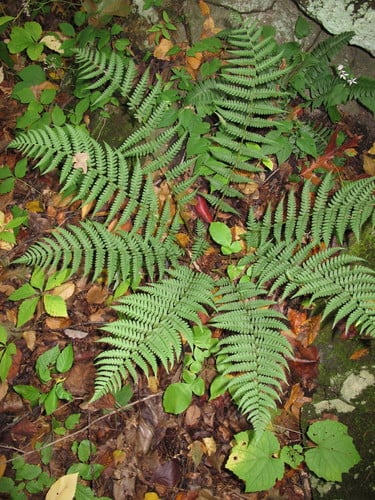
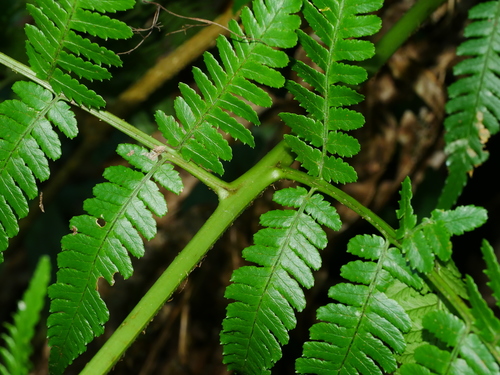
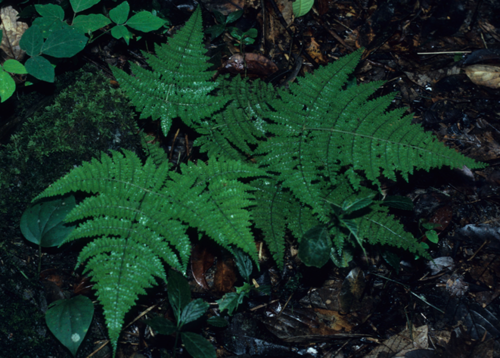
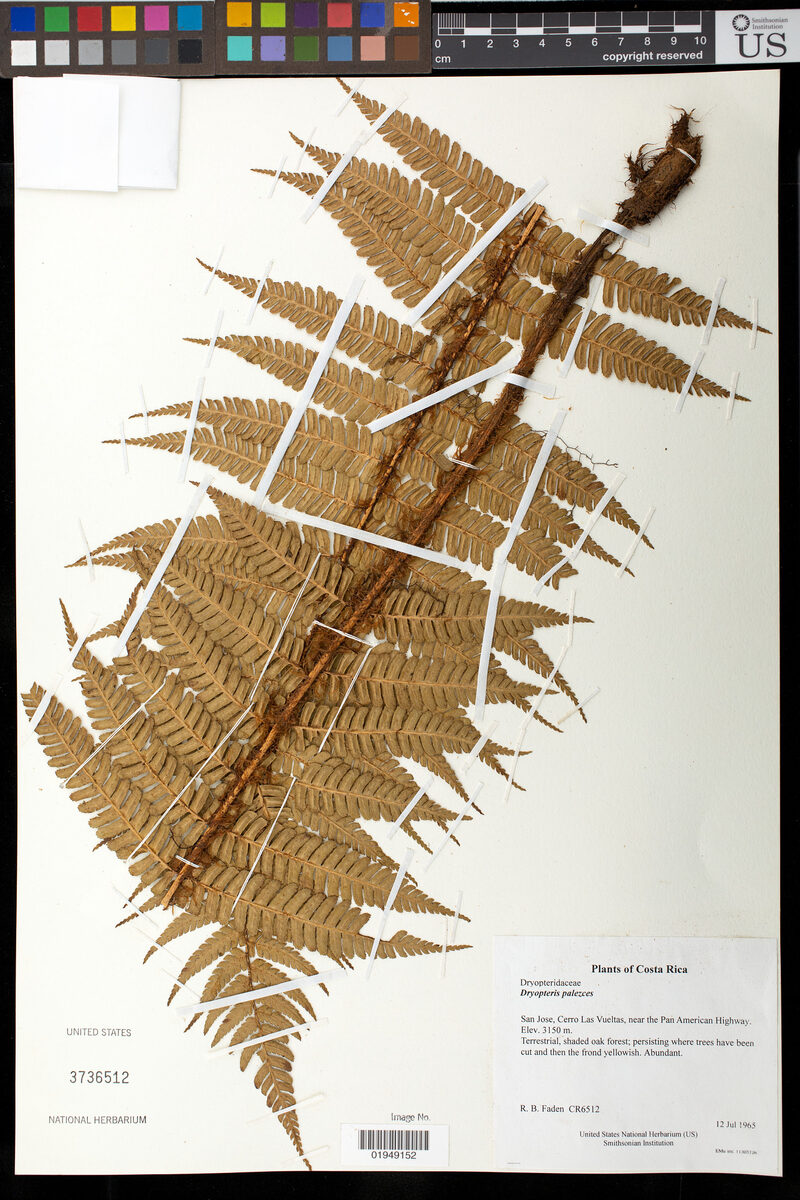
Athyrium squamigerum - (Mett.)Ohwi.
(Mett.)Ohwi.
gbif· cc-by-nc
Michigan State University (MSC-)
gbif· cc-by-nc
Academy of Natural Sciences of Drexel University (ANSP-PH)
gbif· cc-by-nc
Academy of Natural Sciences of Drexel University (ANSP-PH)
Description
Athyrium squamigerum is a FERN growing to 0.3 m (1ft). Suitable for: light (sandy), medium (loamy) and heavy (clay) soils, prefers well-drained soil and can grow in heavy clay soil. Suitable pH: mildly acid, neutral and basic (mildly alkaline) soils and can grow in very acid soils. It can grow in full shade (deep woodland) or semi-shade (light woodland). It prefers moist or wet soil.
Edible Uses
Very young fronds (croziers) - boiled. Some caution is advised. See the notes above on toxicity.
Known Hazards
Although we have found no reports of toxicity for this species, a number of ferns contain carcinogens so some caution is advisable. Many ferns also contain thiaminase, an enzyme that robs the body of its vitamin B complex. In small quantities this enzyme will do no harm to people eating an adequate diet that is rich in vitamin B, though large quantities can cause severe health problems. The enzyme is destroyed by heat or thorough drying, so cooking the plant will remove the thiaminase.
Distribution
E. Asia - Japan.
Where It Grows
Coming Soon
Cultivation
We have very little information on this species and do not know if it will be hardy in Britain, though judging by its native range it should succeed outdoors in many parts of this country. The following notes are based on the general needs of the genus. An easily grown plant, it is calcifuge and prefers an acid soil with a pH from 4.5 to 6.5, but it tolerates alkaline soils if plenty of leaf mould is added. Grows well in heavy clay soils. Prefers a moist sheltered site with moderately high atmospheric humidity. Succeeds in a semi-shaded bog-garden or in damp woodland, also in garden borders in full or part shade. Members of this genus are rarely if ever troubled by browsing deer.
Propagation
Spores - surface sow in a pot of sterile compost in a shady part of the greenhouse and keep moist, this is most easily done by putting the pot in a plastic bag. Pot up small clumps of the plants when they are large enough to handle and keep them moist until they are established. Plant out in late spring of the following year. Division in spring as plants come into growth. Larger divisions can be planted straight into their permanent positions whilst smaller clumps are best potted up and kept in a cold frame until they are growing away well.