Fagopyrum dibotrys
(D. Don) Hara
Perennial buckwheat, Notch-seeded buckwheat
iNaturalist· cc-by
(c) Ramnarayan K, some rights reserved (CC BY)
iNaturalist· cc-by
(c) Ramnarayan K, some rights reserved (CC BY)
iNaturalist· cc-by
(c) Ramnarayan K, some rights reserved (CC BY)
Summary
Source: WikipediaA perennial reaching 1 m tall by 2 m wide with fast growth rate. Frost tender, flowering in September. Monoecious flowers pollinated by bees and flies. Tolerates light sandy, medium loamy, and heavy clay soils including poor nutritional soils with good drainage. Grows in semi-shade or full sun, adapting to dry or moist conditions. Suitable for mildly acid, neutral, and mildly alkaline soils.
Description
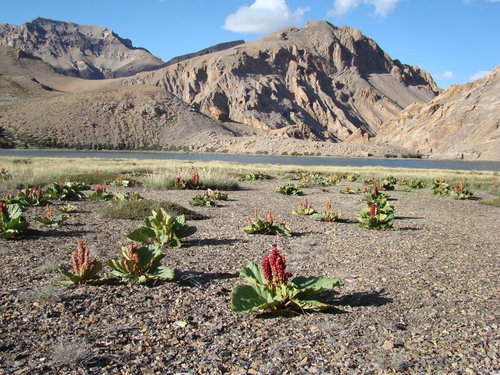
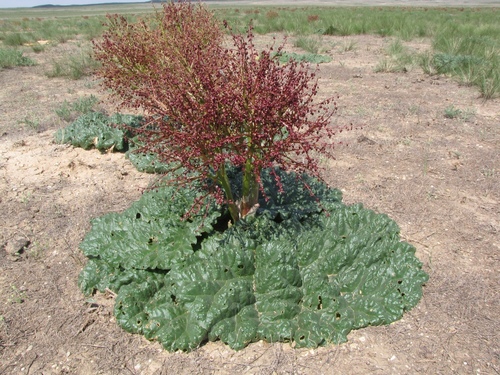
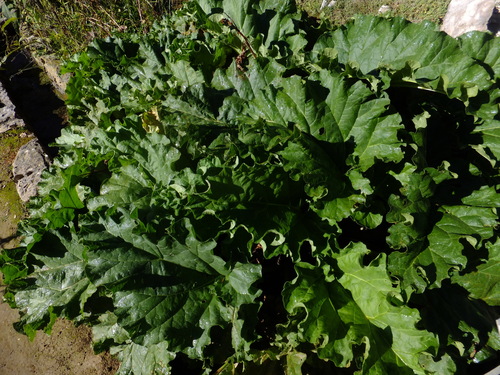
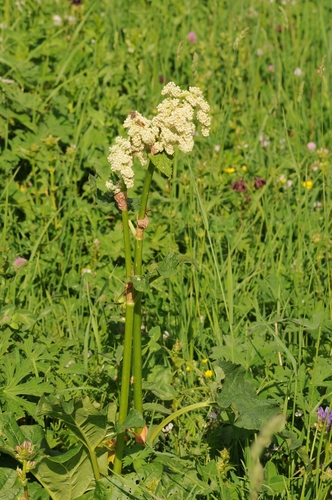
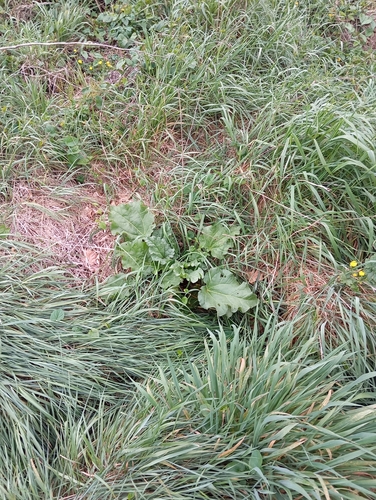
A erect herb. It is hairy. It grows about 1 m high. The main root is big and red and has many branch roots. The leaves are 5-11 cm long by 4.5-13 cm wide. They are triangular, or arrowhead shaped and taper to the tip. The base is heart shaped and there are hairs along the veins. The flowers are white. They occur in the axils of leaves and at the ends of branches. The fruit is a red nut. It is 3 angled. NB Probably now Fagopyrum acutatum
Edible Uses
Leaves can be eaten raw or cooked — boiled or steamed and used like spinach. One report rates them as excellent, though they carry a distinct bitterness, especially when raw. They are rich in rutin, making them a healthy dietary addition. The seed can be sprouted and eaten raw, or cooked and used as a cereal. Dried and ground into a powder, it works as a thickening agent in soups. The seed is rich in vitamin B6, though it is not freely produced in Britain.
Traditional Uses
The tender shoots and leaves are boiled and eaten as a vegetable. They are also cooked in stir fries. The seeds are cooked and eaten or ground into flour. The root is used in soup.
Medicinal Uses
The whole plant is anodyne, anthelmintic, antiphlogistic, carminative, depurative, and febrifuge, and it stimulates blood circulation. A decoction is used for traumatic injuries, lumbago, menstrual irregularities, purulent infections, and snake and insect bites. A decoction of the roots specifically treats insect bites, dysmenorrhoea, inflammation, lumbago, snakebite, and traumatic injuries. The leaves are rich in rutin, which acts as a capillary tonic and is antioedemic, anti-inflammatory, antispasmodic, and hypotensive. Rutin also inhibits carcinogenesis and provides protection against radiation.
Distribution
A tropical plant. In Nepal it grows between 1500-3000 m altitude. It grows by roads, in valleys and in shade. In Yunnan. In Sichuan.
Where It Grows
Asia, Australia, Bhutan, China, Himalayas, India, Indochina, Indonesia, Japan, Malaysia, Myanmar, Nepal, Northeastern India, NW India, Pakistan, SE Asia, Sikkim, Singapore, Thailand, Tibet, Vietnam,
Cultivation
Plants are grown from seed.
Propagation
Sow seed in spring in a greenhouse. Prick out seedlings when large enough to handle and plant into permanent positions in summer. Division is straightforward at almost any point during the growing season, though it is best avoided in early spring when young growth is vulnerable to late frosts. Divisions can be planted directly into permanent positions.
Other Uses
None known.
Other Information
Leaves are sold in local markets.
Notes
There are about 6 (15) Fagopyrum species. They grow in temperate places. It is used in medicine.
Synonyms
Also Known As
An-bawng, Banbhande, Banfafra, Banogal, Banogol, Ban paphra, Ban phapar, Ban phaper, Barbande, Buckwheat, Da goe, Eqiaobie, Geye, Hechung, Hhaoqqail, Hukku, Ja-rain, Jarian, alya, KanKandya, Luo zhuo guo, Pabong, Pa ge mong, Phaphra, Phopra, Pre, Pullip-bi, Saidiku, Sambodom bong, Shakuchiri-soba, Talkyung, Tawu, Titefaper, Titi-phapar, Wanao, Yang bu rai
References (40)
- Agarwal, R. & Chandra, V., 2019, Diversity of wild edible plants in the Mandal-Chopta forest, Uttarakhand. Journal of Medicinal Plants Studies 2019; 7(1): 89-92
- Ambasta, S.P. (Ed.), 2000, The Useful Plants of India. CSIR India. p 218 (As Fagopyrum cymosum)
- Anderson, E. F., 1993, Plants and people of the Golden Triangle. Dioscorides Press. p 211
- Campbell, C.G., 1979, Buckwheat, in Simmonds, N.W., (ed), Crop Plant Evolution. Longmans. London. p 235 (As Fagopyrum cymosum)
- Campbell, C.G., 1979, Buckwheat, in Simmonds, N.W., (ed), Crop Plant Evolution. Longmans. London. p 235 (As Fagopyrum emarginatum)
Show all 40 references Hide references
- Cao, Y., et al, 2020, Ethnobotanical study on wild edible plants used by three trans-boundary ethnic groups in Jiangcheng County, Pu’er, Southwest China. Journal of Ethnobiology and Ethnomedicine (2020) 16:66
- Cheng, Z., et al, 2022, Ethnobotanical study on wild edible plants used by Dulong people in northwestern Yunnan, China. Journal of Ethnobiology and Ethnomedicine (2022) 18:3
- Facciola, S., 1998, Cornucopia 2: a Source Book of Edible Plants. Kampong Publications, p 184 (As Fagopyrum cymosum)
- Flora of China @ efloras.org Volume 5
- Flora of Pakistan. www.eFloras.org
- Gangwar, A. K. & Ramakrishnan, P. S., 1990, Ethnobotanical Notes on Some Tribes of Arunachal Pradesh, Northeastern India. Economic Botany, Vol. 44, No. 1 pp. 94-105
- Geng, Y., et al, 2016, Traditional knowledge and its transmission of wild edibles used by the Naxi in Baidi Village, northwest Yunnan province. Journal of Ethnobiology and Ethnomedicine. 12:10
- Ghimire, S. K., et al, 2008, Non-Timber Forest Products of Nepal Himalaya. WWF Nepal p 114
- Ghorbani, A., et al, 2012, A comparison of the wild food plant use knowledge of ethnic minorities in Naban River Watershed Nature Reserve, Yunnan, SW China. Journal of Ethnobiology and Ethnomedicine; 8:17
- GUPTA, (As Fagopyrum cymosum)
- Hani Medicine of Xishuangbanna, 1999, p 291
- Hedrick, U.P., 1919, (Ed.), Sturtevant's edible plants of the world. p 305 (As Fagopyrum cymosum)
- Hibbert, M., 2002, The Aussie Plant Finder 2002, Florilegium. p 100
- Joshi, N., et al, 2007, Traditional neglected vegetables of Nepal: Their sustainable utilization for meeting human needs. Tropentag 2007. Conference on International Agricultural Research for Development.
- Joshi, N. & Siwakoti, M., 2012, Wild Vegetables Used by Local Community of Makawanpur District and Their Contribution to Food Security and Income Generation. Nepal Journal of Science and Technology Vol. 13, No. 1 (2012) 59-66
- Ju, Y., et al, 2013, Eating from the wild: diversity of wild edible plants used by Tibetans in Shangri-la region, Yunnan, China, Journal of Ethnobiology and Ethno medicine 9:28
- Kar, A., et al, 2013, Wild Edible Plant Resources used by the Mizos of Mizoram, India. Kathmandu University Journal of Science, Engineering and Technology. Vol. 9, No. 1, July, 2013, 106-126
- Luo, B., et al, 2019, Wild edible plants collected by Hani from terraced rice paddy agroecosystem in Honghe Prefecture, Yunnan, China. Journal of Ethnobiology and Ethnomedicine 15:56
- Manandhar, N.P., 2002, Plants and People of Nepal. Timber Press. Portland, Oregon. p 231
- Masoodi, H. U. R. & Sundriyal, R. C., 2020, Richness of non-timber forest products in Himalayan communities—diversity, distribution, use pattern and conservation status. Journal of Ethnobiology and Ethnomedicine 16:56
- Misra, S. et al, 2008, Wild leafy vegetables: A study of their subsistence dietetic support to the inhabitants of Nanda Devi Biosphere reserve, India. Journal or Ethnobiology and Ethnomedicine. 4:15
- Murtem, G. & Chaudhrey, P., 2016, An ethnobotanical note on wild edible plants of Upper Eastern Himalaya, India. Brazilian Journal of Biological Sciences, 2016, v. 3, no. 5, p. 63-81
- Phawa, G. M., Dkhar, E. K. & Marbaniang, D., 2019, Indigenous Wild Edible Plants of Bataw Village, East Jaintia Hills District, Meghalaya. International Journal of Arts, Science and Humanities. 7(2)
- Plants for a Future database, The Field, Penpol, Lostwithiel, Cornwall, PL22 0NG, UK. http://www.scs.leeds.ac.uk/pfaf/
- Radha, B., et al, 2013, Wild Edible Plant Resources of the Lohba Range of Kedarnath Forest Division (KFD), Garhwal Himalaya, India. Int. Res J. Biological Sci. Vol. 2 (11), 65-73
- Rashid, A., Anand, V.K. & Serwar, J., 2008, Less Known Wild Plants Used by the Gujjar Tribe of District Rajouri, Jammu and Kashmir State. International Journal of Botany 4(2):219-244
- Rawat, G.S., & Pangtey, Y.P.S., 1987, A Contribution to the Ethnobotany of Alpine Regions of Kumaon. J. Econ. Tax. Bot. Vol. 11 No. 1 pp 139-147 (As Fagopyrum cymosum)
- Sawian, J. T., et al, 2007, Wild edible plants of Meghalaya, North-east India. Natural Product Radiance Vol. 6(5): p 417
- Sharma, P., et al, 2013, Wild edibles of Murari Devi and surrounding areas in Mandi district of Himachal Pradesh, India. International Journal of Biodiversity and Conservation. Vol. 5(9), pp. 580-592, September 2013
- Singh, B., et al, 2012, Wild edible plants used by Garo tribes of Nokrek Biosphere Reserve in Meghalaya, India. Indian Journal of Traditional Knowledge. 11(1) pp 166-171
- Singh, H.B., Arora R.K.,1978, Wild edible Plants of India. Indian Council of Agricultural Research, New Delhi. p 25 (As Fagopyrum cymosum)
- Terra, G.J.A., 1973, Tropical Vegetables. Communication 54e Royal Tropical Institute, Amsterdam, p 46 (As Fagopyrum cymosum)
- Wild edible plants of Himachal Pradesh
- www.efloras.org Flora of China
- Xu, You-Kai, et al, 2004, Wild Vegetable Resources and Market Survey in Xishuangbanna, Southwest China. Economic Botany. 58(4): 647-667.