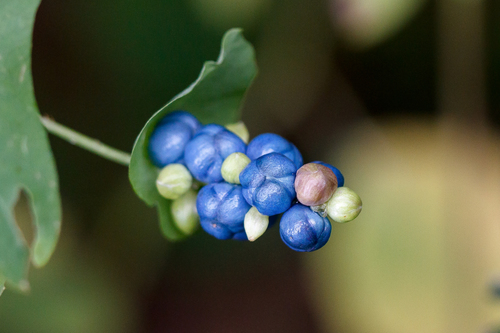
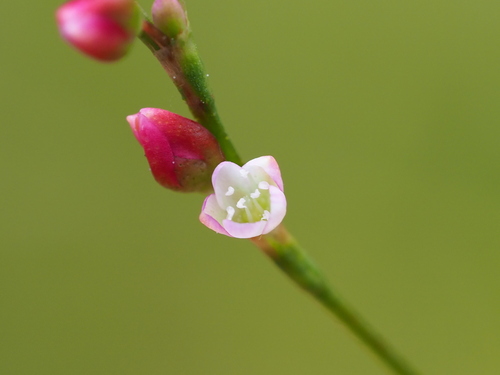
Koenigia mollis
D. Don
Sikkim knotweed
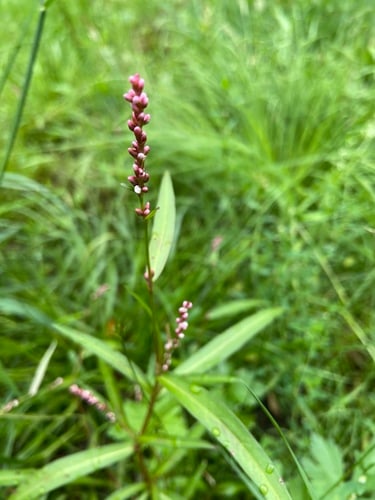
iNaturalist· cc-by-nc-sa
(c) James Ojascastro, some rights reserved (CC BY-NC-SA), uploaded by James Ojascastro
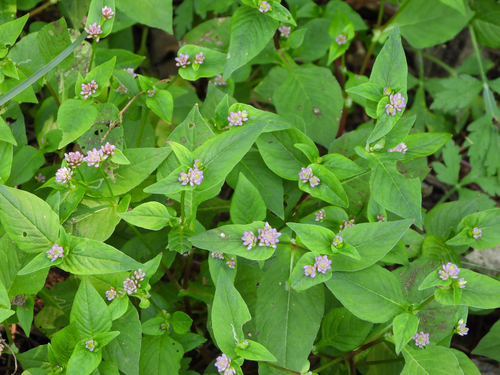
iNaturalist· cc-by-nc
(c) 江国彬, some rights reserved (CC BY-NC), uploaded by 江国彬
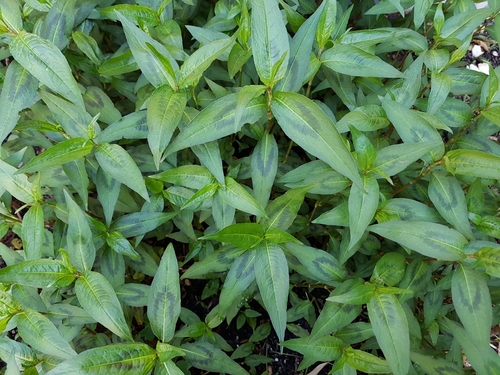
iNaturalist· cc-by-nc
(c) Yaling Lin, some rights reserved (CC BY-NC), uploaded by Yaling Lin
Summary
Source: WikipediaKoenigia mollis is a species of flowering plant in the family Polygonaceae, native to the eastern Himalayas and Myanmar.
Description
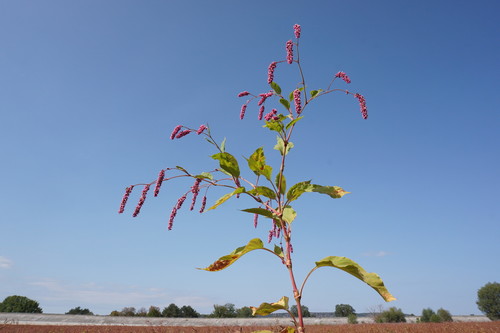
A herb or small shrub. It is erect and grows 2-3 m tall. It is branched and softly hairy. The leaves are 7-18 cm long by 3-6 cm wide. They are narrowly oval and velvety. The flowers are in large branched groups at the ends of branches. The flowers are 3 mm across and creamy white. The nuts are 3 sided and shiny. They are 2-3 mm long.
Edible Uses
The tender stems are eaten raw with an acid flavor similar to rhubarb, and used in jellies. Young shoots and leaves are boiled with dry meat or used in curries and pickles. The sweet fruit are also eaten.
Traditional Uses
The tender stem is eaten raw. It is acid and eaten like rhubarb. It is used in the preparation of jellies. The fruit are sweet and eaten. The young shoots and leaves are boiled with dry meat and eaten. They are also used in curry and pickles.
Medicinal Uses
Young shoots and leaves are boiled with dry meat and eaten in traditional preparations.
Known Hazards
Although no specific mention has been made for this species, there have been reports that some members of this genus can cause photosensitivity in susceptible people. Many species also contain oxalic acid (the distinctive lemony flavour of sorrel) - whilst not toxic this substance can bind up other minerals making them unavailable to the body and leading to mineral deficiency. Having said that, a number of common foods such as sorrel and rhubarb contain oxalic acid and the leaves of most members of this genus are nutritious and beneficial to eat in moderate quantities. Cooking the leaves will reduce their content of oxalic acid. People with a tendency to rheumatism, arthritis, gout, kidney stones or hyperacidity should take especial caution if including this plant in their diet since it can aggravate their condition.
Distribution
It is a subtropical plant. In Sikkim it grows between 2,500-3,500 m above sea level. It grows in damp places along rivers and streams.
Where It Grows
Asia, Bhutan, China, Himalayas, India, Indochina, Indonesia, Myanmar, Nepal, Northeastern India, SE Asia, Sikkim, Sri Lanka, Thailand, Vietnam,
Cultivation
Koenigia mollis is a moderately cold-hardy plant, being able to tolerate short periods with temperatures down to around -15°c when fully dormant. Succeeds in an ordinary garden soil but prefers a moisture retentive not too fertile soil in sun or part shade. Repays generous treatment. A very fast growing plant. Plants seem to be immune to the predations of rabbits.
Propagation
Seed - sow in a tray in a nursery, germination is usually free and easy. When they are large enough to handle, prick the seedlings out into individual pots and plant them out when around 15cm tall.. Division is very easy. Larger divisions can be planted out direct into their permanent positions. We have found that it is better to pot up the smaller divisions and grow them on in light shade until they are well established.
Other Uses
Plants are very fast growing and are used to reclothe and stabilize land slips. They are best spaced about 1.2 metres apart each way.
Production
In northeastern India plants flower in July to September.
Other Information
It is sold in local markets.
Notes
There are about 50 Polygonum species.
Synonyms
Also Known As
Anbongalen, Bhamcha, Bonkung, Chawa-nle, Chomcha, Evau, Kandyeo-pam, Kochomah, Longjo, Ngyalo, Nyalowa, Patusua, Phamjo, Phamjya, Syakum, Tarodi, Tharam, Thothne, Thotne, Thotney, Tuknu, Vah-vu, Yocham
References (22)
- Ambasta, S.P. (Ed.), 2000, The Useful Plants of India. CSIR India. p 480 (As Polygonum molle)
- Dangol, D. R. et al, 2017, Wild Edible Plants in Nepal. Proceedings of 2nd National Workshop on CUAOGR, 2017. (As Polygonum molle)
- Devi, O.S., P. Komor & D. Das, 2010, A checklist of traditional edible bio-resources from Ima markets of Imphal Valley, Manipur, India. Journal of Threatened Taxa 2(11): 1291-1296 (As Polygonum molle)
- Dobriyal, M. J. R. & Dobriyal, R., 2014, Non Wood Forest Produce an Option for Ethnic Food and Nutritional Security in India. Int. J. of Usuf. Mngt. 15(1):17-37 (As Polygonum molle)
- Dutt, B., et al, 2011, Ethnobotanical Survey of Plants used by Gaddi Tribe of Bharmour Area in Himachal Pradesh. ENVIS Bulletin: Himalayan Ecology 19, 2011 (As Aconogonum molle)
Show all 22 references Hide references
- Ghimeray, A. K., Lamsal, K., et al, 2010, Wild edible angiospermic plants of the Illam Hills (Eastern Nepal) and their mode of use by local community. Korean J. Pl. Taxon. 40(1) (As Aconogonum molle)
- Ghimire, S. K., et al, 2008, Non-Timber Forest Products of Nepal Himalaya. WWF Nepal p 111 (As Aconogonum molle)
- Gosh, C. & Das A. P., 2011, Some useful and poisonous tea garden weeds from the Darjiling District of West Bengal, India. Pleione 5(1): 91 - 114 (As Aconogonum molle)
- Joshi, N., et al, 2007, Traditional neglected vegetables of Nepal: Their sustainable utilization for meeting human needs. Tropentag 2007. Conference on International Agricultural Research for Development. (As Polygonum molle)
- Joshi, N. & Siwakoti, M., 2012, Wild Vegetables Used by Local Community of Makawanpur District and Their Contribution to Food Security and Income Generation. Nepal Journal of Science and Technology Vol. 13, No. 1 (2012) 59-66 (As Aconogonum molle)
- Konsam, S., et al, 2016, Assessment of wild leafy vegetables traditionally consumed by the ethnic communities of Manipur, northeast India. Journal of Ethnobiology and Ethnomedicine, 12:9 (As Polygonum molle)
- Pfoze, N. L., et al, 2012, Survey and assessment of floral diversity on wild edible plants from Senapati district of Manipur, Northeast India. Journal or Biodiversity and Environmental Sciences. 1(6):50-52 (As Polygonum molle)
- Plants for a Future database, The Field, Penpol, Lostwithiel, Cornwall, PL22 0NG, UK. http://www.scs.leeds.ac.uk/pfaf/ (As Polygonum molle)
- Prodr. fl. nepal. 72. 1825 (As Polygonum molle)
- Singh, H.B., Arora R.K.,1978, Wild edible Plants of India. Indian Council of Agricultural Research, New Delhi. p 33 (As Polygonum molle)
- Srivastava, R. C., 2010, Traditional knowledge of Nyishi (Daffla) tribe of Arunachal Pradesh. Indian Journal of Traditional Knowledge. 9(1):26-37 (As Polygonum molle)
- Sundriyal, M., et al, 1998, Wild edibles and other useful plants from the Sikkim Himalaya, India. Oecologia Montana 7:43-54 (As Polygonum molle)
- Sundriyal, M., et al, 2004, Dietary Use of Wild Plant Resources in the Sikkim Himalaya, India. Economic Botany 58(4) pp 626-638 (As Polygonum molle)
- Tamang, J. P. & Thapa, M., 2014, Some nonfermented ethnic foods of Sikkim in India. Journal of Ethnic Foods. 1:29-33 (As Aconogonum molle)
- Thothathri, K., & Pal, G.D., 1987, Further Contribution to the Ethnobotany of Subansiri District, Aranchal Pradesh. J. Econ. Tax. Bot. Vol. 10 No. 1 pp 149-157 (As Polygonum molle)
- Tsering, J., et al, 2017, Ethnobotanical appraisal on wild edible plants used by the Monpa community of Arunchal Pradesh. Indian Journal of Traditional Knowledge. Vol 16(4), October 2017, pp 626-637 (As Polygonum molle)
- World Checklist of Useful Plant Species 2020. Royal Botanic Gardens, Kew