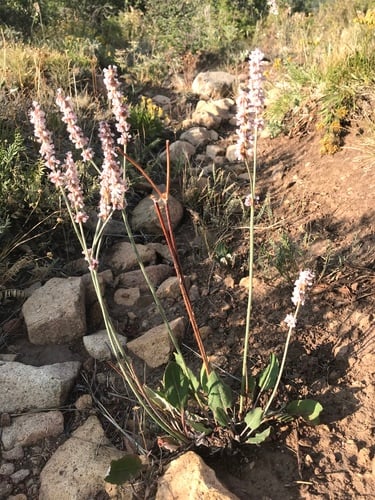
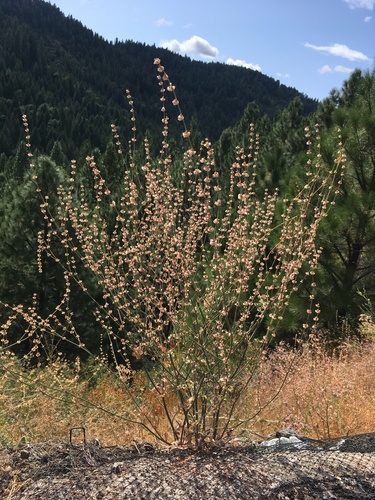
Persicaria nepalensis
(Meisn.) Miyabe
Nepalese Smartweed
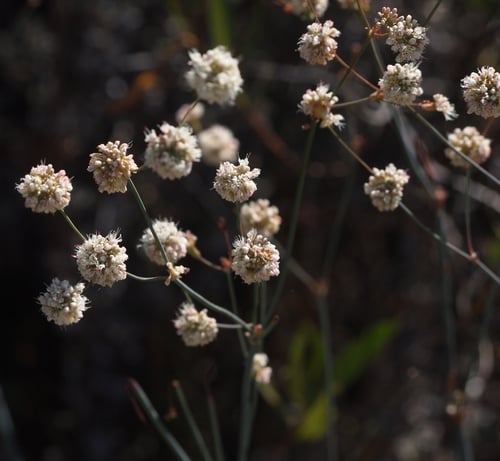
iNaturalist· cc-by-nc
(c) Chuangzao, some rights reserved (CC BY-NC), uploaded by Chuangzao
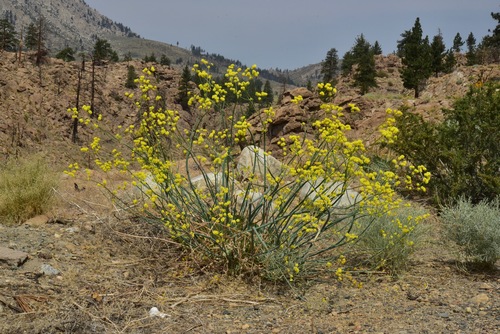
iNaturalist· cc-by
(c) Tom Norton, some rights reserved (CC BY), uploaded by Tom Norton
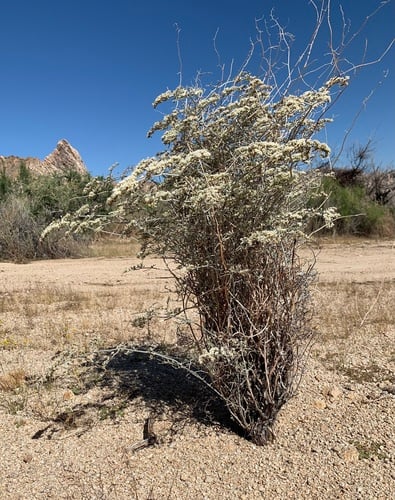
iNaturalist· cc0
no rights reserved, uploaded by 葉子
Summary
Source: WikipediaPersicaria nepalensis is a species of flowering plant in the family Polygonaceae, native to eastern Africa, including Madagascar, and parts of Asia. It has been introduced elsewhere: parts of Europe (including Great Britain), North America (including British Columbia, Connecticut, Massachusetts, New York and Pennsylvania) and northern South America. The species was first described as Polygonum nepalense by Carl Meissner in 1826, and transferred to Persicaria by Hugo Gross in 1913. (The same transfer was made later, in 1934, by Kingo Miyabe; as of 3 May 2019, Plants of the World Online used this transfer for the authorship of the combination.)
Description
An erect annual herb. The stems are slender. They are 1-2 mm across. It can lie along the ground or reach up to about 30 cm high. It often branches near the base and also forms roots. The leaves have stalks that have wings. The leaf blades are pale green and 1-5 cm long and 0.6-1 cm wide. The base is wedge shaped and runs into the leaf stalk. The leaves are oval or pear shaped with a few hairs. The flower arrangements are at the top of the plant. They are false spikes. Several arise together from one stalk. The flowers are pink or red. The fruit are lens shaped or occasional triangle shaped. They are 2 mm long and dark brown to black.
Edible Uses
The tender leaves, shoots, and stems are cooked and eaten as a vegetable; they have a sour taste. Seeds are also edible.
Traditional Uses
The tender leaves and shoots are cooked and eaten as a vegetable. They are sour.
This uses section is brief — help expand it
Medicinal Uses
Traditional uses recorded for this plant.
Known Hazards
Although no specific mention has been made for this species, there have been reports that some members of this genus can cause photosensitivity in susceptible people. Many species also contain oxalic acid (the distinctive lemony flavour of sorrel) - whilst not toxic this substance can bind up other minerals making them unavailable to the body and leading to mineral deficiency. Having said that, a number of common foods such as sorrel and rhubarb contain oxalic acid and the leaves of most members of this genus are nutritious and beneficial to eat in moderate quantities. Cooking the leaves will reduce their content of oxalic acid. People with a tendency to rheumatism, arthritis, gout, kidney stones or hyperacidity should take especial caution if including this plant in their diet since it can aggravate their condition.
Distribution
A tropical and subtropical plant. It is common in the highlands of Papua New Guinea. It occurs from 1200-3,000 m altitude. It grows in disturbed forest and old gardens. In Nepal it grows between 1200-4000 m altitude. It grows on exposed rocky slopes. It also grows in moist shady places.
Where It Grows
Afghanistan, Africa, Asia, Central Asia, China, Ethiopia, Himalayas, India, Indochina, Japan, Korea, Himalayas, Malaysia, Mexico, Nepal, North America, Northeastern India, Pacific, Pakistan, Papua New Guinea, PNG, SE Asia, Sikkim, South Africa, Southern Africa, Tajikistan, Tibet, Vietnam,
Cultivation
Plants are grown from seed.
Propagation
Seed - sow in situ. Germination is usually free and easy.
Other Uses
The squeezed plant is used for washing clothes. The plant has been regarded in Sri Lanka as a valuable ground cover in plantations, protecting the soil from erosion. Weeding methods were deliberately aimed at encouraging the plant in preference to other more troublesome species, only removing it from around the base of the crop plants.
Notes
There are about 50 Polygonum species. It is invasive in Mexico.
Synonyms
Also Known As
Achiak, Chak-aitu, Gong-sgrer-ming, Gui qiao, Ja-ut, Kangany-machan-pillu, Lanbut, Meija daro aga, Nghe Nepal, Priya ghans, Ratanaulo, Ratnaulo, Ruri, Sat balon, Trod, Uyushayan, Yarung
References (25)
- Alemneh, D., 2020, Ethnobotany of wild edible plants in Yilmana Densa and Quarit Districts of West Gojjam Zone, Amhara Region, Ethiopia. Ethnobotany Research & Applications. 20:47
- Ambasta, S.P. (Ed.), 2000, The Useful Plants of India. CSIR India. p 480 (As Polygonum nepalense)
- Angami, A., et al, 2006, Status and potential of wild edible plants of Arunachal Pradesh. Indian Journal of Traditional Knowledge 5(4) October 2006, pp 541-550 (As Polygonum alatum)
- Dangol, D. R. et al, 2017, Wild Edible Plants in Nepal. Proceedings of 2nd National Workshop on CUAOGR, 2017.
- Dobriyal, M. J. R. & Dobriyal, R., 2014, Non Wood Forest Produce an Option for Ethnic Food and Nutritional Security in India. Int. J. of Usuf. Mngt. 15(1):17-37 (As Polygonum nepalense)
Show all 25 references Hide references
- Flora of Pakistan. www.eFloras.org
- Gangwar, A. K. & Ramakrishnan, P. S., 1990, Ethnobotanical Notes on Some Tribes of Arunachal Pradesh, Northeastern India. Economic Botany, Vol. 44, No. 1 pp. 94-105 (As Polygonum nepalense)
- Henty, E.E., & Pritchard, G.S., 1973, Weeds of New Guinea and their control. Botany Bulletin No 7, Division of Botany, Lae, PNG. p 139 (As Polygonum nepalense)
- Henty, E.E., in Womersley, J.S., (ed), 1978, Handbooks of the Flora of Papua New Guinea. Melbourne University Press,Victoria. Vol 1, p 238 (Drawing) (As Polygonum nepalense)
- Joshi, N., et al, 2007, Traditional neglected vegetables of Nepal: Their sustainable utilization for meeting human needs. Tropentag 2007. Conference on International Agricultural Research for Development.
- Kang, Y., et al, 2014, Wild food plants used by the Tibetans of Gongba Valley (Zouqu country, Gansu, China) Journal of Ethnobiology and Ethnomedicine 10:20 (As Persicaria alata)
- Kar, A., et al, 2013, Wild Edible Plant Resources used by the Mizos of Mizoram, India. Kathmandu University Journal of Science, Engineering and Technology. Vol. 9, No. 1, July, 2013, 106-126 (As Polygonum nepalense)
- Li, S., et al, 2020, Monpa, memory, and change: an ethnobotanical study of plant use in Mêdog County, South-east Tibet, China. Journal of Ethnobiology and Ethnomedicine. (2020) 16:5 p 22
- Manandhar, N.P., 2002, Plants and People of Nepal. Timber Press. Portland, Oregon. p 355
- Masoodi, H. U. R. & Sundriyal, R. C., 2020, Richness of non-timber forest products in Himalayan communities—diversity, distribution, use pattern and conservation status. Journal of Ethnobiology and Ethnomedicine 16:56 (As Polygonum nepalense)
- Mot So Rau Dai an Duoc O Vietnam. Wild edible Vegetables. Ha Noi 1994, p 208 (As Polygonum nepalense)
- Pham-Hoang Ho, 1999, An Illustrated Flora of Vietnam. Nha Xuat Ban Tre. p 747 (As Polygonum nepalense)
- Plants for a Future database, The Field, Penpol, Lostwithiel, Cornwall, PL22 0NG, UK. http://www.scs.leeds.ac.uk/pfaf/ (As Polygonum nepalense)
- Sawian, J. T., et al, 2007, Wild edible plants of Meghalaya, North-east India. Natural Product Radiance Vol. 6(5): p 420 (As Polygonum alatum)
- Sharma, P., et al, 2013, Wild edibles of Murari Devi and surrounding areas in Mandi district of Himachal Pradesh, India. International Journal of Biodiversity and Conservation. Vol. 5(9), pp. 580-592, September 2013 (As Polygonum nepalense)
- Singh, B., et al, 2012, Wild edible plants used by Garo tribes of Nokrek Biosphere Reserve in Meghalaya, India. Indian Journal of Traditional Knowledge. 11(1) pp 166-171 (As Polygonum nepalense)
- Singh, H.B., Arora R.K.,1978, Wild edible Plants of India. Indian Council of Agricultural Research, New Delhi. p 33 (As Polygonum nepalense)
- Srivastava, R. C., 2009, Traditional knowledge of Adi tribe of Arunachal Pradesh on plants. Indian Journal of Traditional Knowledge. 8(2): 146-153 (As Polygonum nepalense)
- Srivastava, R. C., 2010, Traditional knowledge of Nyishi (Daffla) tribe of Arunachal Pradesh. Indian Journal of Traditional Knowledge. 9(1):26-37 (As Polygonum alatum)
- World Checklist of Useful Plant Species 2020. Royal Botanic Gardens, Kew