Polygonum glabrum
Willd.
Denseflower knotweed, Common marsh buckwheat
iNaturalist· cc-by-nc
(c) Radha Veach, some rights reserved (CC BY-NC)
iNaturalist· cc-by-nc
(c) Radha Veach, some rights reserved (CC BY-NC)
iNaturalist· cc-by-nc
(c) Radha Veach, some rights reserved (CC BY-NC)
Summary
Source: WikipediaPolygonum glabrum can refer to: Polygonum glabrum Rchb., a synonym of Persicaria lapathifolia (L.) Delarbre Polygonum glabrum Roxb., a synonym of Persicaria decipiens (R.Br.) K.L.Wilson Polygonum glabrum Roxb. ex D.Don, a synonym of Persicaria decipiens (R.Br.) K.L.Wilson Polygonum glabrum Willd., a synonym of Persicaria glabra (Willd.) M.Gómez
Description
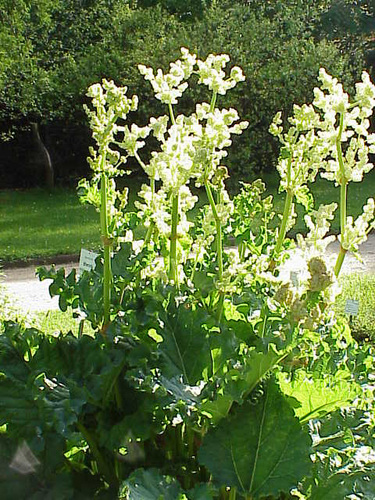
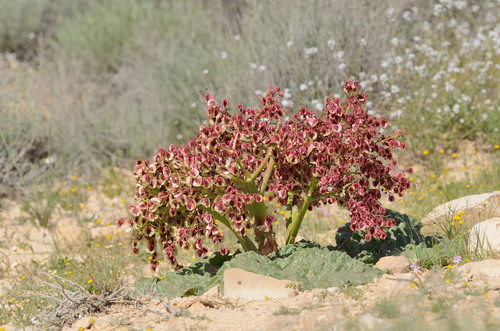
A tall erect herb. It keeps growing from year to year. The leaves are long and sword shaped but taper towards both ends. The leaves are 20 cm long by 4-5 cm wide. The flowers are in the axils of leaves and at the top of the plant. They are red. The nuts are dark brown and shiny.
Edible Uses
Leaves, roots, seeds, stalks, and fruit are all edible.
Distribution
A tropical plant. It grows near water and in marshes. In India it grows from sea level to 1,400 m above sea level. In Argentina it grows below 500 m above sea level.
Where It Grows
Afghanistan, Africa, Argentina, Asia, Australia, Bahamas, Brazil, Central America*, China, Dominican Republic*, East Africa, Guiana, Guianas, Guyana, Haiti*, Himalayas, India, Indochina, Jamaica*, Japan, Lesser Antilles*, Madagascar, Malaysia, Nepal, Northeastern India, Paraguay, Puerto Rico, SE Asia, South America*, Sri Lanka, Suriname, Thailand, Uruguay, Venezuela, Vietnam, West Indies*,
Notes
There are about 50 Polygonum species.
Synonyms
Also Known As
Aatlaria, Actalaree, Attarali, Bighani, Bihlangani, Chakaifu, Chuvanna mudela mukku, Jioti, Khar arxa, Larborna, Nadi sag, Nghe khong-long, Niru kanigalu, Niru sanne soppu, Paral, Patharua, Pathurua bhelagni, Rakta rohia, Sauri arak, Sckoranna mudela mucca, Sivappu, Takta rohita
References (21)
- Ambasta, S.P. (Ed.), 2000, The Useful Plants of India. CSIR India. p 479
- Anderson, E. F., 1993, Plants and people of the Golden Triangle. Dioscorides Press. p 218
- Cleland, J.B., 1957, Mankind. 5(4):149-162.
- Dobriyal, M. J. R. & Dobriyal, R., 2014, Non Wood Forest Produce an Option for Ethnic Food and Nutritional Security in India. Int. J. of Usuf. Mngt. 15(1):17-37
- HOOPER,
Show all 21 references Hide references
- IRVINE,
- Jardin, C., 1970, List of Foods Used In Africa, FAO Nutrition Information Document Series No 2.p 96
- Kannan, M., et al, 2015, Ethnobotanical survey on wild edible plants of Kalrayan Hills, Salem District, Tamil Nadu, India. Global J. Res. Med Plants & Indigen. med. 4(12): 236-246
- Lazarides, M. & Hince, B., 1993, Handbook of Economic Plants of Australia, CSIRO. p 194
- Marandi, R. R. & Britto, S. J., 2015, Medicinal Properties of Edible Weeds of Crop Fields and Wild plants Eaten by Oraon Tribals of Latehar District, Jharkhand. International Journal of Life Science and Pharma Research. Vo. 5. (2) April 2015
- Martin, F.W. & Ruberte, R.M., 1979, Edible Leaves of the Tropics. Antillian College Press, Mayaguez, Puerto Rico. p 213
- Morley, B.D., & Toelken, H.R., (Eds), 1983, Flowering Plants in Australia. Rigby. p 86
- Patiri, B. & Borah, A., 2007, Wild Edible Plants of Assam. Geethaki Publishers. p 114
- Pham-Hoang Ho, 1999, An Illustrated Flora of Vietnam. Nha Xuat Ban Tre. p 752
- Plants of Haiti Smithsonian Institute http://botany.si.edu/antilles/West Indies
- Singh, H.B., Arora R.K.,1978, Wild edible Plants of India. Indian Council of Agricultural Research, New Delhi. p14, 33, 83
- Sinha, R. & Lakra, V., 2007, Edible weeds of tribals in Jharkhand, Orissa and West Bengal. Indian Journal of Traditional Knowledge 6(1) January 2007 pp 217-222
- Sp. pl. 2(1):447. 1799
- Swapna, M. M. et al, 2011, A review on the medicinal and edible aspects of aquatic and wetland plants of India. J. Med. Plants Res. 5 (33) pp. 7163-7176
- Terra, G.J.A., 1973, Tropical Vegetables. Communication 54e Royal Tropical Institute, Amsterdam, p 68
- Vartak, V.D. and Kulkarni, D.K., 1987, Monsoon wild leafy vegetables from hilly regions of Pune and neighbouring districts, Maharashtra state. J. Econ. Tax. Bot. Vol. 11 No. 2 pp 331-335