Rheum officinale
Baill.
Chinese Rhubarb, Kelembak
iNaturalist· cc-by-sa
(с) [1], некоторые права защищены (CC BY-SA)
wikimedia· cc-by-sa
Wikimedia Commons - Krzysztof Ziarnek, Kenraiz
Summary
Source: WikipediaRheum officinale, the Chinese rhubarb, or Indian rhubarb is a rhubarb from the family Polygonaceae native to western China and Tibet. In Chinese it is called yào yòng dà huáng (Chinese: 药用大黄), literally meaning medicinal rhubarb.
Description
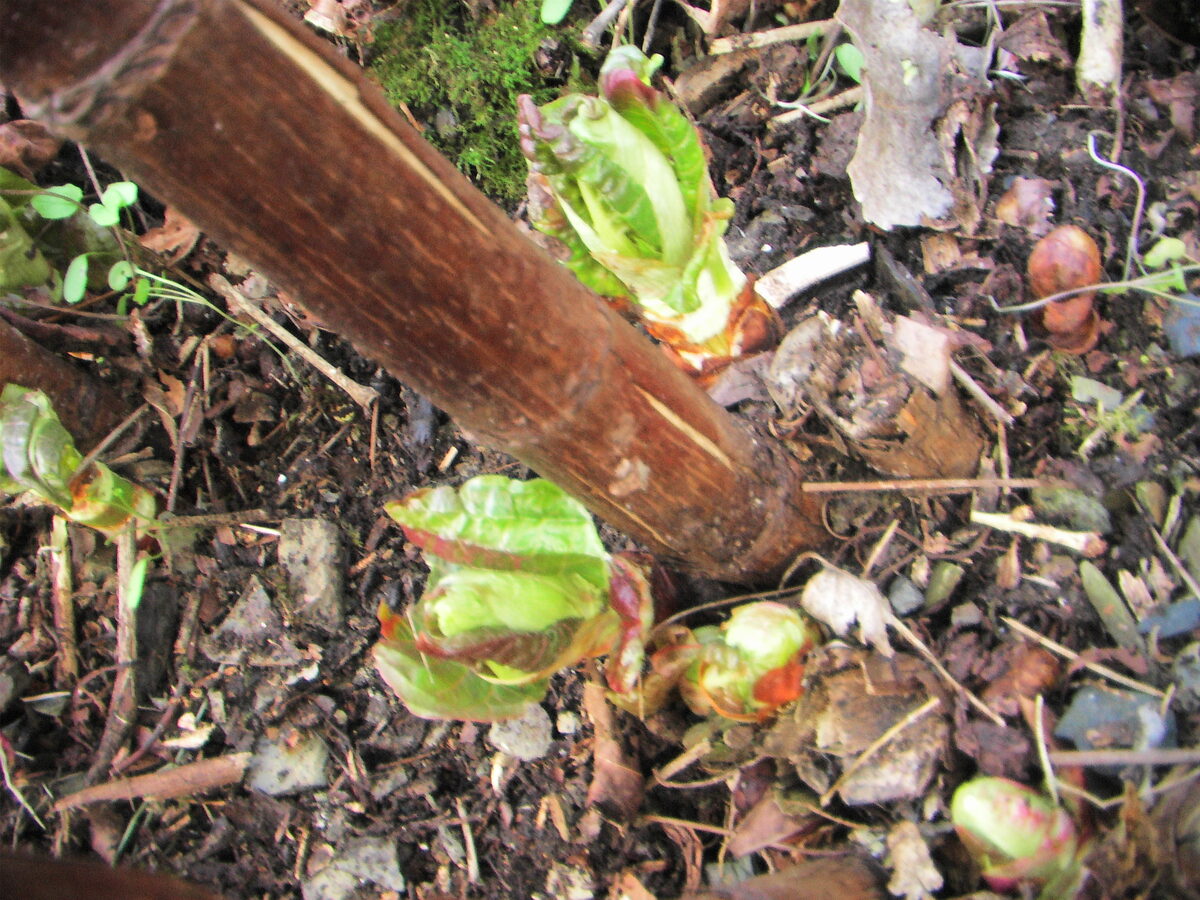
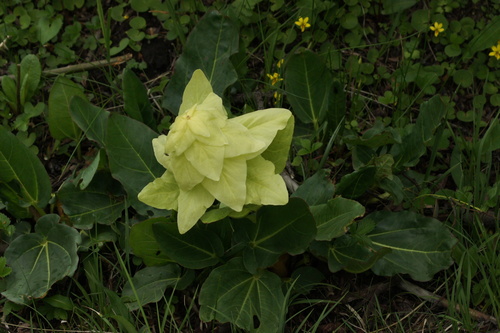
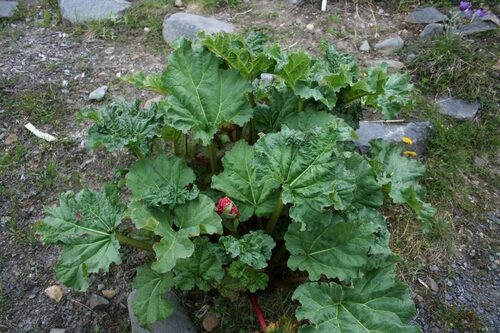
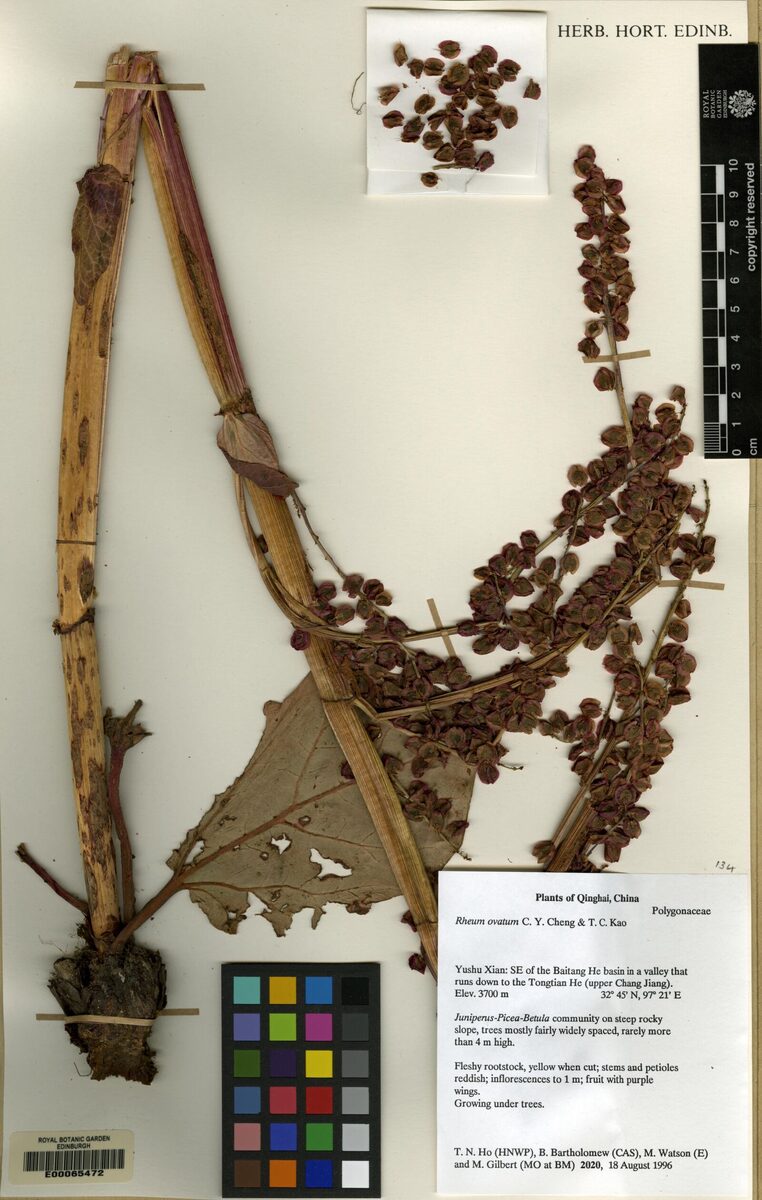
A herb that keeps growing from year to year. It grows 1-15 cm high. It has a thick rhizome or underground stem. The leaves near the base have long leaf stalks. They are 15-30 cm long and 1-2 cm thick and fleshy. The leaf blades are almost round and 30-60 cm long and wide. They can have lobes. The flowers are greenish-white. They are in groups at the top of the plant. The fruit are dry and one seeded and with wings.
Edible Uses
The leaf stem can be eaten raw or cooked, though it has a rather medicinal quality. The plant is reported to contain 1.3% rutin, though the source does not specify which part; the leaves are the most likely candidate.
Traditional Uses
The dried rhizomes are used to make tonic wines and other alcoholic drinks. Caution: Alcohol is a cause of cancer. Extracts of the root are used to flavour bitter tonics, drinks, syrups, and baked goods. The stalks are eaten as a snack. Caution: The leaves contain oxalates and are poisonous.
Medicinal Uses
Rhubarb has a long and proven history of herbal use, with its primary effect being a positive and balancing action on the entire digestive system. It is one of the most widely used herbs in Chinese medicine. The root is anticholesterolemic, antiseptic, antispasmodic, antitumor, aperient, astringent, cholagogue, demulcent, diuretic, laxative, purgative, stomachic, and tonic. Its roots contain anthraquinones, which produce a purgative effect, alongside tannins and bitters that exert the opposite, astringent effect. In small doses the root acts as an astringent tonic to the digestive system; larger doses act as a mild laxative. It is taken internally for chronic constipation, diarrhoea, liver and gall bladder complaints, haemorrhoids, menstrual problems, and skin eruptions caused by an accumulation of toxins. It is not prescribed for pregnant or lactating women, nor for patients with intestinal obstruction. Externally, the root is applied in the treatment of burns. Roots are harvested in October from plants at least six years old and dried for later use. A homeopathic remedy prepared from the dried root is used especially for diarrhoea in teething children.
Known Hazards
Although no specific mention has been seen for this species, the leaves of some if not all members of this genus contain significant quantities of oxalic acid and should not be eaten in any quantity. Oxalic acid can lock up certain minerals in the body, especially calcium, leading to nutritional deficiency. The content of oxalic acid will be reduced if the plant is cooked. People with a tendency to rheumatism, arthritis, gout, kidney stones or hyperacidity should take especial caution if including this plant in their diet since it can aggravate their condition.
Distribution
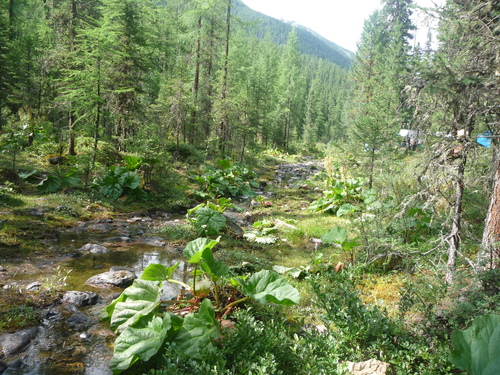
A temperate plant. It suits hardiness zones 7-10. It grows in Sichuan and Yunnan.
Where It Grows
Asia, Australia, Britain, China*, Czech Republic, Europe, India, Indochina, Italy, Laos, Mediterranean, SE Asia, Slovenia, Thailand, Tibet*, Vietnam,
Cultivation
Prefers a deep, fertile, moderately heavy, humus rich, moisture retentive, well-drained soil in sun or semi-shade. Grows well in heavy clay soils. Plants can be grown in quite coarse grass, which can be cut annually in the autumn. Hardy to about -20°c. A very ornamental plant, it is closely related to R. australe. Hybridizes freely with other members of this genus. Cultivated as a medicinal plant in China. Plants at the Cambridge Botanical Gardens in September 1993 were growing well in the shade of a woodland garden, though they were not succeeding when planted closely to the trees. Plants in this genus seem to be immune to the predations of rabbits.
Propagation
Seed is best sown in autumn in a shaded cold frame, though spring sowing in a cold frame is also possible. Once seedlings are large enough to handle, prick them out into individual pots and grow them on in a greenhouse or cold frame through their first winter, then plant out in spring. For division, work in early spring or autumn, splitting the rootstock with a sharp spade or knife and ensuring at least one growth bud per division. Larger divisions can go directly into their permanent positions; smaller ones are better potted up and grown on in light shade in a cold frame until well established before planting out in late spring or early summer.
Other Uses
Plants can be grown as ground cover when spaced approximately 1.8 metres apart in each direction.
Notes
There are about 50 Rheum species. This one is mainly used for medicine.
Synonyms
Also Known As
Daihoang duocdung, Kitajska rabarbara, Koad num tao, Tibetan rhubarb
References (19)
- Adansonia 10:246. 1871-73
- Ambasta S.P. (Ed.), 2000, The Useful Plants of India. CSIR India. p 520
- Bodkin, F., 1991, Encyclopedia Botanica. Cornstalk publishing, p 875
- Bremness, L., 1994, Herbs. Collins Eyewitness Handbooks. Harper Collins. p 210
- Burkill, I.H., 1966, A Dictionary of the Economic Products of the Malay Peninsula. Ministry of Agriculture and Cooperatives, Kuala Lumpur, Malaysia. Vol 2 (I-Z) p 1924
Show all 19 references Hide references
- Facciola, S., 1998, Cornucopia 2: a Source Book of Edible Plants. Kampong Publications, p 186 (As Rheum officinale)
- Flora of China @ efloras.org Volume 5
- Hibbert, M., 2002, The Aussie Plant Finder 2002, Florilegium. p 246
- http://www.botanic-gardens-ljubljana.com/en/plants
- Hu, Shiu-ying, 2005, Food Plants of China. The Chinese University Press. p 373
- Jiwajinda, S., et al, 2002, Suppressive Effects of Edible Thai Plants on Superoxide and Nitric Oxide Generation. Asian Pacific Journal of Cancer Prevention, Vol 3, 2002
- Kang, J. et al, 2016, Wild food plants and fungi used in the mycophilous Tibetan community of Zhagana (Tewo Country, Gansu, China) Journal of Ethnobiology and Ethnomedicine. 12:21
- Kermath, B. M., et al, 2014, Food Plants in the Americas: A survey of the domesticated, cultivated and wild plants used for Human food in North, Central and South America and the Caribbean. On line draft. p 741
- Kew Plants of the World Online
- Kiple, K.F. & Ornelas, K.C., (eds), 2000, The Cambridge World History of Food. CUP p 1843
- Pham-Hoang Ho, 1999, An Illustrated Flora of Vietnam. Nha Xuat Ban Tre. p 742
- Purseglove, J.W., 1968, Tropical Crops Dicotyledons, Longmans. p 640
- van Wyk, B., 2005, Food Plants of the World. An illustrated guide. Timber press. p 320
- World Checklist of Useful Plant Species 2020. Royal Botanic Gardens, Kew