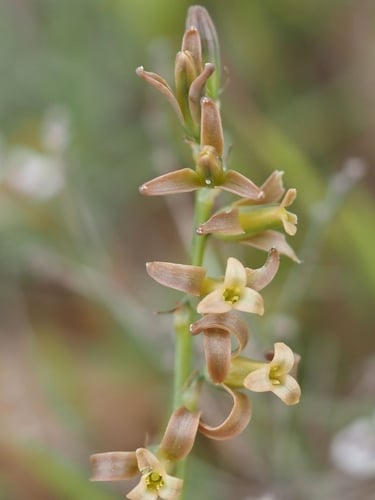
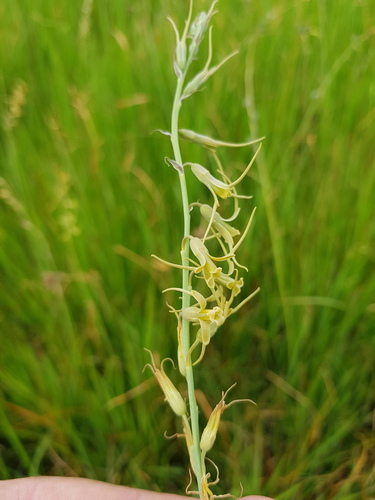
Polygonatum odoratum var. thunbergii
(C. Morris & Decne.) Hara
Angular Solomon's seal, Variegated Solomon's seal
gbif· cc-by
Meise Botanic Garden
Summary
Source: WikipediaPolygonatum odoratum (syn. P. officinale), the angular Solomon's seal or scented Solomon's seal, is a species of flowering plant in the family Asparagaceae, native to Europe, the Caucasus, Siberia, the Russian Far East, China, Mongolia, Korea, Nepal and Japan. In the United Kingdom it is one of three native species of the genus, the others being P. multiflorum and P. verticillatum. The genus name Polygonatum comes from the Greek words "poly", meaning "many", and "gonu", meaning "knee joint". This is in reference to the plant's jointed rhizomes. The Latin specific epithet odoratum means "scented".
Description
An herbaceous perennial in the Asparagaceae family (also classified in Convallariaceae) found in temperate regions. It is one of approximately 50 Polygonatum species.
Edible Uses
The leaves and roots are edible.
Known Hazards
Polygonatum odoratum is used in traditional Chinese medicine and Traditional Korean medicine, where it is called yùzhú (玉竹) and dunggulle (둥굴레) respectively. In Korea, the root of the plant is used to make tea. This plant species is described in the work Plantas Medicinales (medicinal plants) of Pius Font i Quer. According to it, its rhizome contains asparagine, mucilage, a cardio-tonic glycoside, saponin, and quinine gluconate. It has been used for intestinal problems and pain, for rheumatism, gout, water retention, and as a diuretic. He says that the scientific medicine has used it to treat diabetes. He also describes a digestive liquor that uses the rhizome of this plant. The young shoots of the plants may be boiled and served like asparagus. The stems, leaves, and berries, however, must be treated with caution, as they are thought to be toxic if consumed in large quantities. Its rhizome contains scattered raphides, but only in the cortex (outer layer).
Distribution
It is a temperate plant.
Where It Grows
Africa, Asia, Britain, Egypt, Europe, Japan, North Africa, Spain,
Notes
There are about 50 Polygonatum species. Also put in the family Convallariaceae.
Synonyms
References (1)
- Plants for a Future database, The Field, Penpol, Lostwithiel, Cornwall, PL22 0NG, UK. http://www.scs.leeds.ac.uk/pfaf/