Dipcadi serotinum
(L.) Medik.
Dipcadi
iNaturalist· cc-by-nc
(c) gardatxanae, some rights reserved (CC BY-NC), uploaded by gardatxanae
iNaturalist· cc-by-nc
(c) gardatxanae, some rights reserved (CC BY-NC)
iNaturalist· cc-by-nc
(c) Corrie du Toit, some rights reserved (CC BY-NC), uploaded by Corrie du Toit
Description
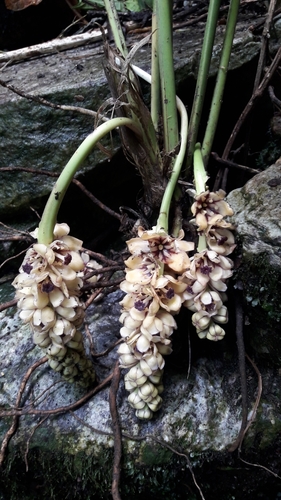
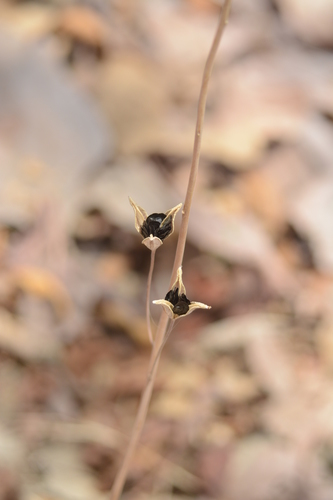
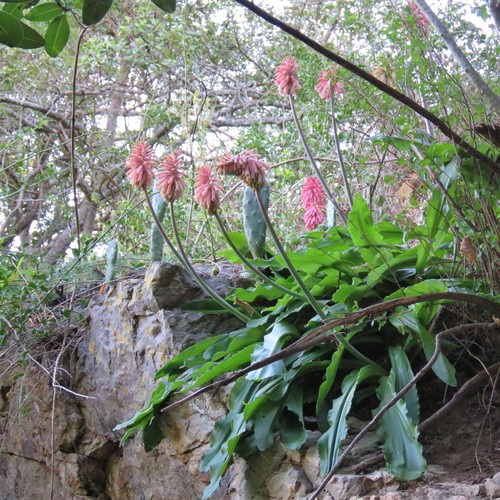
A bulb plant. It does not have hairs. It keeps growing from year to year. The leaves are at the base and narrow. There are only a few leaves and they spread out. They are greyish-green. The flowers are greenish to brownish-yellow. They are in one sided racemes. The tepals are 12-15 mm long. They are narrow and the outer 3 curve outwards. The inner 3 are straight. They all fuse in the lower section. The fruit is a small capsule.
Edible Uses
The bulb is eaten.
Distribution
It grows in rocky, stony and sandy places. It grows in dry locations.
Where It Grows
Africa, Egypt, Europe, France, Himalayas, India, Italy, Mediterranean, Middle East, Nepal, North Africa, Pakistan, Saudi Arabia, Spain,
Notes
They have also been put in the families Hyacinthaceae and Liliaceae.
Synonyms
References (4)
- Blamey, M and Grey-Wilson, C., 2005, Wild flowers of the Mediterranean. A & C Black London. p 479
- Brickell, C. (Ed.), 1999, The Royal Horticultural Society A-Z Encyclopedia of Garden Plants. Convent Garden Books. p 371
- Hist. & Commentat. Acad. Elect. Sci. Theod.-Palat. 6:431. 1790
- Jardin, C., 1970, List of Foods Used In Africa, FAO Nutrition Information Document Series No 2.p 75