Dipcadi viride
(L.) Moench
Green Dipcadi, Dainty green bells
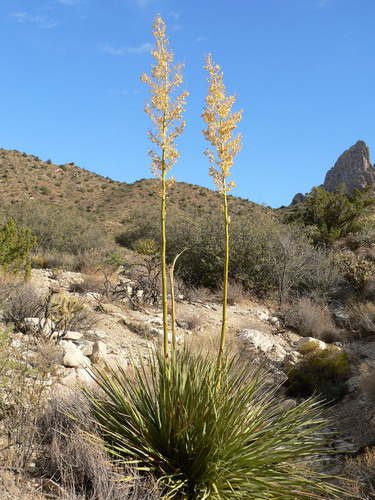
iNaturalist· cc-by-nc
(c) Richard Gill, some rights reserved (CC BY-NC)
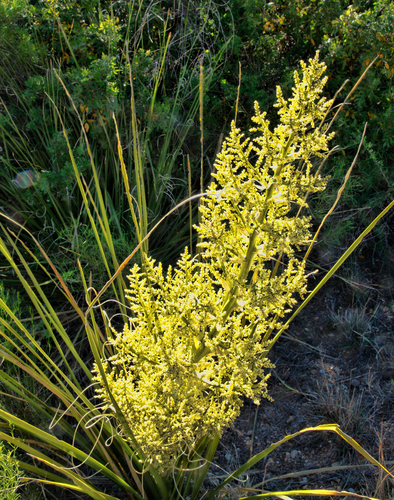
iNaturalist· cc-by-nc
(c) Richard Gill, some rights reserved (CC BY-NC)
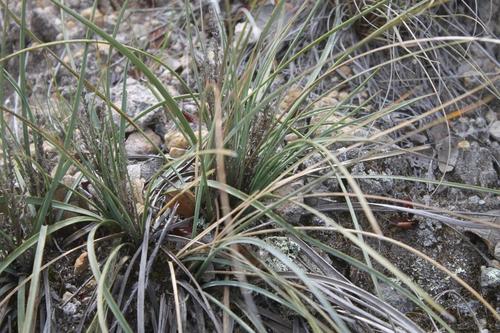
iNaturalist· cc-by-nc
(c) Richard Gill, some rights reserved (CC BY-NC)
Description
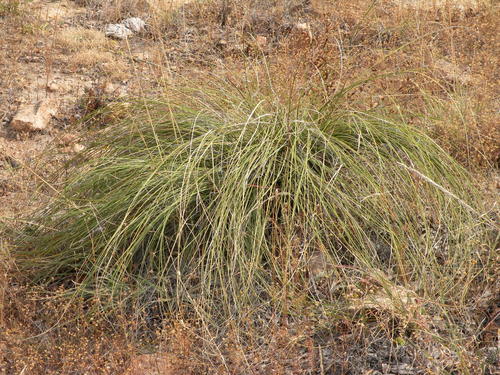
A small hairless plant with a white bulb. It can have runners with small bulbs. The leaves occur as 1-4 per shoot. They vary in size but are long and sword shaped. They clasp the stem at the base. The flowers occur as 10 small flowers in a loose arrangement around the stalk. The stalk can be 20-50 cm long. The individual flowers are small and thread like. The fruit are on long angular capsules. The seeds are flat, round, shiny and black.
Edible Uses
The bulbs are baked in ashes, and the leaves are used as a vegetable.
Traditional Uses
CAUTION: Some closely related Dipcadi are used as rat poison. The bulbs and leaves are used as a vegetable. The bulbs are baked in ashes.
This uses section is brief — help expand it
Known Hazards
Some closely related Dipcadi species are used as rat poison.
Distribution
It is a subtropical plant. It grows in open woodland and wet grass savannah. In Nigeria it has been recorded at 2,300 m above sea level.
Where It Grows
Africa, Australia, Botswana, East Africa, Eswatini, Guinea, Guinée, Guinea-Bissau, Lesotho, Mozambique, Nigeria, South Africa, Southern Africa, Swaziland, West Africa, Zambia, Zimbabwe,
Notes
They have also been put in the families Hyacinthaceae and Liliaceae.
Nutrition
| Part | Moisture | kJ | kcal | Protein | Vit A | Vit C | Iron | Zinc |
|---|---|---|---|---|---|---|---|---|
| Bulb | 86.3 | 215 | 51 | 0.8 | — | 0.1 | 0.5 | 5.1 |
Synonyms
Also Known As
Gifbolletjie, Ligonhua, Morotoana-phookoana, Skaamblommetjie, Slymuintjie, Thelelimoro
References (18)
- Chapman, J. D. & Chapman, H. M., 2001, The Forest Flora of Taraba and Andamawa States, Nigeria. WWF & University of Canterbury. p 210
- FAO, 1988, Traditional Food Plants, FAO Food and Nutrition Paper 42. FAO Rome p 249
- Fowler, D. G., 2007, Zambian Plants: Their Vernacular Names and Uses. Kew. p 86
- Fox, F. W. & Young, M. E. N., 1982, Food from the Veld. Delta Books. p 251
- Gillarmod, J., 1966, 1971,
Show all 18 references Hide references
- Hibbert, M., 2002, The Aussie Plant Finder 2002, Florilegium. p 87
- http://aflora.africa.kyoto-u.ac.jp
- Jardin, C., 1970, List of Foods Used In Africa, FAO Nutrition Information Document Series No 2.p 75 (As Dipcadi filamentosum)
- Lee, 1979,
- Long, C., 2005, Swaziland's Flora - siSwati names and Uses http://www.sntc.org.sz/flora/
- Malaisse, F., 1997, Se nourrir en floret claire africaine. Approche ecologique et nutritionnelle. CTA., p 91.
- Peters, C. R., O'Brien, E. M., and Drummond, R.B., 1992, Edible Wild plants of Sub-saharan Africa. Kew. p 30
- Plowes, N. J. & Taylor, F. W., 1997, The Processing of Indigenous Fruits and other Wildfoods of Southern Africa. in Smartt, L. & Haq. (Eds) Domestication, Production and Utilization of New Crops. ICUC p 190
- Ruiters-Welcome, A. K., 2019, Food plants of southern Africa. Ph.D. thesis. Univ. of Johannesburg p 65
- Suppl. Meth. 267. 1802
- Tanaka, 1980,
- Tredgold, M.H., 1986, Food Plants of Zimbabwe. Mambo Press. p 44
- Welcome, A. K. & Van Wyk, B.-E., 2019, An inventory and analysis of the food plants of southern Africa. South African Journal of Botany 122 (2019) 136–179