Pollichia campestris
Aiton
Waxberry, Barley sugar bush
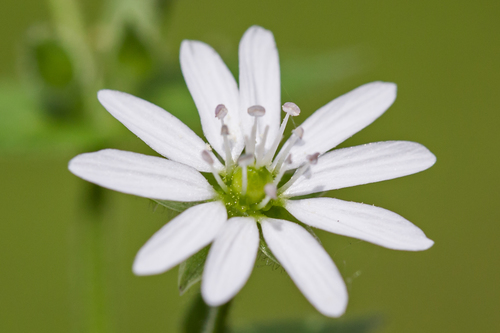
iNaturalist· cc-by-nc
(c) Duncan McKenzie, some rights reserved (CC BY-NC), uploaded by Duncan McKenzie
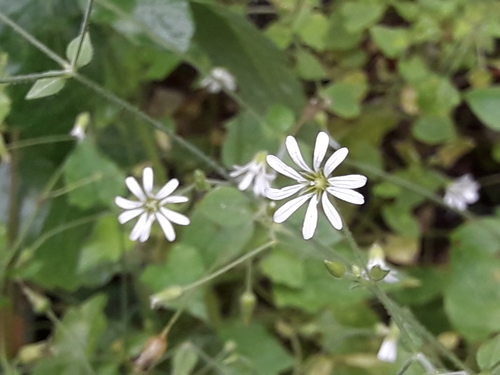
iNaturalist· cc-by-nc
(c) Khama III Memorial Museum in Serowe, some rights reserved (CC BY-NC)
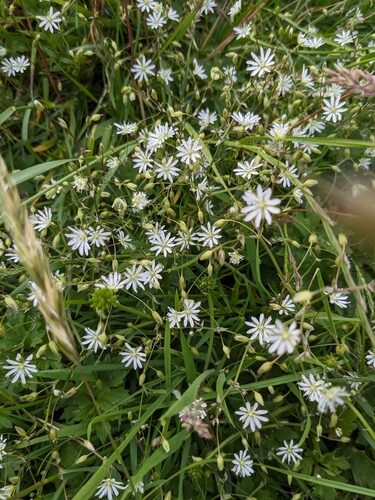
iNaturalist· cc-by-sa
(c) Nicola van Berkel, some rights reserved (CC BY-SA), uploaded by Nicola van Berkel
Description
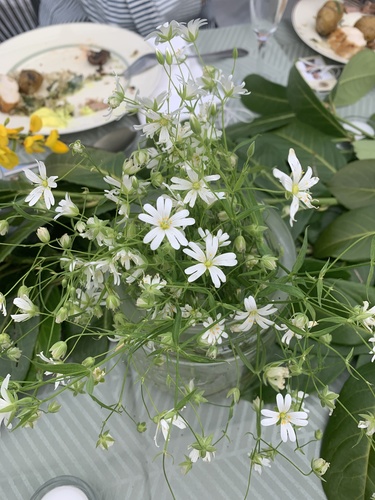
A herb or small shrub. It has many branches. It grows 60 cm tall. The young branches have a white woolly covering. The leaves are grey-green. They are 1-3 cm long by 0.5 cm wide. They are narrowly sword shaped. The flowers are in groups of 5. The petals are white. The fruit is a capsule 1.3 mm long by 0.7 mm wide. There is usually one seed 0.8 mm long by 0.5 mm wide. The fruit are edible.
Edible Uses
The fruit and flowers are eaten raw, with the fleshy part of the flower being the primary edible portion. The fruit are especially popular with children, and the leaves are also edible.
Traditional Uses
The fruit and flowers are eaten raw. It is the fleshy part of the flower that is eaten.
This uses section is brief — help expand it
Distribution
It is a tropical and subtropical plant. It grows in open bushland on sandy soils. It grows in hot arid areas with a marked dry season. It grows in deep well-drained soils. It grows from sea level to 1,700 m altitude. It can grow in arid places.
Where It Grows
Africa, Arabia, Botswana, East Africa, Eswatini, Ethiopia, Kenya, Middle East, Mozambique, Namibia, South Africa, Southern Africa, Swaziland, Uganda, Zambia, Zimbabwe,
Cultivation
Usually found in the wild in sandy, dry to moist soils.
Other Information
The fruit are eaten especially by children.
Notes
Also put in the family Illecebraceae.
Also Known As
Amangabangaba, Chihembelo, Egogong, Guunguma korbeessaa, Letsoai, Manga, Monokotsoai-oa-makhoaba, Nkayakuj, Sefakoana, Tsimo-ea-manyokolo, Ukudla kwambhayi, Umhlungulu, Utywala
References (23)
- Flora Zambesiaca. http://apps.kew.org/efloras
- Fowler, D. G., 2007, Zambian Plants: Their Vernacular Names and Uses. Kew. p 17
- Fox, F. W. & Young, M. E. N., 1982, Food from the Veld. Delta Books. p 148, 239
- Gemedo-Dalle, T., et al, 2005, Plant Biodiversity and Ethnobotany of Borana Pastoralists in Southern Oromia, Ethiopia. Economic Botany 59(1) pp. 43-65
- Glover et al, 1966b,
Show all 23 references Hide references
- Goode, P., 1989, Edible Plants of Uganda. FAO p 30
- Grivetti, L. E., 1980, Agricultural development: present and potential role of edible wild plants. Part 2: Sub-Saharan Africa, Report to the Department of State Agency for International Development. p 44, 71
- Guillarmod, J., 1966, 1971,
- Hort. kew. 1:5. 1789
- Ichikawa, M., 1980, The Utilization of Wild Food Plants by the Suiei Dorobo in Northern Kenya. J. Anthrop. Soc. Nippon. 88(1): 25-48
- Jardin, C., 1970, List of Foods Used In Africa, FAO Nutrition Information Document Series No 2.p 95, 155
- Long, C., 2005, Swaziland's Flora - siSwati names and Uses http://www.sntc.org.sz/flora/
- Mason, 1971,
- Mutie, F. M., et al, 2023, Important Medicinal and Food Taxa (Orders and Families) in Kenya, Based on Three Quantitative Approaches. Plants 2023, 12, 1145
- Peters & Maguire, 1981,
- Peters, C. R., O'Brien, E. M., and Drummond, R.B., 1992, Edible Wild plants of Sub-saharan Africa. Kew. p 117
- Royal Botanic Gardens, Kew (1999). Survey of Economic Plants for Arid and Semi-Arid Lands (SEPASAL) database. Published on the Internet; http://www.rbgkew.org.uk/ceb/sepasal/internet [Accessed 18th April 2011]
- Ruiters-Welcome, A. K., 2019, Food plants of southern Africa. Ph.D. thesis. Univ. of Johannesburg p 42
- Scudder, 1971,
- Story, 1958,
- van Wyk, Be., & Gericke, N., 2007, People's plants. A Guide to Useful Plants of Southern Africa. Briza. p 54
- Welcome, A. K. & Van Wyk, B.-E., 2019, An inventory and analysis of the food plants of southern Africa. South African Journal of Botany 122 (2019) 136–179
- World Checklist of Useful Plant Species 2020. Royal Botanic Gardens, Kew