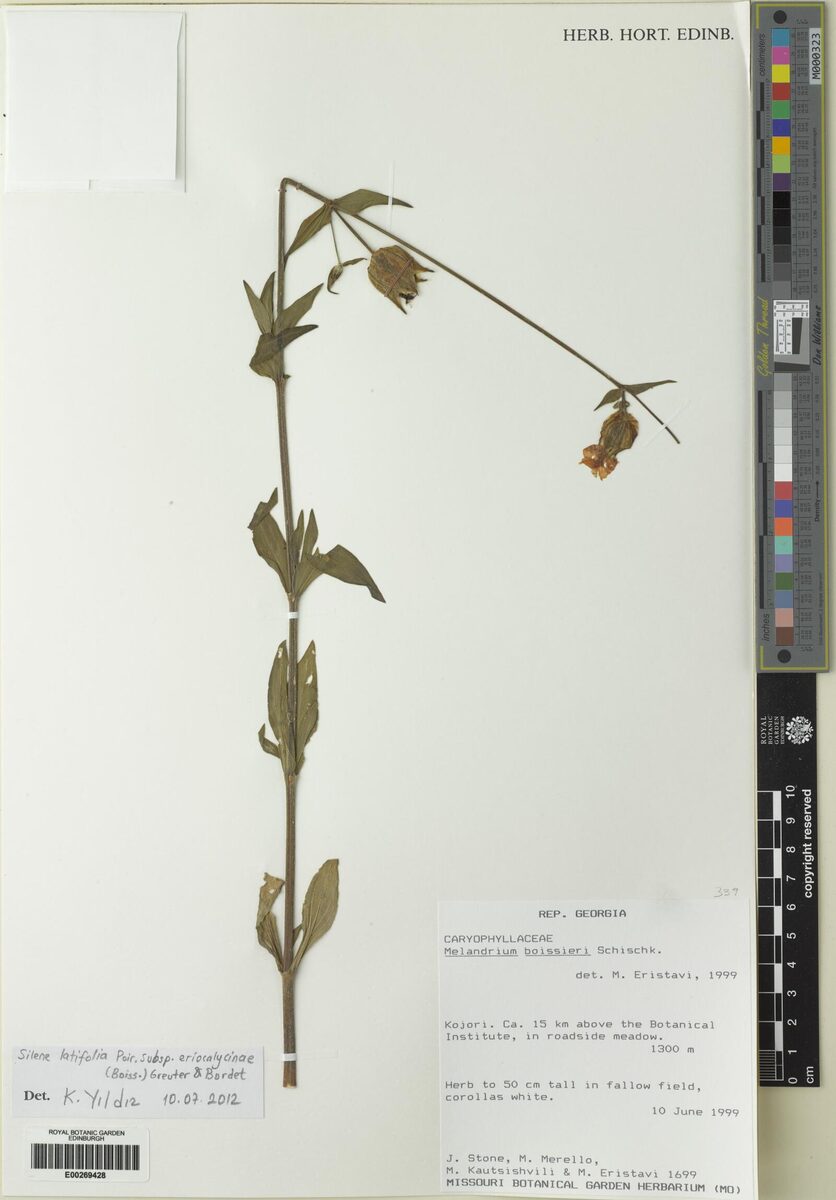
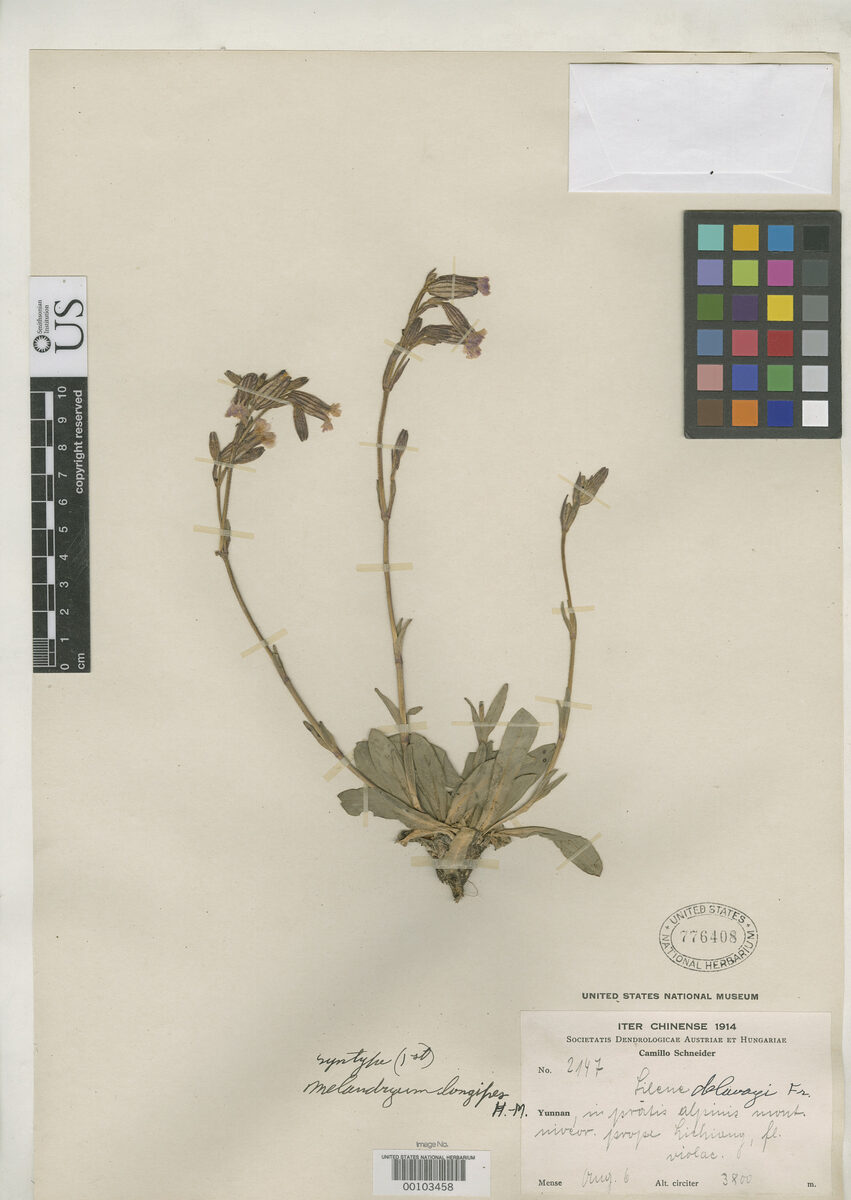
Dianthus barbatus
L.
Sweet William
iNaturalist· cc-by-sa
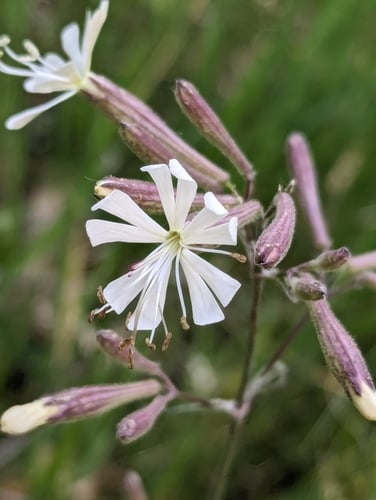
(c) xulescu_g, some rights reserved (CC BY-SA)
iNaturalist· cc-by-nc
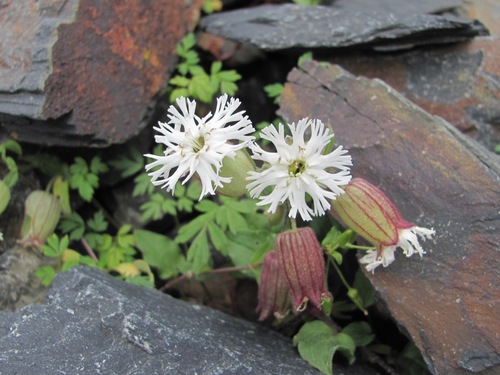
(c) Aleksandr_Levon, some rights reserved (CC BY-NC), uploaded by Aleksandr_Levon
iNaturalist· cc-by-nc
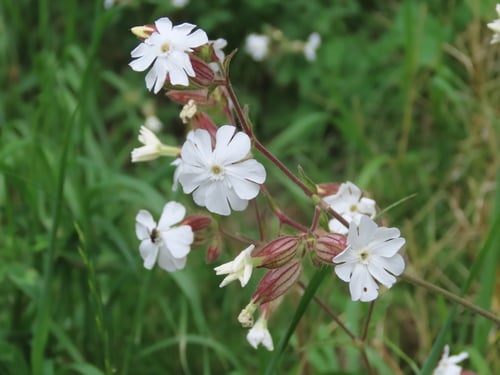
(c) Мария Филатова, some rights reserved (CC BY-NC), uploaded by Мария Филатова
Summary
Source: WikipediaDianthus barbatus, the sweet William, is a species of flowering plant in the family Caryophyllaceae, native to southern Europe and parts of Asia. It has become a popular ornamental garden plant. It is a herbaceous biennial or short-lived perennial plant growing to 13–92 cm tall, with flowers in a dense cluster of up to 30 at the top of the stems. Each flower is 2–3 cm diameter with five petals displaying serrated edges. Wild plants produce red flowers with a white base, but colours in cultivars range from white, pink, red, and purple to variegated patterns. The exact origin of its English common name is unknown but first appears in 1596 in botanist John Gerard's garden catalogue. The flowers are edible and may have medicinal properties. Sweet William attracts bees, birds, and butterflies.
Description
A herb that will keep growing from year to year. The stem curve upwards to 25 cm high. The leaf blades are narrow and spoon shaped. They are 10 cm long and 2 cm wide. The flowers are in dense heads near the ends of the branches.
Edible Uses
The flowers have a mild flavour and make an attractive garnish for vegetable and fruit salads, cakes, desserts, and cold drinks.
Traditional Uses
The flowers have a mild flavour and are used to garnish vegetables, fruit salads and other desserts.
This uses section is brief — help expand it
Medicinal Uses
No medicinal uses are known for this plant.
Distribution
It is best in light to medium, well-drained soils. It needs an open sunny position. It is resistant to frost and drought.
Where It Grows
Asia, Australia, Austria, Balkans, Bulgaria, Canada, Czech Republic, Europe*, France, Hawaii, Hungary, Indochina, Italy, Mediterranean, Myanmar, North America, Pacific, Pakistan, Poland, Romania, Russia, SE Asia, Slovenia, Spain, Switzerland, Turkey, Türkiye, USA, Vietnam, Yugoslavia,
Cultivation
Prefers a rich well-drained loamy soil in a sunny position, but succeeds in most soils including dry ones. A very ornamental plant, its flowers are very attractive to butterflies and moths. The flowers have a strong clove-like scent. Plants self-sow freely when grown in a suitable position. Although the Sweet William is a perennial species, it is quite short-lived and degenerates after its second year. It is best treated as a biennial in the garden.
Propagation
Seed: sow May/June in a cold frame; germination usually takes 2–3 weeks. Prick out into individual pots when large enough and plant out in summer or autumn. Alternatively, sow thinly in an outdoor seedbed in late spring and plant out in late spring or autumn. Cuttings of half-ripe shoots can be taken in July in a frame. Division in September — larger clumps can go directly into permanent positions, though it is better to pot up smaller clumps in a cold frame until rooting well, then plant out in spring.
Other Uses
No other uses are known for this plant. Attracts wildlife and has scented flowers.
Notes
There are about 300 Dianthus species.
Also Known As
Brkati nageljček, Ponimo'i Li'ili'i
References (6)
- Benvenuti, S. & Mazzoncini, M., 2021, The Biodiversity of Edible Flowers: Discovering New Tastes and New Health Benefits. Frontiers in Plant Science Article 569499.
- Bodkin, F., 1991, Encyclopedia Botanica. Cornstalk publishing, p 337
- Christanell, A., et al, 2010, The Cultural Significance of Wild Gathered Plant Species in Kartitsch (Eastern Tyrol, Austria) and the Influence of Socioeconomic Changes on Local Gathering Practices. Chapter 3 in Ethnobotany in the New Europe. Berghahn Books.
- Facciola, S., 1998, Cornucopia 2: a Source Book of Edible Plants. Kampong Publications, p 74
- Sp. pl. 1:409. 1753
Show all 6 references Hide references
- Staples, G.W. and Herbst, D.R., 2005, A tropical Garden Flora. Bishop Museum Press, Honolulu, Hawaii. p 226 (Drawing)