Platycodon grandiflorus
(Jacquin) A. DC.
Balloon flower, Chinese bell flower
iNaturalist· cc-by-nc
(c) safechrislaurie, some rights reserved (CC BY-NC), uploaded by safechrislaurie
iNaturalist· cc-by-nc
(c) Alexander Yakovlev, some rights reserved (CC BY-NC), uploaded by Alexander Yakovlev
iNaturalist· cc-by-nc
(c) Chuangzao, some rights reserved (CC BY-NC), uploaded by Chuangzao
Summary
Source: WikipediaPlatycodon grandiflorus is a hardy perennial reaching 50cm (1ft 8in) tall by 40cm (1ft 4in) wide at medium growth rate. Hermaphrodite flowers bloom July to August with seeds ripening August to September. The plant grows in sandy, loamy, or clay soils with well drainage, mildly acidic to mildly alkaline pH, in semi-shade or full sun with preference for moist conditions. Hardy to UK zone 4 and not frost-tender.
Description
A perennial plant. It grows 45-60 cm high and 30-45 cm wide. It has fleshy roots. The leaves are blue-green. They are sword shaped and have teeth along the edge. The buds are balloon shaped. The flowers are spreading and bell-shaped. They can be 5 cm across. They are blue or violet.
Edible Uses
Young leaves can be eaten cooked, though only the upper leaves should be used as the radical leaves are said to be slightly toxic. Old leaves are dried, powdered, and used as a flavouring. The root is cooked and eaten in soups as a tonic vegetable; it can also be peeled and pickled or preserved in sugar. Nutritional analysis per 100g dry weight of root: 379 calories; water 0%; protein 3.2g; fat 1.2g; carbohydrate 93.7g; fibre 11.7g; ash 2g; calcium 306mg; phosphorus 249mg; iron 8.2mg; thiamine (B1) 0.13mg; riboflavin (B2) 0.47mg; niacin 10.3mg.
Traditional Uses
Only the leaves from the top are eaten. The young shoots in spring are used as a potherb. CAUTION: The root leaves are considered slightly toxic. The root is cut into strips, seasoned with chilis, vinegar, sesame oil, and soy sauce and eaten with salads. It is also used in soups. The flowers are eaten in salads.
Medicinal Uses
This species has over 2,000 years of herbal use in China, with modern clinical trials confirming its efficacy. It is widely used in Chinese patent remedies and made into cough tablets. The root contains saponins and is anthelmintic, antiasthmatic, anticholesterolemic, antiphlogistic, antitussive, astringent, carminative, expectorant, haemolytic, hypoglycaemic, sedative, stomachic, tonic, and vermifuge. It lowers blood sugar and cholesterol levels in the liver and inhibits the release of histamine. Internally it is used to treat coughs with profuse phlegm, colds, bronchitis, pleurisy, pulmonary abscesses, and throat infections, and in Korea it is also used for hypertension and diabetes. Roots of plants 2–3 years old are harvested in spring or autumn, peeled, and used fresh or dried.
Distribution
It suits a temperate seasonal climate. It is frost hardy. It needs humus-rich, well-drained soil. It suits hardiness zones 4-9. In Sichuan and Yunnan.
Where It Grows
Asia, Australia, Canada, China, Hawaii, India, Japan, Korea, Manchuria, Mongolia, North America, Pacific, Russia, Siberia, Slovenia, Tasmania, USA,
Cultivation
Plants are grown from seed.
Propagation
Sow seed in spring in a cold frame; germination is free and quick. Prick seedlings out into individual pots when large enough to handle and plant out in winter when the plants are dormant. Basal cuttings of non-flowering shoots can be taken in spring, preferably with a piece of root attached. Harvest shoots with plenty of underground stem when about 8–10 cm above ground, pot into individual pots, and keep in light shade in a cold frame or greenhouse until rooting well, then plant out in summer.
Other Uses
None known Special Uses Food Forest
Production
It is slow to establish. It is long lived and hardy.
Other Information
It is a commercially cultivated vegetable. It is a main wild vegetable in the Hexi corridor QiLain mountains, China.
Notes
There is only one Platycodon species. Chemical composition (Chinese sample) (leaves): protein = 3.5%; fat = 0.28%; carbohydrate = 10.9%; ash = 1.02%. It has anticancer properties.
Nutrition
| Part | Moisture | kJ | kcal | Protein | Vit A | Vit C | Iron | Zinc |
|---|---|---|---|---|---|---|---|---|
| Root | 24.2 | 1200 | 287 | 2.4 | — | — | 6.2 | — |
Synonyms
Also Known As
Broad Bluebell, Doraji, Jiegeng, Kikio, Kikyo, Mountain bellflower, Toraji, Zvončnik
References (31)
- Ambasta, S.P. (Ed.), 2000, The Useful Plants of India. CSIR India. p 467 (As grandiflorum)
- Arora, R. K., 2014, Diversity in Underutilized Plant Species - An Asia-Pacific Perspective. Bioversity International. p 108
- Bodkin, F., 1991, Encyclopedia Botanica. Cornstalk publishing, p 810
- Bremness, L., 1994, Herbs. Collins Eyewitness Handbooks. Harper Collins. p 204
- Brickell, C. (Ed.), 1999, The Royal Horticultural Society A-Z Encyclopedia of Garden Plants. Convent Garden Books. p 809
Show all 31 references Hide references
- Chen, B. & Qiu, Z., Consumer's Attitudes towards Edible Wild Plants, Ishikawa Prefecture, Japan. p 24 www.hindawi.com/journals/ijfr/aip/872413.pdf
- "Chinese Nutrition Journal", 2002, Vol 23(8) p 298
- Cundall, P., (ed.), 2004, Gardening Australia: flora: the gardener's bible. ABC Books. p 1059
- Facciola, S., 1998, Cornucopia 2: a Source Book of Edible Plants. Kampong Publications, p 70
- Fan, L., et al, The Use of Edible Wild Plants and Fungi in Korean-Chinese Villages. Journal of Environmental Information Science 44-5 p 71-79
- Food Composition Tables for use in East Asia FAO http://www.fao.org/infoods/directory No. 374
- Hibbert, M., 2002, The Aussie Plant Finder 2002, Florilegium. p 236
- http://www.botanic-gardens-ljubljana.com/en/plants
- Hu, Shiu-ying, 2005, Food Plants of China. The Chinese University Press. p 716
- Jackes, D. A., Edible Forest Gardens
- Joyce, D., 1998, The Garden Plant Selector. Ryland, Peters and Small. p 258
- Kays, S. J., and Dias, J. C. S., 1995, Common Names of Commercially Cultivated Vegetables of the World in 15 languages. Economic Botany, Vol. 49, No. 2, pp. 115-152
- Kintzios, S. E., 2006, Terrestrial Plant-Derived Anticancer Agents and Plant Species Used in Anticancer research. Critical Reviews in Plant Sciences. 25: pp 79-113 (As grandiflorum)
- Lee, Y. M., 2014, Important Plants of East Asia II: Endemic Plant Stories. East Asia Biodiversity Conservation Network p 74
- Lim, T. K., 2015, Edible Medicinal and Non Medicinal Plants. Volume 9, Modified Stems, Roots, Bulbs. Springer p 66
- Liu, Yi-tao, & Long, Chun-Lin, 2002, Studies on Edible Flowers Consumed by Ethnic Groups in Yunnan. Acta Botanica Yunnanica. 24(1):41-56
- Monogr. Campan. 125, t. 3, fig. A. 1830
- Pemberton, R. W. & Lee, N. S., 1996, Wild Food Plants in South Korea: Market Presence, New Crops, and Exports to the United States. Economic Botany, Vol. 50, No. 1, pp. 57-70
- Plants for a Future database, The Field, Penpol, Lostwithiel, Cornwall, PL22 0NG, UK. http://www.scs.leeds.ac.uk/pfaf/
- READ,
- Song, M., et al, 2013, Traditional knowledge of wild edible plants in Jeju Island, Korea. Indian Journal of Traditional Knowledge. 12(2) pp 177-194
- USDA, ARS, National Genetic Resources Program. Germplasm Resources Information Network - (GRIN). [Online Database] National Germplasm Resources Laboratory, Beltsville, Maryland. Available: www.ars-grin.gov/cgi-bin/npgs/html/econ.pl (10 April 2000)
- Valder, P., 1999, The Garden Plants of China. Florilegium. p 379
- Wiersema, J. H. & Leon, B., 2013, World Economic Plants. A Standard Reference CRC Press. 2nd Ed. p 540
- World Checklist of Useful Plant Species 2020. Royal Botanic Gardens, Kew
- Wujisguleng, W., & Khasbagen. K., 2010, An integrated assessment of wild vegetable resources in Inner Mongolian Autonomous Region, China. Journal or Ethnobiology and Ethnomedicine 6:34
More from Campanulaceae
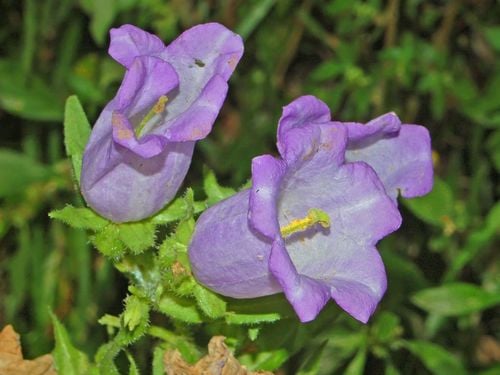
Campanula medium
Canterbury bells, Cup and saucer
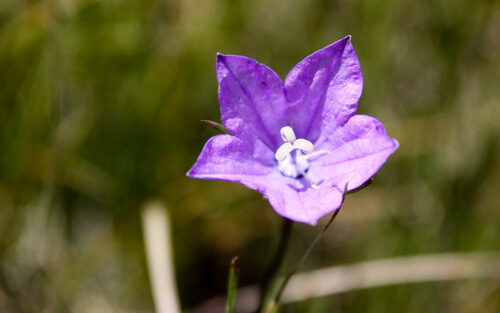
Campanula parryi
Parry's Bellflower, Idaho bellflower
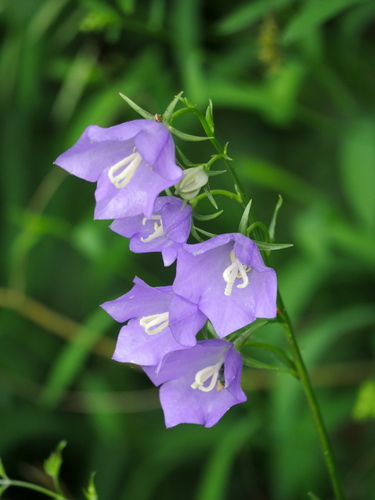
Campanula persicifolia
Harebell, Peach-leaf Bellflower
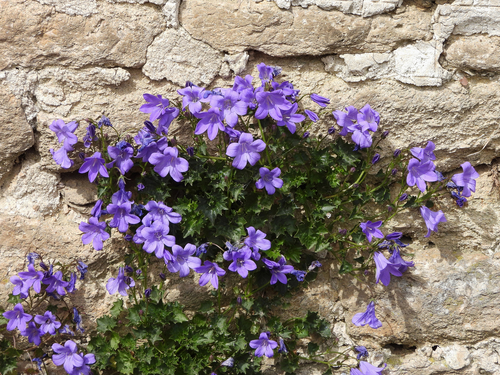
Campanula portenschlagiana
Adria bellflower
Campanula poscharskyana
Trailing bellflower, Poscharsky's Bellflower
Campanula prenanthoides
Campanitas