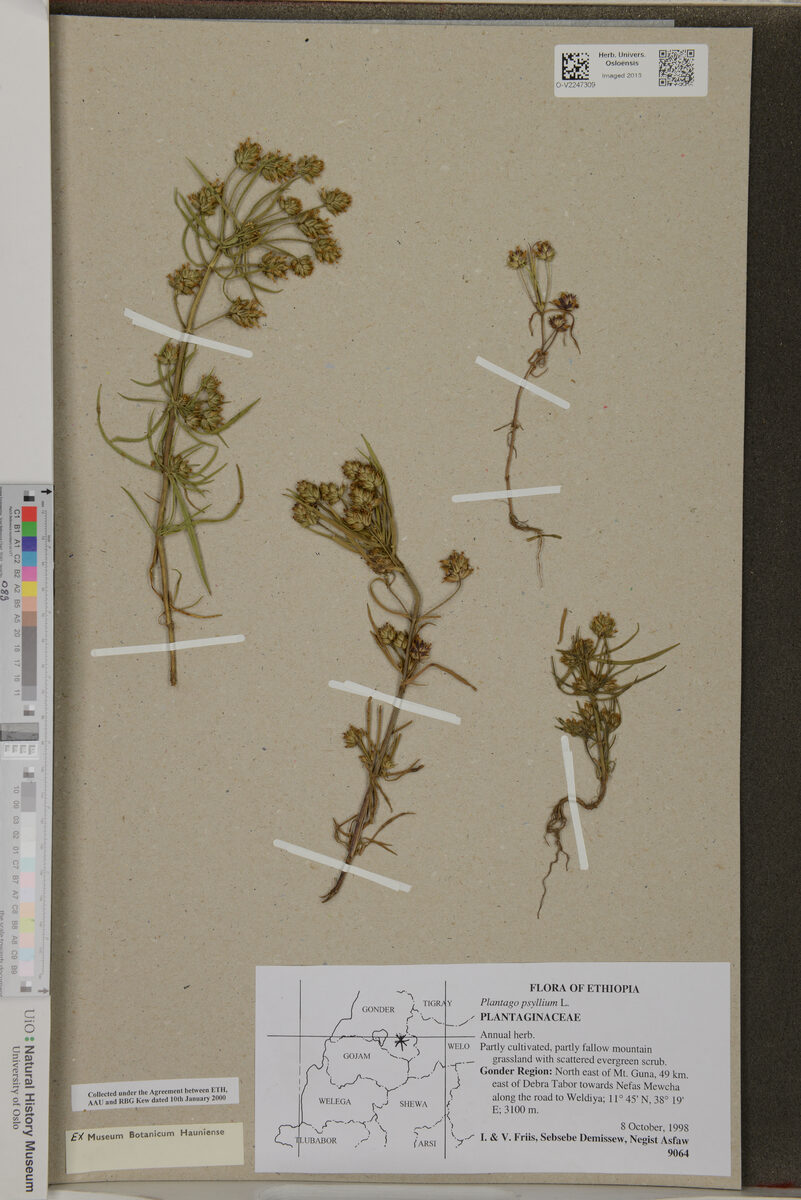
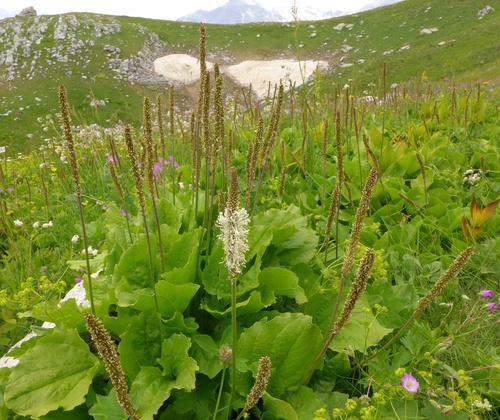
Plantago maritima
L.
Sea plantain
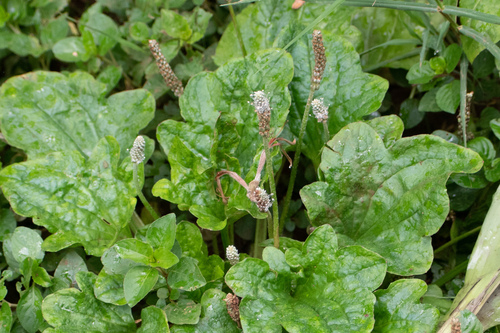
iNaturalist· cc0
no rights reserved, uploaded by Tatiana Gavrilova
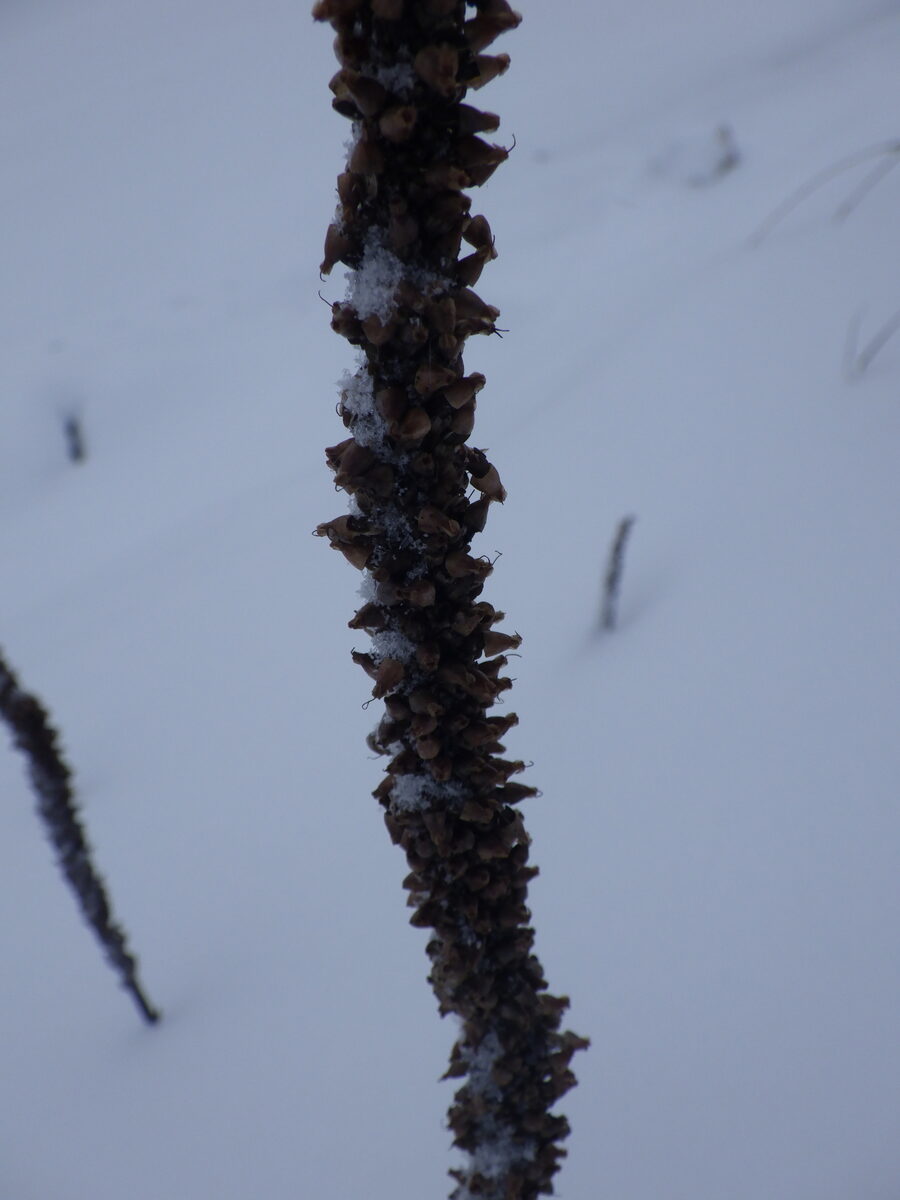
iNaturalist· cc-by-nc-sa
(c) c michael hogan, some rights reserved (CC BY-NC-SA), uploaded by c michael hogan
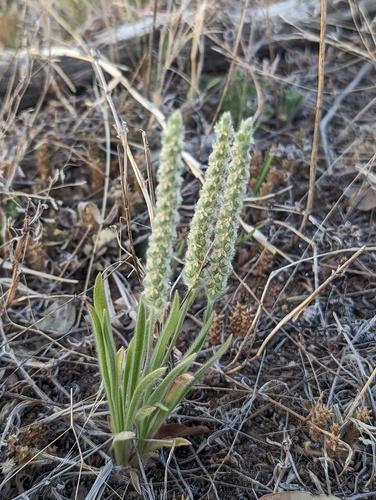
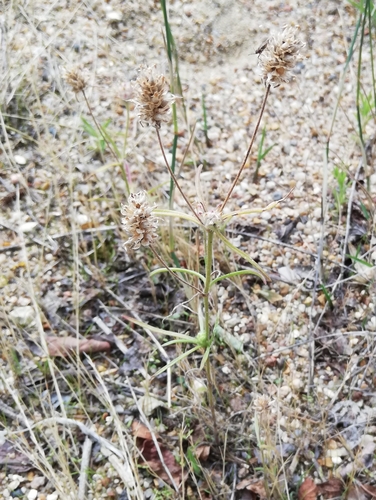
iNaturalist· cc-by-nc
(c) Alex Bairstow, some rights reserved (CC BY-NC), uploaded by Alex Bairstow
Summary
Source: WikipediaPlantago maritima, the sea plantain, seaside plantain or goose tongue, is a species of flowering plant in the plantain family Plantaginaceae. It has a subcosmopolitan distribution in temperate and Arctic regions, native to most of Europe, northwest Africa, northern and central Asia, northern North America, and southern South America.
Description
A low herb. It keeps growing from year to year. It has several rings of leaves. The leaves are thick and fleshy. They are narrow and rigid and do not have teeth. There are 3-5 veins. The flowers are brownish and 3 mm long. They are in long greenish spikes. These can be 3-7 cm long. The stalks do not have ridges.
Edible Uses
Young leaves can be eaten raw or cooked and have a delicious flavour, making this one of the better-tasting members of the genus. The leaves are fairly low in fibre and make an acceptable addition to a mixed salad. In Alaska, the leaves are canned for winter use. The seed can be eaten raw or cooked, or ground into a powder and used as a flour extender, though it is very small and tedious to harvest.
Traditional Uses
The leaves are boiled in soup. They are also eaten in salads. They are also pickled. The seeds can be eaten raw or cooked and can be ground into flour.
Medicinal Uses
The seeds contain up to 30% mucilage, which swells in the gut and acts as a bulk laxative while soothing irritated membranes. The seed husks alone are sometimes used in place of the whole seeds.
Distribution
It is a temperate plant. It grows in coastal habitats on salt marshes and sandy places. In Argentina it grows below 500 m above sea level.
Where It Grows
Africa, Alaska, Arctic, Argentina, Britain, Canada, Chile, Europe, Falklands, France, Greece, Ireland, Italy, Mediterranean, North Africa, North America, Norway, Portugal, Scandinavia, South America*, Spain, Sweden, Turkey, Türkiye, USA,
Cultivation
Succeeds in any moderately fertile soil in a sunny position.
Propagation
Sow seed in spring in a cold frame. Once seedlings are large enough to handle, prick them out into individual pots and plant out in early summer. If seed is plentiful, a direct outdoor sowing can be made in situ from mid to late spring.
Other Uses
This plant is an important food source for the caterpillars of many butterfly species and is a dynamic accumulator.
Other Information
In Alaska it is canned for winter use. It is foraged and eaten in restaurants in Sweden.
Notes
The plantains or Plantaginaceae are mostly in temperate regions. There are about 165 Plantago species.
Also Known As
Goose tongue, Strandkjempe
References (15)
- Blamey, M and Grey-Wilson, C., 2005, Wild flowers of the Mediterranean. A & C Black London. p 421
- Bowser, M., 2017, Handout on Edible Plants of the Kenai Peninsula. USFWS Kenai National Wildlife Refuge p 16
- Facciola, S., 1998, Cornucopia 2: a Source Book of Edible Plants. Kampong Publications, p 173
- Girard, N. J., 2020, Sustainable Foraging of Wild Edible Plants in Norway. A Biocultural Approach. M. Sc. thesis Norwegian University. p 133
- Hedrick, U.P., 1919, (Ed.), Sturtevant's edible plants of the world. p 507
Show all 15 references Hide references
- Heller, C. A., 1962, Wild Edible and Poisonous Plants of Alaska. Univ. of Alaska Extension Service. p 23
- http://nordicfood lab/org/blog/2102/9/wild-edible-plants-an-overview
- Irving, M., 2009, The Forager Handbook, A Guide to the Edible Plants of Britain. Ebury Press p 251
- Luczaj, L. et al, 2012, Wild food plant use in 21st century Europe: the disappearance of old traditions and the search for new cuisines involving wild edibles. Acta Soc Bot Pol 81(4):359–370
- Moerman, D. F., 2010, Native American Ethnobotany. Timber Press. p 417
- Plants for a Future database, The Field, Penpol, Lostwithiel, Cornwall, PL22 0NG, UK. http://www.scs.leeds.ac.uk/pfaf/
- Sp. pl. 1:114. 1753
- Uphof,
- Upson, R., & Lewis R., 2014, Updated Vascular Plant Checklist and Atlas for the Falkland Islands. Falklands Conservation and Kew.
- www.wildediblefood.com