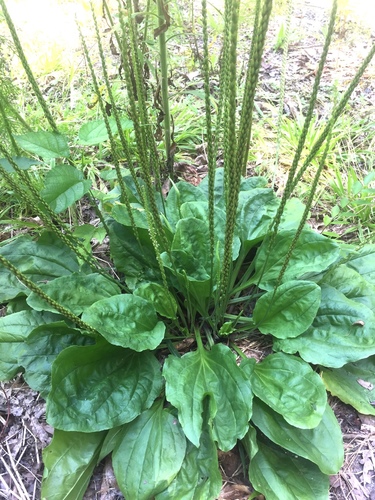
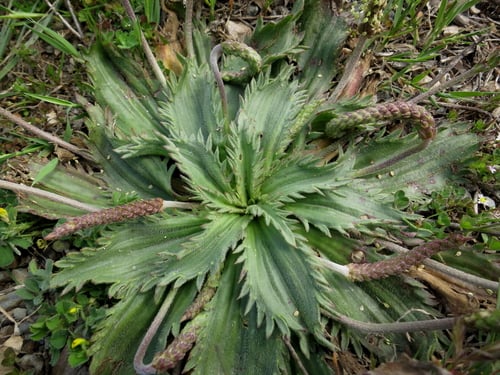
Plantago amplexicaulis
Cav.
Ispaghul
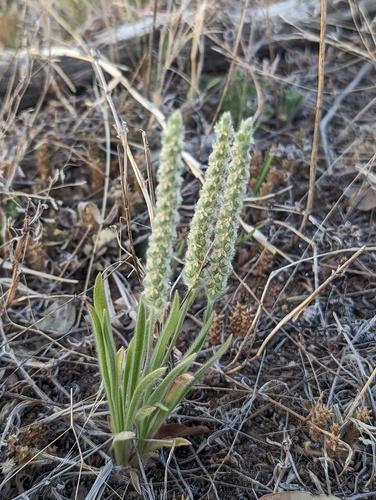
iNaturalist· cc-by-nc
(c) John Pereira, some rights reserved (CC BY-NC), uploaded by John Pereira
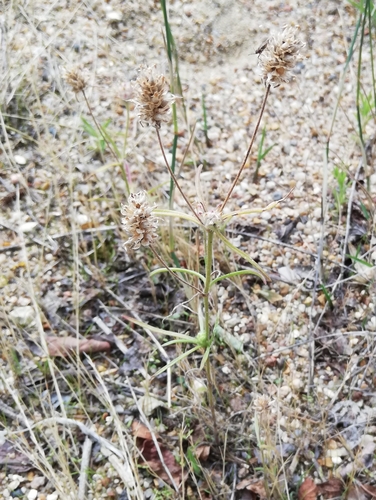
iNaturalist· cc-by-nc
(c) Ron Frumkin, some rights reserved (CC BY-NC), uploaded by Ron Frumkin
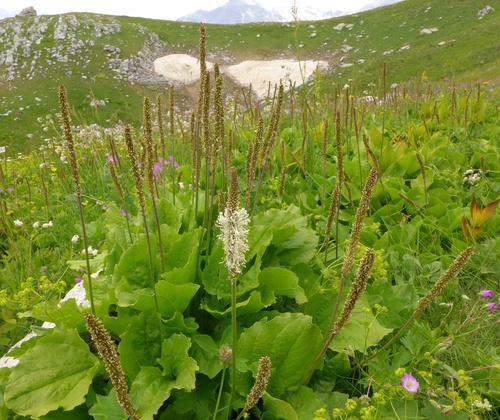
iNaturalist· cc-by-nc
(c) John Pereira, some rights reserved (CC BY-NC), uploaded by John Pereira
Summary
Source: WikipediaPlantago amplexicaulis is an annual plant of the family Plantaginaceae and the genus Plantago that grows in dry sand and deserts. Plantago amplexicaulis is a therophyte, a type of plant that survives as seed during unfavourable conditions. In the deserts where P. amplexicaulis lives, this results in the desert suddenly bursting into bloom after a rainstorm.
Description
A low herb. It is an annual plant and green. It has few hairs. The leaves are narrowly oval and broadest above the middle. There are 3-5 faint veins.
Edible Uses
Young leaves can be eaten raw or cooked.
Traditional Uses
The seeds are mixed with barley grains and processed into flour for flat bread or porridge.
This uses section is brief — help expand it
Medicinal Uses
The dried seeds are demulcent, febrifuge, ophthalmic, and pectoral, used in the treatment of intestinal complaints and as a demulcent in dysentery. Plantain seeds contain up to 30% mucilage, which swells in the gut and acts as a bulk laxative while soothing irritated membranes; sometimes the husks are used without the seeds. The leaves are astringent and said to be useful for intermittent fevers and pulmonary complaints. An infusion of the leaves is applied to the eyes in the treatment of ophthalmia.
Distribution
It is a Mediterranean climate plant. It grows in rocky places and on waste ground. It grows in the Sahara.
Where It Grows
Africa, Asia, Europe, India, Italy, Mediterranean, Morocco, North Africa, Pakistan, Spain,
Cultivation
Succeeds in any moderately fertile soil in a sunny position. This species is sold in local markets in India as a medicinal plant.
Propagation
Seed - sow in spring in a cold frame. Prick seedlings into individual pots when large enough to handle and plant out in early summer. A direct sowing outdoors in situ can be made in mid to late spring if sufficient seed is available.
Other Uses
None known
Notes
The plantains or Plantaginaceae are mostly in temperate regions. There are about 165 Plantago species.
Also Known As
Lyelma, Lesnab
References (6)
- Ambasta, S.P. (Ed.), 2000, The Useful Plants of India. CSIR India. p 466
- Blamey, M and Grey-Wilson, C., 2005, Wild flowers of the Mediterranean. A & C Black London. p 422
- Flora of Pakistan. www.eFloras.org
- Icon. 2(1):22, t. 125. 1793
- Nassif, F., & Tanji, A., 2013, Gathered food plants in Morocco: The long forgotten species in Ethnobotanical Research. Life Science Leaflets 3:17-54
Show all 6 references Hide references
- Plants for a Future database, The Field, Penpol, Lostwithiel, Cornwall, PL22 0NG, UK. http://www.scs.leeds.ac.uk/pfaf/