Plagiobothrys fulvus var. campestris
(Greene) I. M. Johnston
Fulvous popcornflower
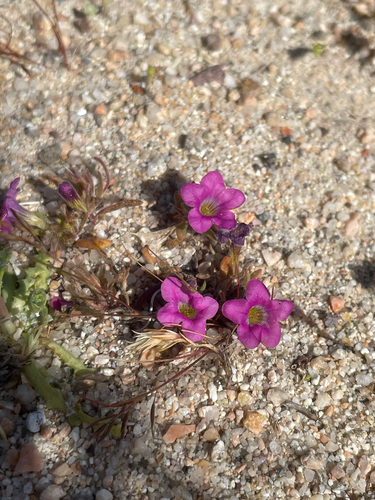
iNaturalist· cc-by
(c) Don Loarie, some rights reserved (CC BY), uploaded by Don Loarie
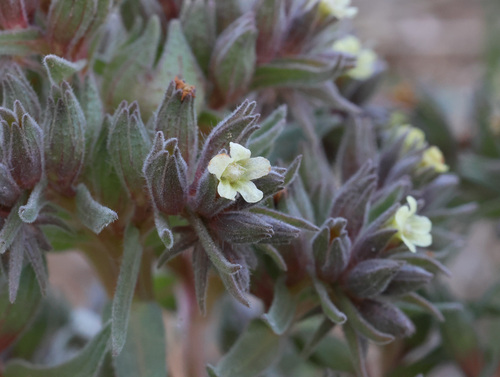
iNaturalist· cc-by
(c) Don Loarie, some rights reserved (CC BY), uploaded by Don Loarie
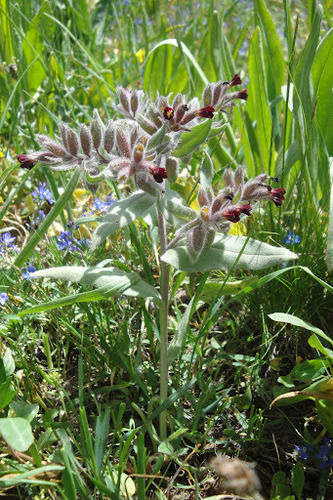
iNaturalist· cc-by
(c) Matt Berger, some rights reserved (CC BY), uploaded by Matt Berger
Summary
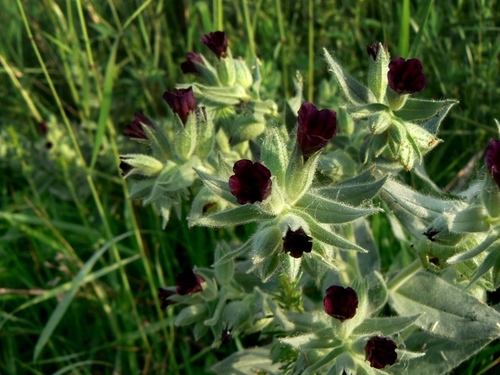
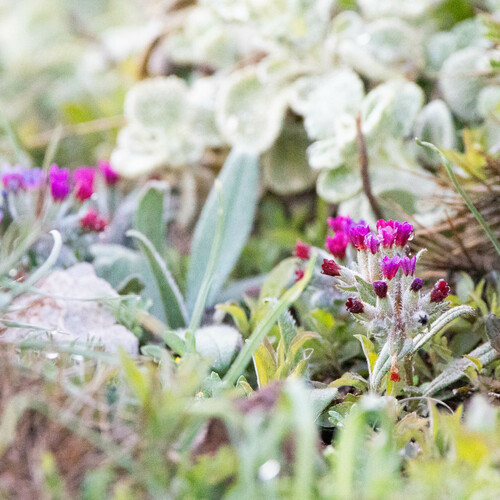
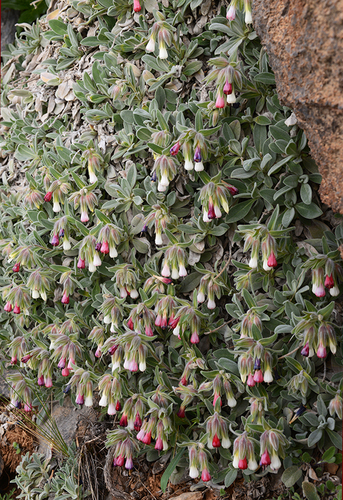
Source: WikipediaPlagiobothrys fulvus is a species of flowering plant in the borage family known by the common names field popcornflower or fulvous popcornflower. It is native to California and Oregon in the United States, as well as Chile. It is a common wildflower in several types of habitat, including grasslands. It is an annual herb with a very hairy stem growing erect to a maximum height around 60 centimeters. The leaves occur in a rosette around the base of the stem and along the stem's length in an alternate arrangement. They are coated in hairs and leak purple juice when crushed. The inflorescence is a curving series of small flowers. Each flower has a white corolla under half a centimeter wide and a calyx of sepals which are slightly longer than the corolla. The fruit is a pair or quartet of tiny angular ribbed nutlets.
Description
A temperate herb in the Boraginaceae family, commonly known as fulvous popcornflower.
This description is brief — help expand it
Edible Uses
The seeds are winnowed, parched, and eaten as flour, or used to make cakes. The young shoots and flowers are eaten as a sweet food.
Traditional Uses
The seeds are used to make cakes. The seeds are winnowed, parched and the flour is eaten dry. The young shoots and flowers are used as a sweet food.
Distribution
It is a temperate plant.
Where It Grows
North America, USA,
Notes
There are about 100 Plagiobotrys species.
Synonyms
References (3)
- Anderson, M. K., 2012, Edible Seeds and Grains of California Tribes and the Klamath Tribe of Oregon in the Phoebe Apperson Hearst Museum of Anthropology Collections, University of California, Berkeley. USDA p 11
- Beckstrom-Sternberg, Stephen M., and James A. Duke. "The Foodplant Database." http://probe.nalusda.gov:8300/cgi-bin/browse/foodplantdb.(ACEDB version 4.0 - data version July 1994)
- Moerman, D. F., 2010, Native American Ethnobotany. Timber Press. p 415