Ehretia acuminata
R. Br.
Koda tree, Silky Ash, Heliotrope tree
iNaturalist· cc0
no rights reserved, uploaded by 葉子
iNaturalist· cc-by-nc
(c) tomato777, some rights reserved (CC BY-NC)
iNaturalist· cc-by
(c) 潘立傑 LICHIEH_PAN, some rights reserved (CC BY)
Summary
Source: WikipediaEhretia acuminata is a deciduous tree native to regions from India to Japan and south to eastern Australia. It was first described in 1810 and has the conservation status of least concern. In Australia it is commonly known as koda.
Description
A medium sized to tall tree. It can grow 10-25 m tall and spread 5-12 m across. It loses its leaves during the year. The stem has deep channels along it. The bark is light grey and develops cracks along it. The young leaves are light green. The leaves are 7-15 cm long by 3-6 cm wide. They are dark green on top and paler underneath. They are oval and thin textured. The edges of the leaves have coarse teeth. The flowers are about 0.5 cm across. They are white and have a sweet scent. The flowers occur on branched clusters 5-20 cm long. These can be at the ends of branches or in the axils of leaves. The fruit is 4-6 mm across. It is round and orange and splits open when ripe. The fruit occur in large numbers. The ripe fruit is edible.
Edible Uses
The fruit is eaten raw. It is roughly pea-sized — about 4mm in diameter — and is insipidly sweet when fully ripe. Unripe fruit is sometimes used as a pickle.
Traditional Uses
The ripe fruit are eaten mostly raw. The unripe fruit are pickled in India. The leaves are used in herbal drinks.
This uses section is brief — help expand it
Medicinal Uses
The juice of the bark is used in the treatment of fevers.
Distribution
A tropical plant. It grows naturally in rainforests and moist forests in tropical and subtropical areas. It suits humid locations. Often they occur along the banks of streams. It requires well drained soil. In Western China it grows up to 1500 m altitude. It cannot stand frost. Trees can tolerate sun from an early stage. It can grow in arid places.
Where It Grows
Africa, Asia, Australia, Bangladesh, Bhutan, China, East Africa, East Timor, Himalayas, India, Indochina, Indonesia, Japan, Korea, Laos, Madagascar, Myanmar, Nepal, Northeastern India, Pacific, Pakistan, Papua New Guinea, PNG, Philippines, SE Asia, Taiwan, Thailand, Timor-Leste, Vietnam,
Cultivation
Prefers a moderately fertile well-drained sandy loam in a sunny position. Tolerates calcareous soils. Requires a sheltered position. Plants are shade tolerant in continental climates but they require more sun in maritime areas in order to ripen the wood. Rich fertile soils encourage soft sappy growth which is then more susceptible to winter damage. The young growth in spring, even on mature plants, is frost-tender and so it is best to grow the plants in a position sheltered from the early morning sun. A tree at Kew was 6 metres tall in 1989. This species is much confused with E. ovalifolia.
Propagation
No specific information is available for this species. It is suggested to sow seed as soon as it is ripe in a greenhouse, or to sow stored seed in late winter or early spring. Once seedlings are large enough to handle, prick them out into individual pots and grow on in the greenhouse for at least their first winter. Plant out into permanent positions in late spring or early summer, after the last expected frosts. Cuttings of half-ripe wood can be taken in July or August and rooted in a frame.
Other Uses
The wood is light, tough, soft, and easily worked, and is used for making carrying poles.
Production
It is a fast growing tree. In Australia fruit mature March to April from trees flowering in September to November. In NE India plants flower and fruit March to April.
Other Information
The fruit are eaten especially by children. Young leaves are exported to mix with tea.
Notes
There are about 50-75 Ehretia species. They mostly grow in the tropics and subtropics.
Synonyms
Also Known As
Anonang, Arjun, Bol-artok, Bual, Chelwan-arong, Chillay, Churnwood, Dieng-basier, Gual, Hou ke shu, Jasim-jola, Kala huja, Kalthaun, Kath guwa, Kendal, Koda, Kom, Kula-aja, Kur-kuria, Lahichan, Nalshina, Narra, Pania, Panyan, Petthin, Pohon ehretia koda, Pudila, Punia, Punna, Punyan, Puran, Shaursi, Susang esing, Taw-petsut, Uzalm Pojar, Zibyin, Wu-lan-tzu
References (43)
- Altschul, S.V.R., 1973, Drugs and Foods from Little-known Plants. Notes in Harvard University Herbaria. Harvard Univ. Press. Massachusetts. no. 3557
- Ambasta, S.P. (Ed.), 2000, The Useful Plants of India. CSIR India. p 190
- Azam, F. M. S., et al, 2014, Are Famine Food Plants Also Ethnomedicinal Plants? An Ethnomedicinal Appraisal of Famine Food Plants of Two Districts of Bangladesh. Evidence-Based Complementary and Alternative Medicine Volume 2014, Article ID 741712, 28 pages
- Bandyopadhyay, S. et al, 2009, Wild edible plants of Koch Bihar district, West Bengal. Natural Products Radiance 8(1) 64-72
- Bodkin, F., 1991, Encyclopedia Botanica. Cornstalk publishing, p 375
Show all 43 references Hide references
- Caton, J.M. & Hardwick, R. J., 2016, Field Guide to Useful Native Plants from Temperate Australia. Harbour Publishing House. p 194
- Cherikoff V. & Isaacs, J., The Bush Food Handbook. How to gather, grow, process and cook Australian Wild Foods. Ti Tree Press, Australia p 195, 199
- Cooper W & Cooper W T, 1994, Fruits of the Rain Forest. RD Press p 104
- Cooper, W. and Cooper, W., 2004, Fruits of the Australian Tropical Rainforest. Nokomis Editions, Victoria, Australia. p 94
- Cribb, A.B. & J.W., 1976, Wild Food in Australia, Fontana. p 75
- Dobriyal, M. J. R. & Dobriyal, R., 2014, Non Wood Forest Produce an Option for Ethnic Food and Nutritional Security in India. Int. J. of Usuf. Mngt. 15(1):17-37
- Elliot, W.R., & Jones, D.L., 1984, Encyclopedia of Australian Plants suitable for cultivation. Vol 3. Lothian. p 382
- Facciola, S., 1998, Cornucopia 2: a Source Book of Edible Plants. Kampong Publications, p 93
- Flora of Pakistan. (As Ehretia serrata)
- GUPTA,
- Hedrick, U.P., 1919, (Ed.), Sturtevant's edible plants of the world. p 285
- Heywood, V.H., Brummitt, R.K., Culham, A., and Seberg, O. 2007, Flowering Plant Families of the World. Royal Botanical Gardens, Kew. p 66 (Family)
- Hibbert, M., 2002, The Aussie Plant Finder 2002, Florilegium. p 91
- http://palaeoworks.anu.edu.au/Nuno_PhD/04.pdf
- Jeeva, S., 2009, Horticultural potential of wild edible fruits used by the Khasi tribes of Meghalaya. Journal or Horticulture and Forestry Vol. 1(9) pp. 182-192
- Jones D, L, 1986, Ornamental Rainforest Plants in Australia, Reed Books, p 211
- Krishen P., 2006, Trees of Delhi, A Field Guide. DK Books. p 63
- Lazarides, M. & Hince, B., 1993, Handbook of Economic Plants of Australia, CSIRO. p 87
- Lacuna-Richman, C., 2006, The use of non-wood forest products by migrants in a new settlement: experiences of a Visayan community in Palawan, Philippines. Journal of Ethnobiology and Ethnomedicine. 2:36
- Molyneux, B & Forrester, S., 1997, The Austraflora A-Z of Australian Plants. Reed. p 76
- Nicholson, N & H., 1996, Australian Rainforest Plants, Terania Rainforest Publishing. NSW. p 27
- Pasha, M. K. & Uddin, S. B., 2019, Minor Edible Fruits of Bangladesh. Bangladesh J. Plant Taxon. 26(2): 299–313 (As Ehretia serrata)
- Patiri, B. & Borah, A., 2007, Wild Edible Plants of Assam. Geethaki Publishers. p 85 (As Ehretia acuminata var. serrata)
- Plants for a Future database, The Field, Penpol, Lostwithiel, Cornwall, PL22 0NG, UK. http://www.scs.leeds.ac.uk/pfaf/
- Prodr. 497. 1810
- PROSEA (Plant Resources of South East Asia) handbook, Volume 2, 1991, Edible fruits and nuts.
- Royal Botanic Gardens, Kew (1999). Survey of Economic Plants for Arid and Semi-Arid Lands (SEPASAL) database. Published on the Internet; http://www.rbgkew.org.uk/ceb/sepasal/internet [Accessed 4th April 2011]
- Sarma, H., et al, 2010, Updated Estimates of Wild Edible and Threatened Plants of Assam: A Meta-analysis. International Journal of Botany 6(4): 414-423
- Sawian, J. T., et al, 2007, Wild edible plants of Meghalaya, North-east India. Natural Product Radiance Vol. 6(5): p 415
- Singh, H.B., Arora R.K.,1978, Wild edible Plants of India. Indian Council of Agricultural Research, New Delhi. p 56
- Sosef, M. S. M., Hong, L. T., & Prawirohatmodjo, S., (Eds.), 1998, Timber tree: Lesser-known timbers. Plant Resources of South-East Asia, 5(3), p 197
- Sukarya, D. G., (Ed.) 2013, 3,500 Plant Species of the Botanic Gardens of Indonesia. LIPI p 255
- Swaminathan, M.S., and Kochnar, S.L., 2007, An Atlas of Major Flowering Trees in India. Macmillan. p 187 (As Ehretia serrata)
- Townsend, K., 1994, Across the Top. Gardening with Australian Plants in the tropics. Society for Growing Australian Plants, Townsville Branch Inc. p 173
- Upreti, K., et al, 2010, Diversity and Distribution of Wild Edible Fruit Plants of Uttarakhand. Bioversity Potentials of the Himalaya. p 168
- Williams, J.B., Harden, G.J., and McDonald, W.J.F., 1984, Trees and shrubs in rainforests of New South Wales and Southern Queensland. Univ. of New England, Armidale. p 75
- World Checklist of Useful Plant Species 2020. Royal Botanic Gardens, Kew
- Zhu Ge-ling; Harald Riedl, Rudolf Kamelin, BORAGINACEAE, Flora of China
More from Boraginaceae
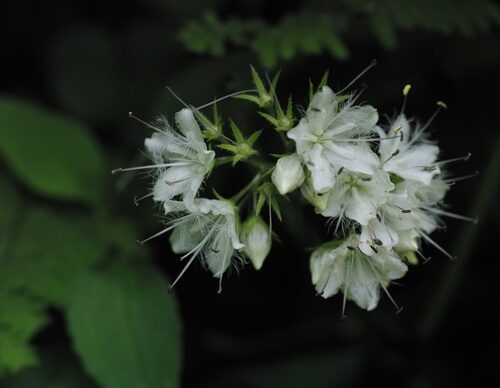
Hydrophyllum canadense
John's Cabbage, Bluntleaf waterleaf
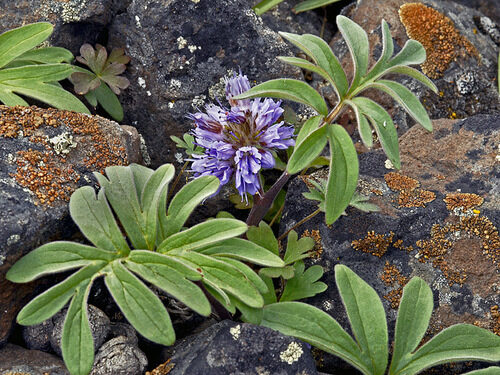
Hydrophyllum capitatum
Cat's Breeches, Ballhead waterleaf, Alpine waterleaf, Thompson's waterleaf
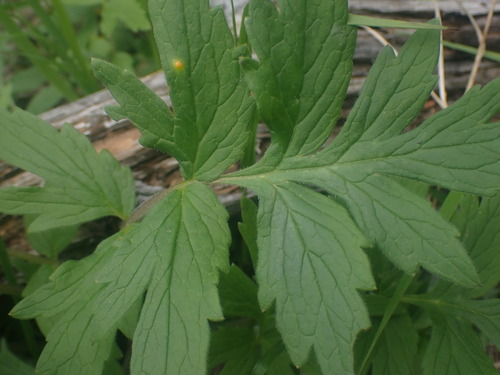
Hydrophyllum fendleri var. albifrons
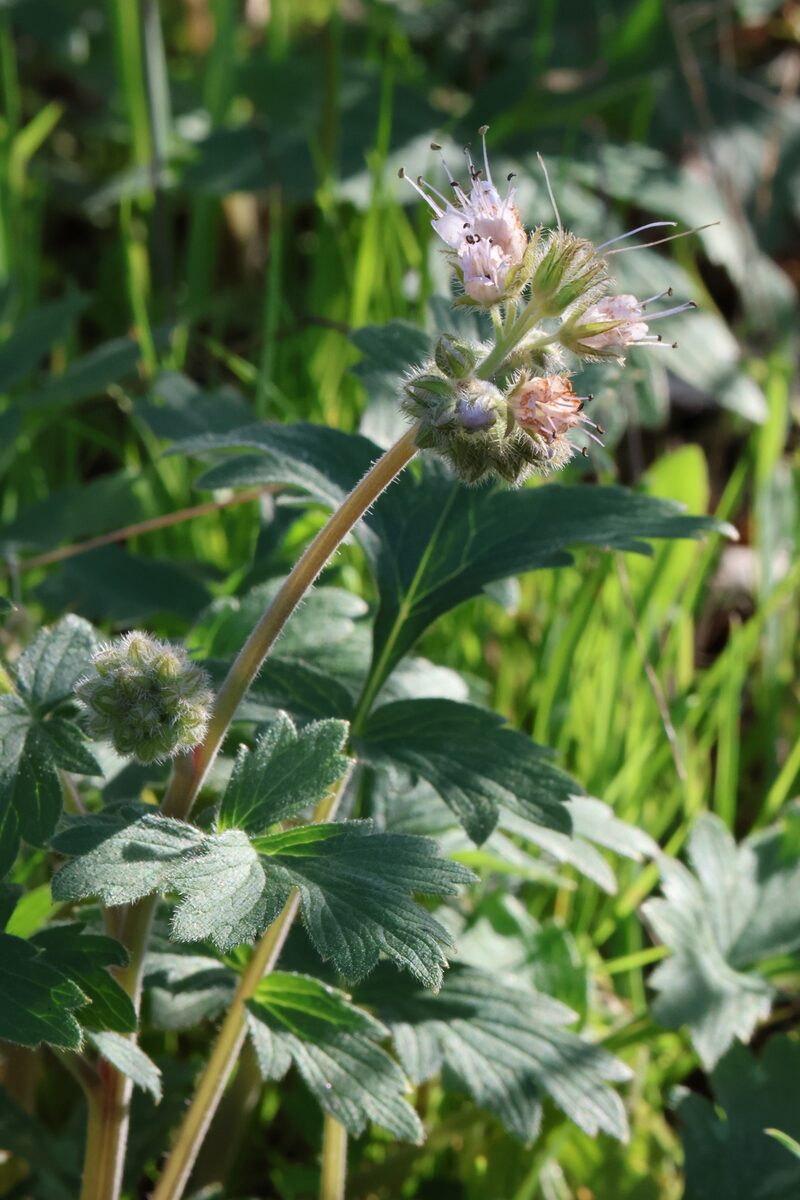
Hydrophyllum occidentale - (Watson.)A.Gray.
Western Waterleaf
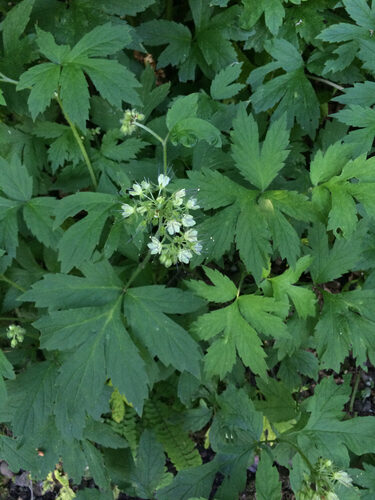
Hydrophyllum tenuipes
Pacific Waterleaf
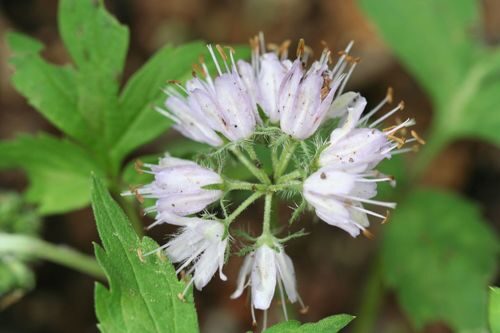
Hydrophyllum virginianum
Virginia Waterleaf, Eastern waterleaf