Ehretia anacua
(Teran & Berland.) I. M. Johnst.
Knock-away, Sugarberry, Anacua
iNaturalist· cc-by-nc
(c) Carlos G Velazco-Macias, some rights reserved (CC BY-NC)
iNaturalist· cc-by-nc
(c) Carlos G Velazco-Macias, some rights reserved (CC BY-NC)
iNaturalist· cc-by-nc
(c) Carlos G Velazco-Macias, some rights reserved (CC BY-NC)
Summary
Source: WikipediaEhretia anacua is medium-sized tree found in eastern Mexico and southern Texas in the United States. It is a member of the [family Ehretiaceae. One of its common names, anacua, is derived from the Mexican Spanish word anacahuite, as is that of the related Cordia boissieri, the anacahuita. That word in turn is derived from the Nahuatl words āmatl, meaning "paper," and cuahuitl, meaning "tree," possibly referring to the bark. It is also known as knockaway, a corruption of anacua, and sandpaper tree. Alternate spellings are anaqua and anachua.
Description
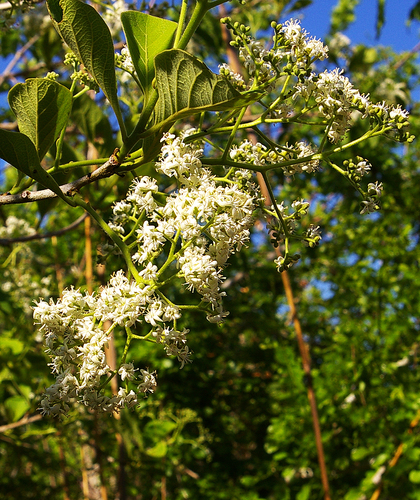
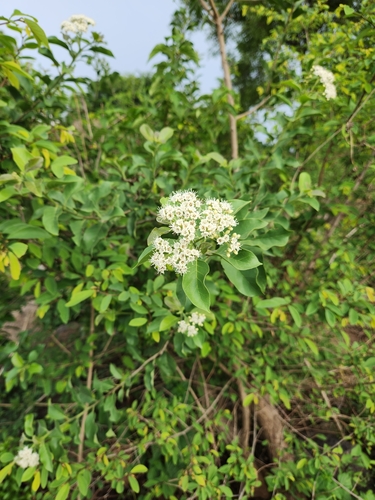
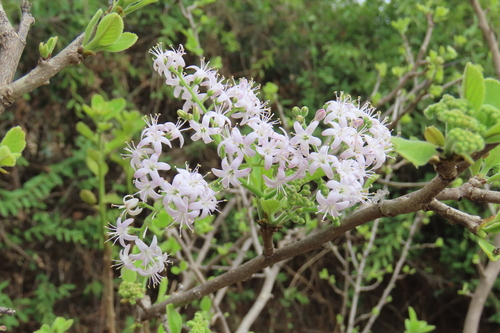
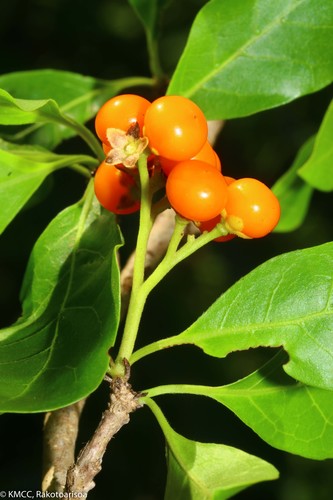
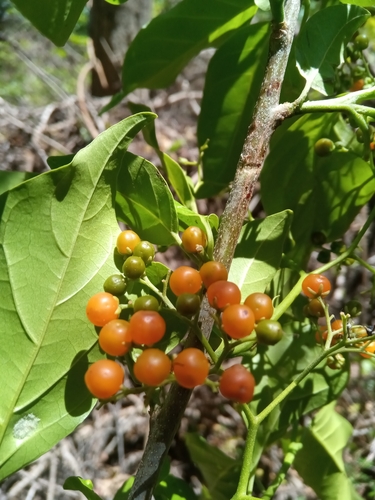
A small tree. It grows 7-15 m tall. The bark is reddish-brown with narrow furrows and peeling in scales. The leaves are dark green and oval. The flowers are in groups at the ends of branches. The fruit are the size of a pea and yellow. They have a thin pulp. The pulp is edible. There are 2 stones with 2 seeds in each.
Edible Uses
The fruit is eaten raw. It is sweet and fairly juicy but has a thin flesh, and measures about 8mm in diameter.
Traditional Uses
The pulp of the fruit is eaten raw or cooked.
This uses section is brief — help expand it
Medicinal Uses
No medicinal uses are known for this plant.
Distribution
It is a subtropical plant. It grows larger along river valleys. It grows from sea level to 1,000 m above sea level. Dormant plants can tolerate cold temperatures. It is best in a fertile, well-drained soil.
Where It Grows
Asia, Central America*, Indonesia, Mexico, North America, SE Asia, USA,
Cultivation
Plants can be grown by seeds.
Propagation
No specific information is available for this species. It is suggested to sow seed as soon as it is ripe in a greenhouse, or to sow stored seed in late winter or early spring. Once seedlings are large enough to handle, prick them out into individual pots and grow on in the greenhouse for at least their first winter. Plant out into permanent positions in late spring or early summer, after the last expected frosts. Cuttings of half-ripe wood can be taken in July or August and rooted in a frame. Suckers can be divided during the growing season.
Other Uses
The wood is heavy, hard, not particularly strong, close-grained, and difficult to split. It is used for tool handles, yokes, axles, wheel spokes, and similar applications.
Notes
There are about 50 Ehretia species.
Synonyms
Also Known As
Anacua, Manzanilla, Pohon ehretia amplas
References (14)
- Beckstrom-Sternberg, Stephen M., and James A. Duke. "The Foodplant Database." http://probe.nalusda.gov:8300/cgi-bin/browse/foodplantdb.(ACEDB version 4.0 - data version July 1994) (As Ehretia elliptica)
- Bennett, M. 2003. Pulmonarias and the Borage family. (Pulmonaria) 202.
- Contributions from the Gray Herbarium of Harvard University 70: 89. 1924
- Estrada-Castillon, E., et al, 2014, Ethnobotany in Rayones, Nuevo Leon, Mexico. Journal of Ethnobiology and Ethnomedicine, 10:62
- Fouqué, A. 1972. Espèces fruitières d'Amérique tropicale. Institut français de recherches fruitierès outre-mer (ifac) (As Ehretia elliptica)
Show all 14 references Hide references
- Hedrick, U.P., 1919, (Ed.), Sturtevant's edible plants of the world. p 285 (As Ehretia elliptica)
- Kermath, B. M., et al, 2014, Food Plants in the Americas: A survey of the domesticated, cultivated and wild plants used for Human food in North, Central and South America and the Caribbean. On line draft. p 330 (Also as Ehretia elliptica)
- Martin, F. W., et al, 1987, Perennial Edible Fruits of the Tropics. USDA Handbook 642 p 93 (As Ehretia elliptica)
- Piedra-Malagón, E. M. et al, 2022, Edible native plants of the Gulf of Mexico Province. Biodiversity Data Journal 10: e80565 p 14
- Prodr. 9:503. 1845 (As Ehretia elliptica)
- Segura, S. et al, 2018, The edible fruit species in Mexico. Genet Resour Crop Evol (2018) 65:1767–1793
- Smith, N., Mori, S.A., et al, 2004, Flowering Plants of the Neotropics. Princeton. p 62 (As Ehretia elliptica)
- Sukarya, D. G., (Ed.) 2013, 3,500 Plant Species of the Botanic Gardens of Indonesia. LIPI p 255
- World Checklist of Useful Plant Species 2020. Royal Botanic Gardens, Kew