Pithecellobium unguis-cati
(L.) Benth.
Cat's claw, Black bead tree
iNaturalist· cc-by-nc
(c) Chuck Sexton, some rights reserved (CC BY-NC), uploaded by Chuck Sexton
iNaturalist· cc-by
(c) Alison Northup, some rights reserved (CC BY), uploaded by Alison Northup
iNaturalist· cc-by
(c) Katja Schulz, some rights reserved (CC BY)
Summary
Source: WikipediaPithecellobium unguis-cati is a species of plant in the family Fabaceae. It ranges from Mexico through Central America and the Caribbean to Colombia, Venezuela, and Florida. It is known by many synonyms. The IUCN Red List lists a synonym, Pithecellobium saxosum, as endangered, with a distribution in Guatemala and Honduras.
Description
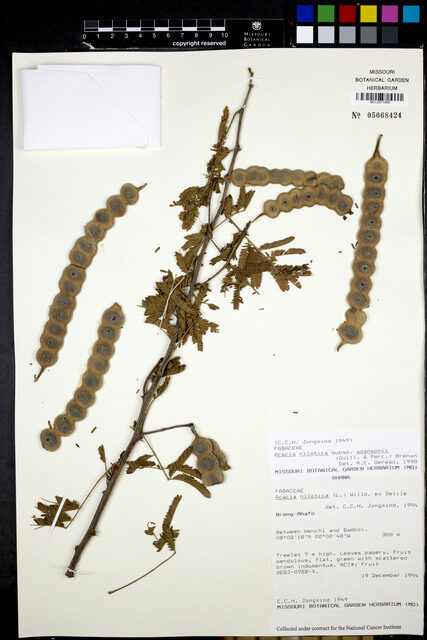
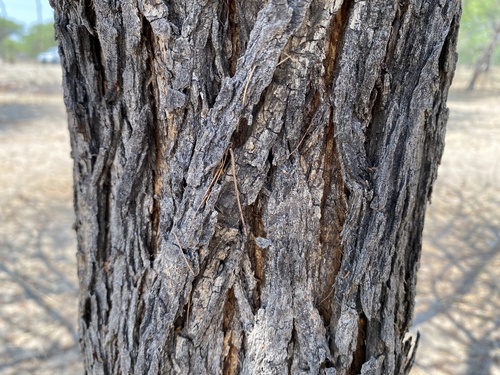
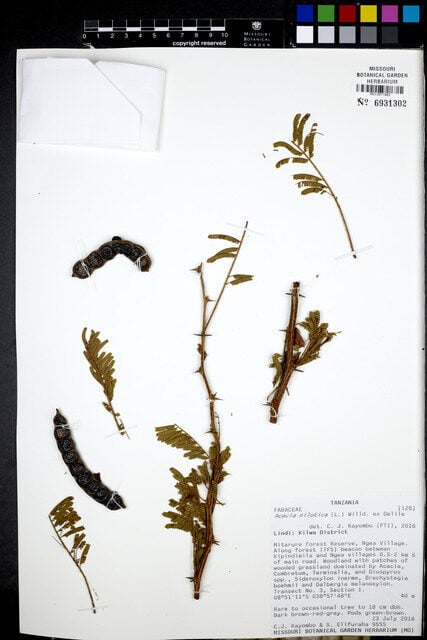
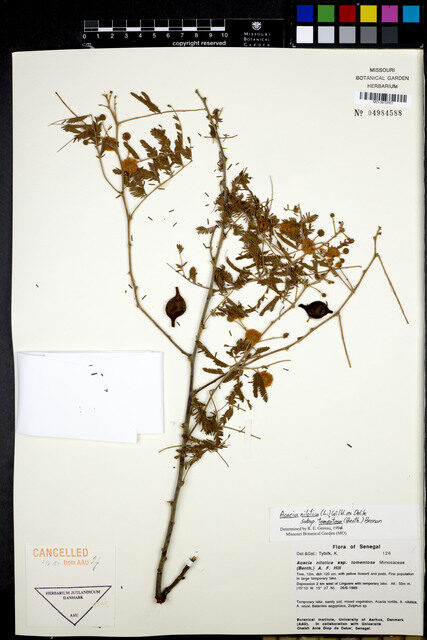
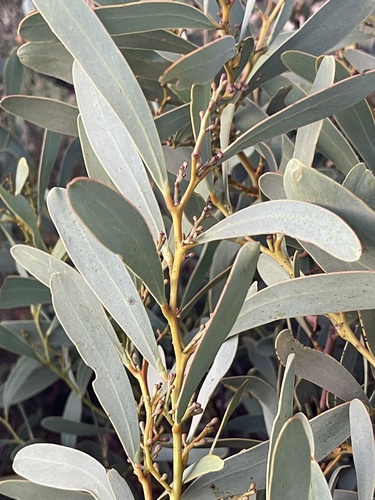
A small shrub or small tree. It grows 20 m tall. It is very spiny. The trunk can be 1.2 m across. It often has a low branches and a wide crown. The bark is brown and cracked. The leaves are alternate and compound. The leaves are twice divided. There are 4 leaflets about 3-5 cm long. The flowers are white on a spike. The fruit is a pod 5-10 cm long. It is curved or coiled. It splits open when ripe. The seeds are black and shiny with a fleshy aril of layer around them.
Edible Uses
The fleshy pulp surrounding the seeds is occasionally eaten.
Traditional Uses
The pulp around the seeds is eaten.
This uses section is brief — help expand it
Medicinal Uses
The bark is said to be febrifuge. A decoction is used as a wash.
Distribution
A tropical plant. It grows in dry areas. It grows on sand dunes and coastal strands. It can grow up to 450 m above sea level.
Where It Grows
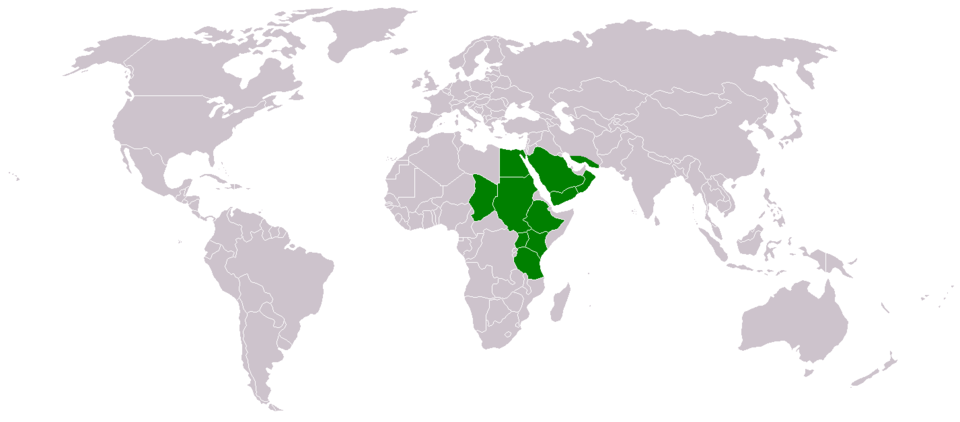
Africa, Anguilla, Antilles, Asia, Bahamas, Barbados, Belize, British Indian Ocean Terr., BIOT, Burundi, Caribbean, Central America*, Colombia, Costa Rica, Curacao, Dominican Republic, East Africa, El Salvador, French Guiana, Ghana, Grenadines, Guatemala, Guyana, Haiti, Honduras, India, Indonesia, Jamaica, Martinique, Mauritius, Mexico*, Myanmar, Nicaragua, North America, Panama, Puerto Rico, Reunion, SE Asia, Seychelles, South America, St. Kitts and Nevis, Tanzania, Trinidad, USA, Venezuela, Virgin Islands, West Africa, West Indies,
Cultivation
Plants can be grown from seeds. It can be clipped and pruned.
Other Uses
The seeds are used in ornamental seed work. A useful hedge plant, since it is not eaten by livestock.
Other Information
It is only eaten occasionally.
Notes
Also as Mimosaceae.
Synonyms
Also Known As
Aranca pellejo, Black bead, Bread & Cheese, Campeche, Dinde, Espino carbon, Espinuelo, Kanpes, Pohon cakar kucing, Yaga dabaruida
References (14)
- Ambasta, S.P. (Ed.), 2000, The Useful Plants of India. CSIR India. p 464
- Burkill, I.H., 1966, A Dictionary of the Economic Products of the Malay Peninsula. Ministry of Agriculture and Cooperatives, Kuala Lumpur, Malaysia. Vol 2 (I-Z) p 1793
- Condit, R., et al, 2011, Trees of Panama and Costa Rica. Princeton Field Guides. p 206
- Grandtner, M. M., 2008, World Dictionary of Trees. Wood and Forest Science Department. Laval University, Quebec, Qc Canada. (Internet database http://www.wdt.qc.ca)
- Grandtner, M. M. & Chevrette, J., 2013, Dictionary of Trees, Volume 2: South America: Nomenclature, Taxonomy and Ecology. Academic Press p 511
Show all 14 references Hide references
- Hedrick, U.P., 1919, (Ed.), Sturtevant's edible plants of the world. p 506
- Kermath, B. M., et al, 2014, Food Plants in the Americas: A survey of the domesticated, cultivated and wild plants used for Human food in North, Central and South America and the Caribbean. On line draft. p 669
- London J. Bot. 3:200. 1844
- Menninger, E.A., 1977, Edible Nuts of the World. Horticultural Books. Florida p 99
- Plants of Haiti Smithsonian Institute http://botany.si.edu/antilles/West Indies
- Roa, J. A. G. & Boada, D. S. G., 2018, Fundación para el Fortalecimiento de la Fruticultura y Plantas Alimenticias no Convencionales en Colombia.
- Segura, S., et al, 2018, The edible fruit species in Mexico. Genet Resour Crop Evol (2018) 65:1767–1793
- Sukarya, D. G., (Ed.) 2013, 3,500 Plant Species of the Botanic Gardens of Indonesia. LIPI p 455
- Topp, J. M. W., 1988, An Annotated Check List of the Flora of Diego Garcia, British Ocean Territory. Atoll Research Bulletin No. 313