Pistacia atlantica
Desf.
Atlantic pistachio
iNaturalist· cc-by-nc
(c) Eyal Korin, some rights reserved (CC BY-NC), uploaded by Eyal Korin
iNaturalist· cc-by
(c) James Hardcastle, some rights reserved (CC BY), uploaded by James Hardcastle
iNaturalist· cc-by-nc
(c) Stefano Doglio, some rights reserved (CC BY-NC), uploaded by Stefano Doglio
Summary
Source: WikipediaPistacia atlantica is a species of pistachio tree known by the English common name Mt. Atlas mastic tree, Atlas pistachio, Atlantic pistacio, Atlantic terebinth, wild pistachio, and Cyprus turpentine tree. P. atlantica has three subspecies or varieties which have been described as atlantica, cabulica, and mutica. According to molecular phylogenetic studies, P. atlantica subsp. kurdica is actually a separate species, Pistacia eurycarpa.
Description
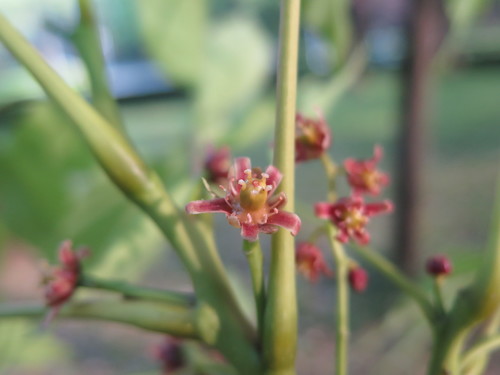
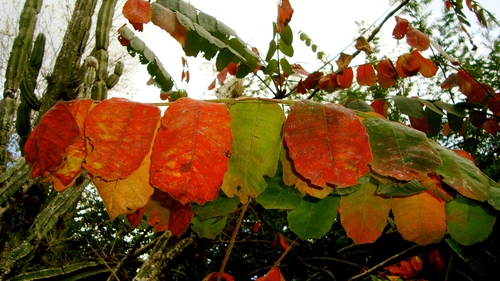
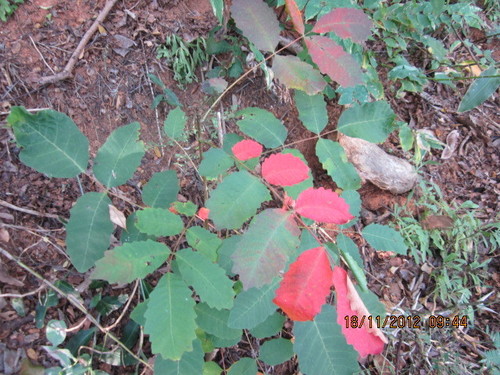
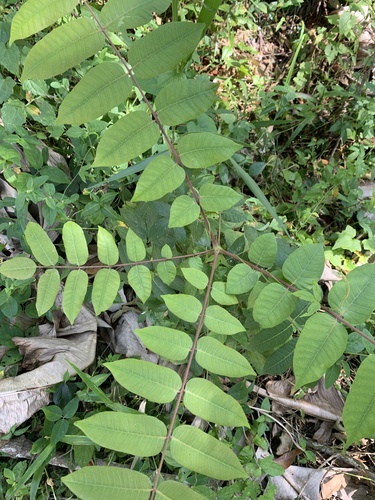
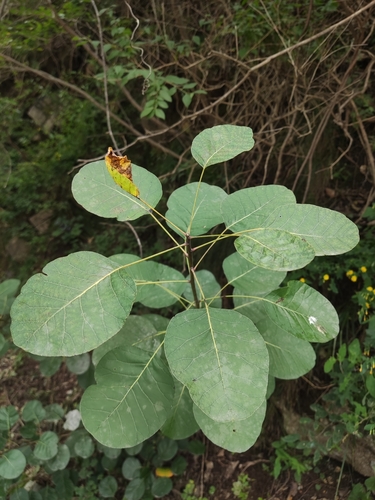
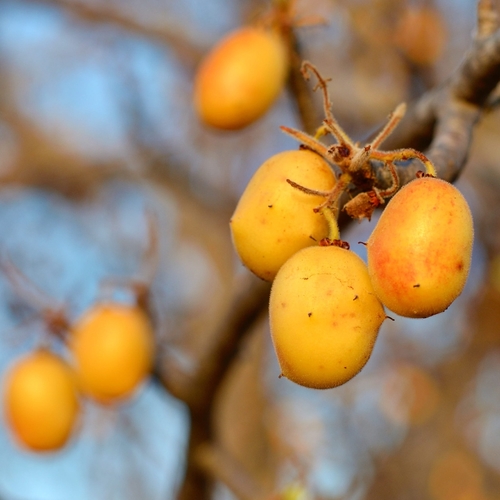
It is like Terebinth. A small deciduous tree. It grows 5-10 m high. The leaves have hairy stalks. The leaf stalk has narrow wings. The leaflets are sword shaped. The fruit are fleshy and 5-7 mm long by 4-6 mm wide. They are oval.
Edible Uses
The fruit can be eaten raw and has a turpentine flavour; each fruit is about 8mm long and 6mm wide and contains a single seed. An excellent edible oil is obtained from the seed.
Traditional Uses
The fruit are eaten raw. The dried fruit are added to parched wheat. The nuts are crushed to produce an edible oil. The seeds are pounded and mixed with pounded dates.
Medicinal Uses
The gum obtained from the tree is used as an antiseptic.
Distribution
They suit dry Mediterranean regions. It grows in rocky places and open woodland. It cannot tolerate frost. It grows in areas with an annual rainfall of 50-800 mm. It suits arid places. It can grow in arid places. In Brisbane Botanical Gardens.
Where It Grows
Afghanistan, Africa, Algeria, Armenia, Australia, Azerbaijan, Britain, Canary Islands, Caucasus, Central Asia, Colombia, Cyprus, Egypt - Sinai, Europe, Greece, Hungary, India, Iran, Iraq, Israel, Jordan, Lebanon, Libya, Mediterranean, Middle East, Morocco, North Africa, Pakistan, Palestine, Saudi Arabia, Sinai, Slovenia, South America, Spain - Canary Islands, Syria, Tajikistan, Tunisia, Turkey, Türkiye, Ukraine,
Cultivation
Requires a sunny position in a deep well-drained light soil. Succeeds in dry soils. This species is not very cold-hardy in Britain, though it can succeed outdoors in the mildest areas of the country. This plant is sometimes grown near P. vera, the pistachio, as a pollinator. Any pruning that needs to be done is best carried out in the spring. Plants are prone to fungal root rots. Dioecious, male and female plants must be grown if seed is required.
Propagation
Pre-soak seed for 16 hours in alkalized water, or for 3–4 days in warm water, then sow in late winter in a cold frame or greenhouse. Two months of cold stratification may speed germination, in which case sowing in early winter may be preferable. Germination is variable and can be slow. Prick seedlings out into individual pots when large enough to handle and grow them on for at least their first winter under glass. Plant out into permanent positions in early summer, with some frost protection considered advisable for the first year or two. Propagation is also possible by cuttings of half-ripe wood from juvenile trees taken in July in a frame, or by layering.
Other Uses
The tree is used as a rootstock for P. vera, the pistachio nut. A resin is obtained from the tree, and a gum is also obtained — it is possible these are the same substance. Galls that form on the tree as a result of fungal infection yield tannin, which is used to make both an ink and a dye. The leaves contain 22.2% tannin. The wood is considered useful.
Production
It grows slowly.
Notes
There are 9-11 Pistacia species. Biblical references Genesis 35:4; Joshua 24:26; 2 Samuel 18:9, 14;
Also Known As
Almacigo, Atlantic terebinth, Betoum, Botum, Butum, Halibah, Mastic tree, Mt Atlas pistache, Teil tree
References (22)
- Al-Qura'n, S. A., 2010, Ethnobotanical and Ecological Studies of Wild Edible Plants in Jordan. Libyan Agriculture Research Center Journal International 1(4):231-243
- Ambasta, S.P. (Ed.), 2000, The Useful Plants of India. CSIR India. p 462
- Bailey, C. and Danin, A., 1981, Bedouin Plant Utilization in Sinai and the Negev. Economic Botany 35(2): 145-162
- Blamey, M and Grey-Wilson, C., 2005, Wild flowers of the Mediterranean. A & C Black London. p 127
- Della, A., et al, 2006, An ethnobotanical survey of wild edible plants of Paphos and Larnaca countryside of Cyprus. J. Ethnobiol. Ethnomed. 2:34
Show all 22 references Hide references
- Ertug, F., 2000, An Ethnobotanical Study in Central Anatolia (Turkey). Economic Botany Vol. 54. No. 2. pp. 155-182
- Ertug, F, Yenen Bitkiler. Resimli Türkiye Florası -I- Flora of Turkey - Ethnobotany supplement
- Facciola, S., 1998, Cornucopia 2: a Source Book of Edible Plants. Kampong Publications, p 172
- Fl. atlant. 2:364. 1799
- Hedrick, U.P., 1919, (Ed.), Sturtevant's edible plants of the world. p 501
- http://www.botanic-gardens-ljubljana.com/en/plants
- Jardin, C., 1970, List of Foods Used In Africa, FAO Nutrition Information Document Series No 2.p 35
- Khaurin, E., 2003, Trees and bushes of Afghanistan. FAO, p 39
- Nassif, F., & Tanji, A., 2013, Gathered food plants in Morocco: The long forgotten species in Ethnobotanical Research. Life Science Leaflets 3:17-54
- Oran, S. A. S., 2015, Selected Wild Aromatic Plants in Jordan. International Journal of Medicinal Plants. Photon 108 (2015) 686-699
- Rivera, D. et al, 2006, Gathered Mediterranean Food Plants - Ethnobotanical Investigations and Historical Development, in Heinrich M, Müller WE, Galli C (eds): Local Mediterranean Food Plants and Nutraceuticals. Forum Nutr. Basel, Karger, 2006, vol 59, pp 18–74
- Roa, J. A. G. & Boada, D. S. G., 2018, Fundación para el Fortalecimiento de la Fruticultura y Plantas Alimenticias no Convencionales en Colombia.
- Royal Botanic Gardens, Kew (1999). Survey of Economic Plants for Arid and Semi-Arid Lands (SEPASAL) database. Published on the Internet; http://www.rbgkew.org.uk/ceb/sepasal/internet [Accessed 28th March 2011]
- Uphof,
- USDA, ARS, National Genetic Resources Program. Germplasm Resources Information Network - (GRIN). [Online Database] National Germplasm Resources Laboratory, Beltsville, Maryland. Available: www.ars-grin.gov/cgi-bin/npgs/html/econ.pl (10 April 2000)
- van Wyk, B., 2005, Food Plants of the World. An illustrated guide. Timber press. p 299
- World Checklist of Useful Plant Species 2020. Royal Botanic Gardens, Kew