Pinus wallichiana
A. B. Jackson
Himalayan blue pine, Bhutan pine, Blue Pine, Himalayan Pine, Qiao song, Kail, Yiro, Kaiar, Lim, Raisalla, Lamshing, Byans, Cheel, Dolchilla, Neet-kung, Tongschi, Lamshing
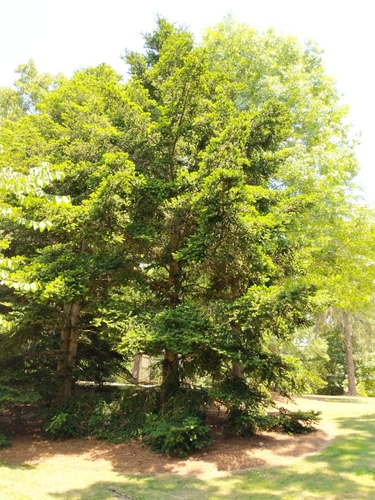
iNaturalist· cc-by
(c) Wendy Cutler, some rights reserved (CC BY)
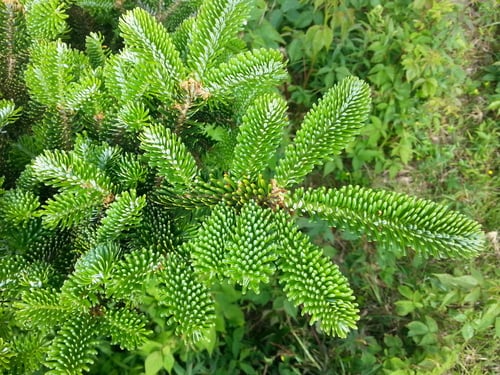
iNaturalist· cc-by-nc
(c) Hornbeam Arts, some rights reserved (CC BY-NC)
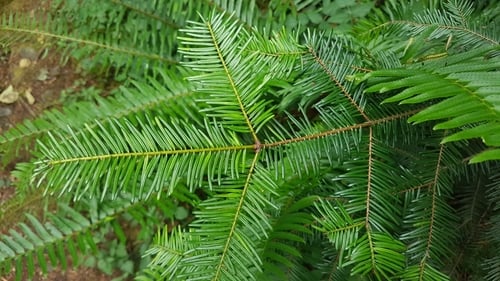
iNaturalist· cc-by-nc-sa
(c) Charos Pix, some rights reserved (CC BY-NC-SA)
Summary
Source: WikipediaPinus wallichiana is a coniferous evergreen tree native to the Himalaya, Karakoram and Hindu Kush mountains, from eastern Afghanistan east across northern Pakistan and north west India to Yunnan in southwest China. It grows in mountain valleys at altitudes of 1800–4300 m (rarely as low as 1200 m), reaching 30–50 m (98–164 ft) in height. It favours a temperate climate with dry winters and wet summers. In Pashto, it is known as Nishtar. This tree is often known as Bhutan pine, (not to be confused with the recently described Bhutan white pine, Pinus bhutanica, a closely related species). Other names include blue pine, Himalayan pine and Himalayan white pine.
Description
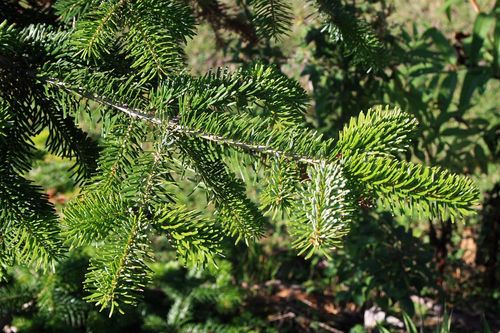
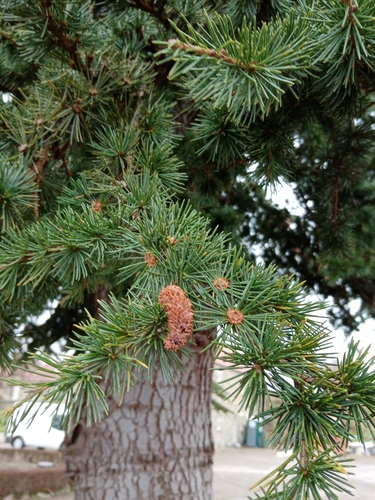
An evergreen tree. It grows 22-36 m high and spreads 6-12 m wide. It can be 70 m tall. The trunk can be 1 m or more across. The crown is cone shaped. The first year branches are green and shiny with a faint white bloom. The leaves are blue-green. The needles are arranged in groups of five. They hang down. They are 11-18 cm long by 1 mm wide. They are soft. The cones are banana shaped. They hang down. They are 10-30 cm long by 3-4 cm wide. They are 5-9 cm wide when open. The seeds are brown or black. They are oval and 3-9 mm long by 4-5 mm wide. The wings are 1-3 cm wide and 8-9 mm thick.
Edible Uses
The seeds, which are quite small at up to 7mm long, can be eaten raw or cooked, though their very resinous flavour means they are not much relished. A manna-like honeydew that forms on aphid-infested leaves is eaten, and another account describes a manna-like substance exuding from the leaves and twigs that is eaten or used like honey. A vanillin flavouring is also obtained as a by-product of resins released from the pulpwood.
Traditional Uses
A sappy exudate from the leaves and twigs hardens and is eaten. It is also added to honey. The tender layer of the stem just beneath the bark is edible. The seeds are sometimes eaten.
Medicinal Uses
The turpentine from the resin is antiseptic, diuretic, rubefacient, and vermifuge. Taken internally, it treats kidney and bladder complaints; used as a rub or steam bath, it addresses rheumatic conditions. It benefits the respiratory system and is useful against diseases of the mucous membranes and complaints such as coughs, colds, influenza, and TB. Externally, it treats skin complaints, wounds, sores, burns, and boils, applied as liniment plasters, poultices, herbal steam baths, and inhalers. The wood is diaphoretic and stimulant and has been used to treat burning sensations in the body, cough, fainting, and ulcers.
Known Hazards
The wood, sawdust and resins from various species of pine can cause dermatitis in sensitive people.
Distribution
It is a temperate plant. It is frost hardy. In China it grows in the mountains in the temperate rainforests between 1600-3300 m altitude in Yunnan. It suits hardiness zones 6-9. Arboretum Tasmania. Hobart Botanical Gardens, Launceston city Park, Kyneton Botanical Gardens.
Where It Grows
Afghanistan, Africa, Asia, Australia, Bhutan, Britain, China, Europe, France, Germany, Himalayas, India, Indochina, Italy, Kashmir, Mediterranean, Myanmar, Nepal, Northeastern India, Pakistan, Romania, SE Asia, Sikkim, Slovenia, South Africa, Tasmania, Tibet, Ukraine, USA, Yugoslavia,
Cultivation
Thrives in a light well-drained sandy or gravelly loam. Dislikes poorly drained moorland soils or shade. Established plants tolerate drought. Prefers sandy or clay soils rather than limestone. A very hardy but relatively short-lived tree in cultivation. The Himalayan blue pine succeeds in exposed positions but it looks much better when grown in a sheltered position. It is a very fast growing tree when young, with new shoots up to 1metre long per year and 30 year old trees 20 metres tall. New growth takes place from April to mid-July. Growth in height diminishes rapidly when trees are 25 metres tall, probably due to their dislike of exposure at that height. Cultivated for timber in Italy. Plants are strongly outbreeding, self-fertilized seed usually grows poorly. They hybridize freely with other members of this genus. Cones open and shed their seed whilst still on the tree. Leaf secretions inhibit the germination of seeds, thereby reducing the amount of plants that can grow under the trees. Plants in this genus are notably susceptible to honey fungus.
Propagation
Sow seed in individual pots in a cold frame as soon as it is ripe, or in late winter if not. A short stratification of 6 weeks at 4°C can improve germination of stored seed. Plant seedlings into their permanent positions as soon as possible and protect them for their first winter or two. Because plants have a very sparse root system, early planting is important for good establishment. Trees should be planted out when quite small — between 30 and 90cm — though we typically plant them at around 5–10cm tall. A thorough weed-excluding mulch aids establishment well. Larger trees check badly and may put on little growth for several years, which also harms root development and wind resistance. Cuttings work only when taken from trees less than 10 years old. Use single leaf fascicles with the base of the short shoot; disbudding the shoots a few weeks before taking cuttings can help. Cuttings are normally slow to grow away.
Other Uses
This tree is a commercial source of turpentine and tar, said to be superior in quality to that of P. roxburghii, though not produced as freely. Oleo-resins are present in all pine tissues but are often not commercially extracted; they are obtained by tapping the trunk or by destructive distillation of the wood, with warmer-region trees generally yielding more. Turpentine makes up an average of 20% of the oleo-resin and is separated by distillation for use as a solvent for waxes, in varnish, and medicinally. Rosin, the residue after turpentine removal, is used on violin bows and in sealing wax and varnish. Pitch from the resin is used for waterproofing and as a wood preservative. The leaves are used as stuffing for pillows and similar items. A tan or green dye is obtained from the needles, which release terpene when washed by rain — a substance that negatively affects the germination of some plants, including wheat. The wood is moderately hard, durable, and highly resinous; it is used in construction and carpentry. It makes a good firewood but gives off a pungent resinous smoke. The resin-rich wood can also be splintered and used as a torch.
Production
Cones take 18 months to mature. In NW Pakistan seeds are collected in October.
Other Information
The seeds are especially eaten by children.
Notes
There are over 100 species of Pinus.
Synonyms
Also Known As
Cheeltu, Gobre sallo, Himalajski bor, Nashtar
References (20)
- Ambasta, S.P. (Ed.), 2000, The Useful Plants of India. CSIR India. p 459
- Bull. Misc. Inform. Kew 1938:85. 1938
- Coombes, A.J., 2000, Trees. Dorling Kindersley Handbooks. p 75
- Cundall, P., (ed.), 2004, Gardening Australia: flora: the gardener's bible. ABC Books. p 1051
- Facciola, S., 1998, Cornucopia 2: a Source Book of Edible Plants. Kampong Publications, p 171
Show all 20 references Hide references
- Fu Liguo, Li Nan, Mill, R.R., Pinaceae. Flora of China.
- Guo, C., et al, 2022, An Ethnobotany Survey of Wild Plants Used by the Tibetan People of the Yadong River Valley, Tibet, China. Journal of Ethnobiology and Ethnomedicine p 24
- Harris, E & J., 1983, Field Guide to the Trees and Shrubs of Britain. Reader's Digest. p 257
- Hedrick, U.P., 1919, (Ed.), Sturtevant's edible plants of the world. p 320, 497 (As Pinus excelsa)
- Hibbert, M., 2002, The Aussie Plant Finder 2002, Florilegium. p 234
- http://www.botanic-gardens-ljubljana.com/en/plants
- Joyce, D., 1998, The Garden Plant Selector. Ryland, Peters and Small. p 172
- Lord, E.E., & Willis, J.H., 1999, Shrubs and Trees for Australian gardens. Lothian. p 88
- Plants for a Future database, The Field, Penpol, Lostwithiel, Cornwall, PL22 0NG, UK. http://www.scs.leeds.ac.uk/pfaf/
- Ryan, S., 2008, Dicksonia. Rare Plants Manual. Hyland House. p 69
- Sahni, K.C., 2000, The Book of Indian Trees. Bombay Natural History Society. Oxford. p 198
- Tanaka,
- Thakur, D., et al, 2017, Why they eat, what they eat: patterns of wild edible plants consumption in a tribal area of Western Himalaya. Journal of Ethnobiology and Ethnomedicine (2017) 13:70
- Tsering, J., et al, 2017, Ethnobotanical appraisal on wild edible plants used by the Monpa community of Arunchal Pradesh. Indian Journal of Traditional Knowledge. Vol 16(4), October 2017, pp 626-637
- www.worldagroforestrycentre.org/treedb/