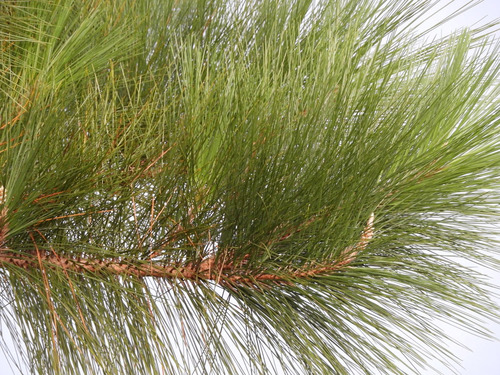
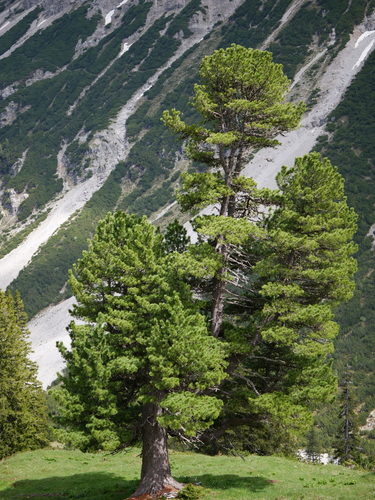
Abies firma
Siebold & Zucc.
Momi fir, Japanese fir
iNaturalist· cc-by
(c) Rob John, some rights reserved (CC BY), uploaded by Rob John
iNaturalist· cc-by-sa
(c) anonymous, some rights reserved (CC BY-SA)
iNaturalist· cc-by-sa
(c) KENPEI, some rights reserved (CC BY-SA)
Summary
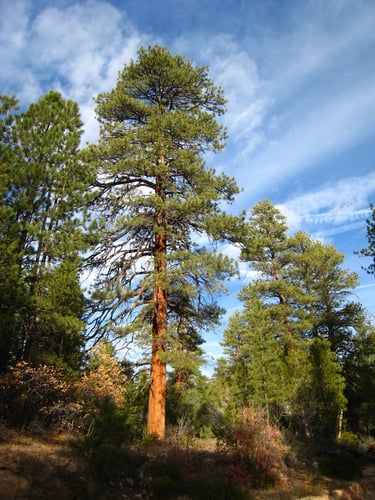
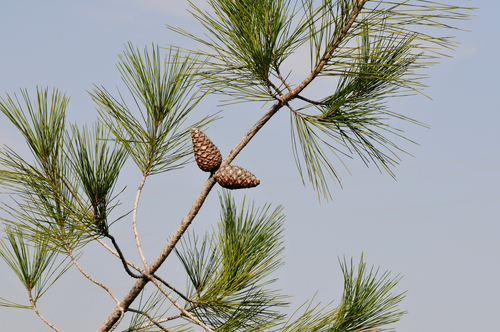
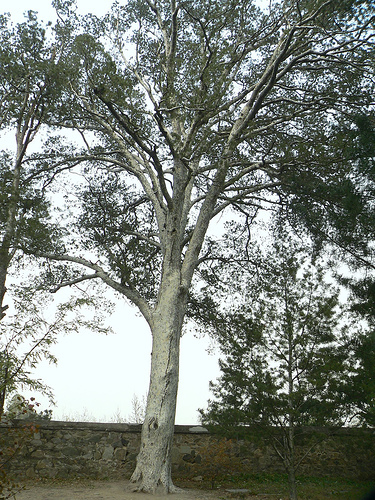
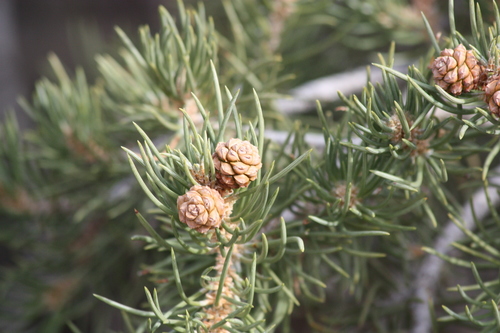
Source: WikipediaAbies firma, the momi fir, is a species of fir native to central and southern Japan, growing at low to moderate altitudes of 50–1200 m. Abies firma is a medium-sized to large evergreen coniferous tree growing to 50 metres (160 ft) tall and 2 metres (6 ft 7 in) in trunk diameter, with a broad conical crown of straight branches rising at an angle of about 20° above horizontal. The bark is scaly grey-brown, with resin blisters on young trees. The shoots are grooved, buff to grey-brown, glabrous or finely pubescent. The leaves ("needles") are flattened, 2–5 centimetres (0.79–1.97 in) long and 2–4 millimetres (0.079–0.157 in) broad, spread at nearly right angles from the shoot; the apex is sharp, bifid (double-pointed) on the leaves of young trees, single-pointed on mature trees. They are bright green above, and greyish-green below with two broad stomatal bands. The cones are 7–15 centimetres (2.8–5.9 in) long by 3–5 centimetres (1.2–2.0 in) wide, green maturing yellow-brown, tapering to a 2–3 centimetres (0.79–1.18 in) broad bluntly rounded apex. The scale bracts are exserted 3–6 millimetres (0.12–0.24 in), triangular. The seeds are 7–9 millimetres (0.28–0.35 in) long with a wedge-shaped wing 1.5 centimetres (0.59 in) long, are released after the cones disintegrate at maturity in October. Along with Abies homolepis, Abies firma is one of the two fir species that compose the majority of Japanese temperate forest zones. These two species hybridize at the point where their elevation ranges overlap and give rise to the hybrid Abies umbellata, also known as A. x umbellata. Regrowth of Abies firma forests is threatened by overbrowsing from Sika deer. Momi fir is sometimes, but not commonly, used as an ornamental tree, particularly in warm temperate regions with hot, humid summers such as the southeastern United States. It is also used as a grafting understock for fir cultivars in these areas.
Description
A shrub or small tree. It grows 5 m tall. There are prickles along the stem. The leaves are twice divided and there are 8-18 pairs of pinnae. There are up to 50 pairs of pinnules on each pinnae. The flowers are yellow. They are in large clusters at the ends of branches. The pods are flattened.
Edible Uses
The seeds can be eaten roasted, though they are very small and fiddly to work with, making them difficult to utilize in any quantity.
Traditional Uses
The seeds are eaten roasted.
This uses section is brief — help expand it
Medicinal Uses
None known
Distribution
It is a temperate plant. New growth is damaged by frosts. It can grow in acid soils. It can tolerate some shade. It grows in the mountains of Southern Japan. It suits hardiness zones 6-9. Arboretum Tasmania.
Where It Grows
Asia, Australia, China, Japan, Korea, Taiwan, Tasmania,
Cultivation
Prefers a good moist but not water-logged soil. Grows well in heavy clay soils. Plants are very shade tolerant, especially when young, but growth is slower in dense shade. Intolerant of atmospheric pollution. Prefers slightly acid conditions, down to a pH of about 5. Prefers growing on a north-facing slope. New growth of the side shoots starts in April and this is very susceptible to damage by late frosts. The terminal buds do not open until mid-May and usually escape damage. Trees are fairly fast growing when young, sending up new growth of 60cm a year from the age of about 6 years. Side shoots grow with equal vigour, however and the tree often loses apical dominance. Trees grow best in the Perthshire valleys of Scotland. Trees should be planted into their permanent positions when they are quite small, between 30 and 90cm in height. Larger trees will check badly and hardly put on any growth for several years. This also badly affects root development and wind resistance. The flowers are produced in axils of the previous year's shoots. Plants are strongly outbreeding, self-fertilized seed usually grows poorly. They hybridize freely with other members of this genus.
Propagation
Sow seed in early February in a greenhouse, or outdoors in March. Germination is often poor, typically taking 6–8 weeks. Stratification tends to produce more even germination, so sowing in a cold frame as soon as seed is ripe in autumn is probably the best approach. Seed remains viable for up to 5 years if stored well. When seedlings are large enough to handle, prick them out into individual pots and grow on for at least their first winter under cover. Plant out into permanent positions in late spring or early summer, after the last expected frosts. Where sufficient seed is available, sowing in an outdoor seedbed is also an option. One report recommends growing seedlings on in shade at a density of around 550 plants per square metre, while another suggests a sunny position is preferable.
Other Uses
The wood is light, soft, and coarse-grained, and not particularly durable. It is used for construction and pulp production.
Notes
There are about 50 Abies species. They are mostly in north temperate regions.
Synonyms
Also Known As
Ri ben leng shan
References (6)
- Cundall, P., (ed.), 2004, Gardening Australia: flora: the gardener's bible. ABC Books. p 68
- Etherington, K., & Imwold, D., (Eds), 2001, Botanica's Trees & Shrubs. The illustrated A-Z of over 8500 trees and shrubs. Random House, Australia. p 44
- Fl. jap. 2:15, t. 107. 1842
- Fu Liguo, Li Nan, Mill, R.R., Pinaceae. Flora of China.
- Plants for a Future database, The Field, Penpol, Lostwithiel, Cornwall, PL22 0NG, UK. http://www.scs.leeds.ac.uk/pfaf/
Show all 6 references Hide references
- Young, J., (Ed.), 2001, Botanica's Pocket Trees and Shrubs. Random House. p 41