Pinanga basilanensis
Becc.
Buburis
gbif· cc0
President and Fellows of Harvard College
gbif· cc0
President and Fellows of Harvard College
Description
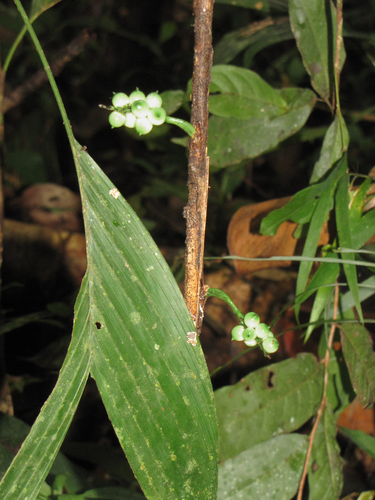
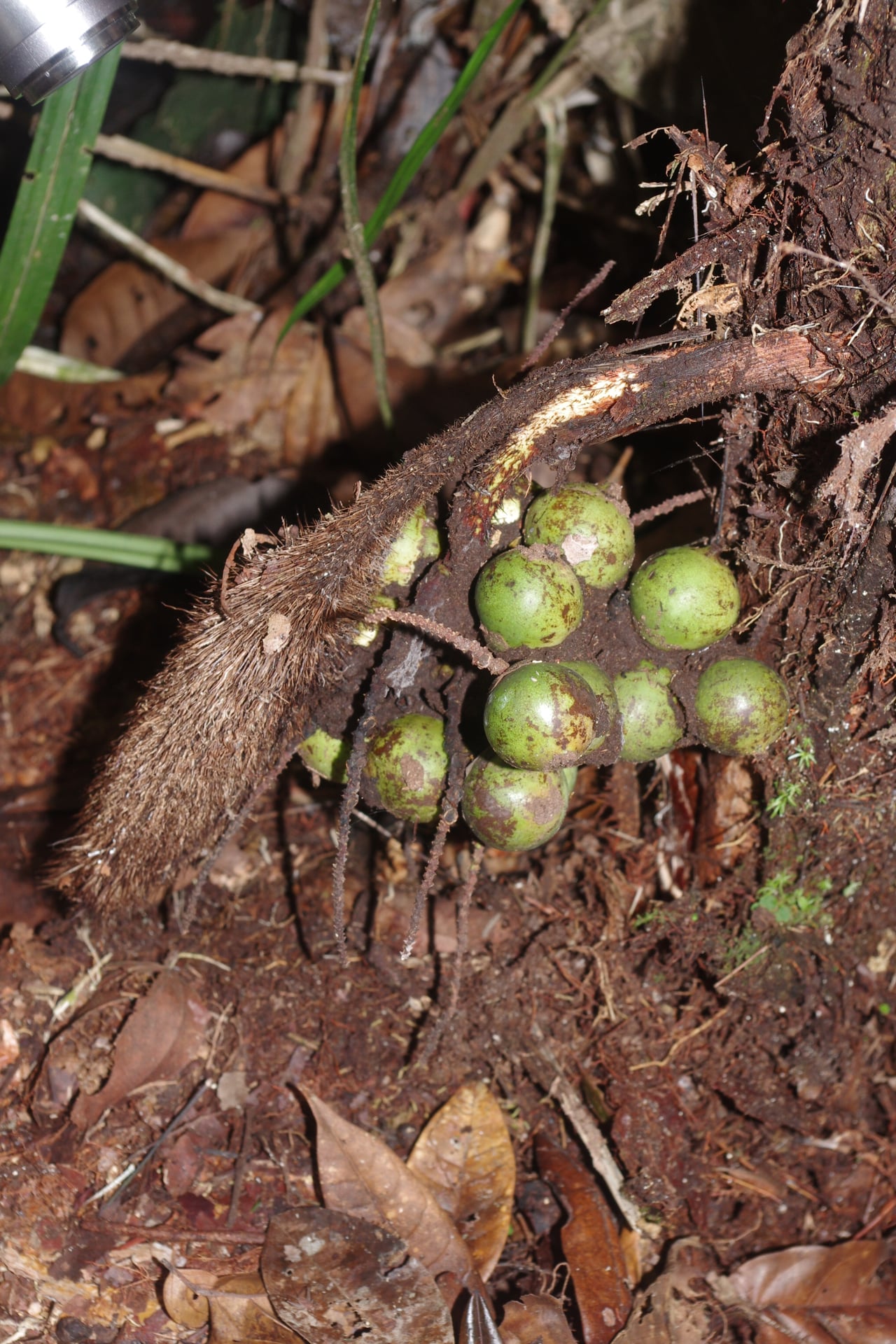
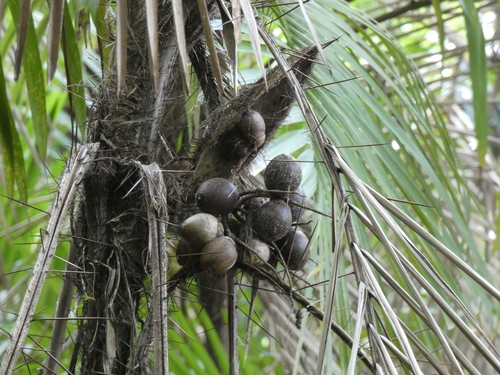
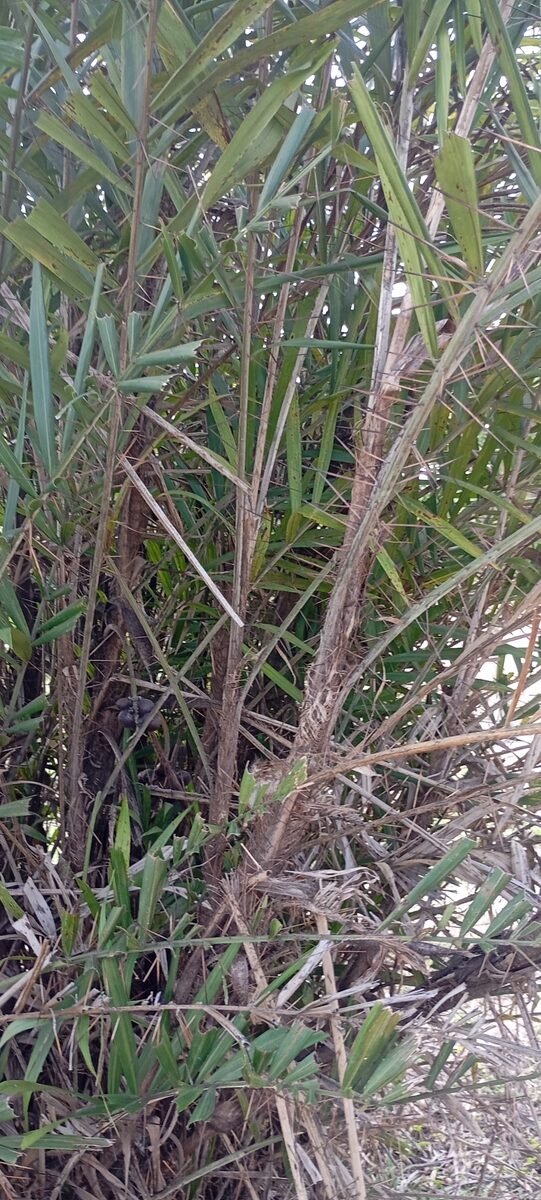
A small and slender palm. The leaf segments are 3-ribbed and one metre long. They are 9 cm wide. They have 3 veins. Sometimes there are narrow teeth along the edge. The flower arrangement is a spike of flowers around a central stalk. It is strongly flattened and with branches which hang down. The fruit are medium sized about 20 mm by 12 mm and slightly oval. The seed layer is somewhat fleshy and crossed by a few fibres.
Edible Uses
The bud is cooked and eaten as palm heart or cabbage.
Traditional Uses
The bud is cooked and eaten.
This uses section is brief — help expand it
Distribution
A tropical plant. They are found in primary forest at low and medium altitudes. They are reported from Mindanao and Basilan in the Philippines. It suits subtropical locations. It needs a shady place.
Where It Grows
Asia, Australia, Pacific, Philippines, SE Asia,
Notes
There are about 120-125 Pinanga species. There is one in New Guinea.
References (3)
- Jones, D.L., 2000, Palms of Australia 3rd edition. Reed/New Holland. p 200
- Monsalud, M.R., Tongacan, A.L., Lopez, F.R., & Lagrimas, M.Q., 1966, Edible Wild Plants in Philippine Forests. Philippine Journal of Science. p 517
- World Checklist of Useful Plant Species 2020. Royal Botanic Gardens, Kew