Pimenta racemosa
(Mill.) J. W. Moore
Bay tree, Bay Rum Tree
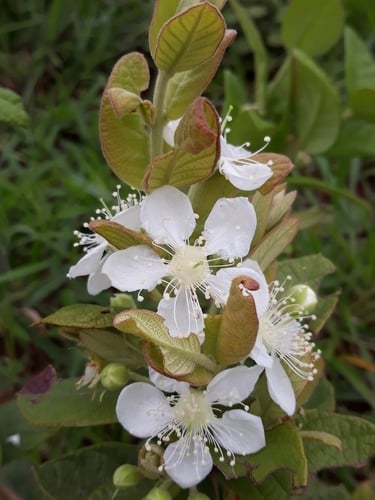
iNaturalist· cc-by-nc
(c) Isaac Martinez Costas, some rights reserved (CC BY-NC), uploaded by Isaac Martinez Costas
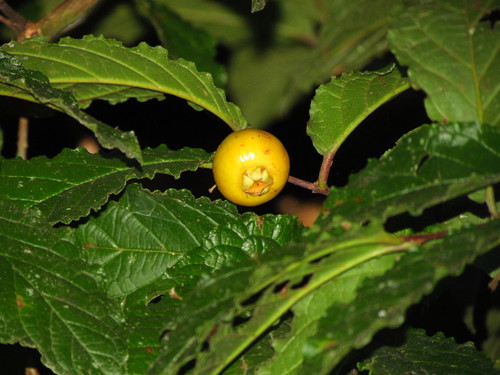
iNaturalist· cc-by-nc
(c) Isaac Martinez Costas, some rights reserved (CC BY-NC), uploaded by Isaac Martinez Costas
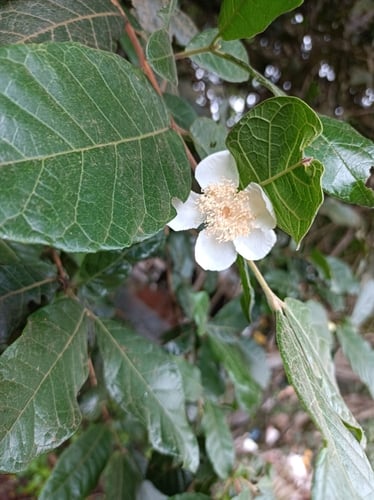
iNaturalist· cc-by-nc
(c) Mario Guzmán, some rights reserved (CC BY-NC)
Summary
Source: WikipediaPimenta racemosa is a species of plant in the myrtle family (Myrtaceae) that is native to the Caribbean region. Common names include West Indian bay tree, bay rum tree, and ciliment.
Description
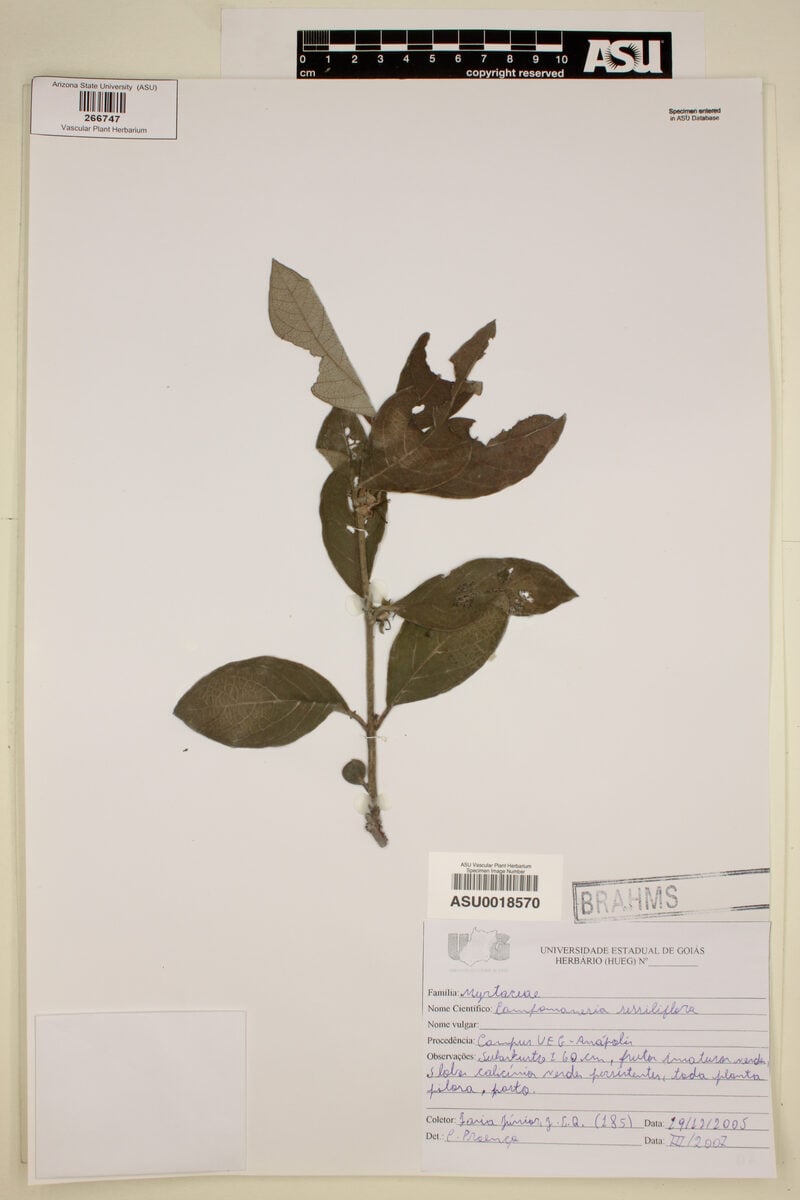
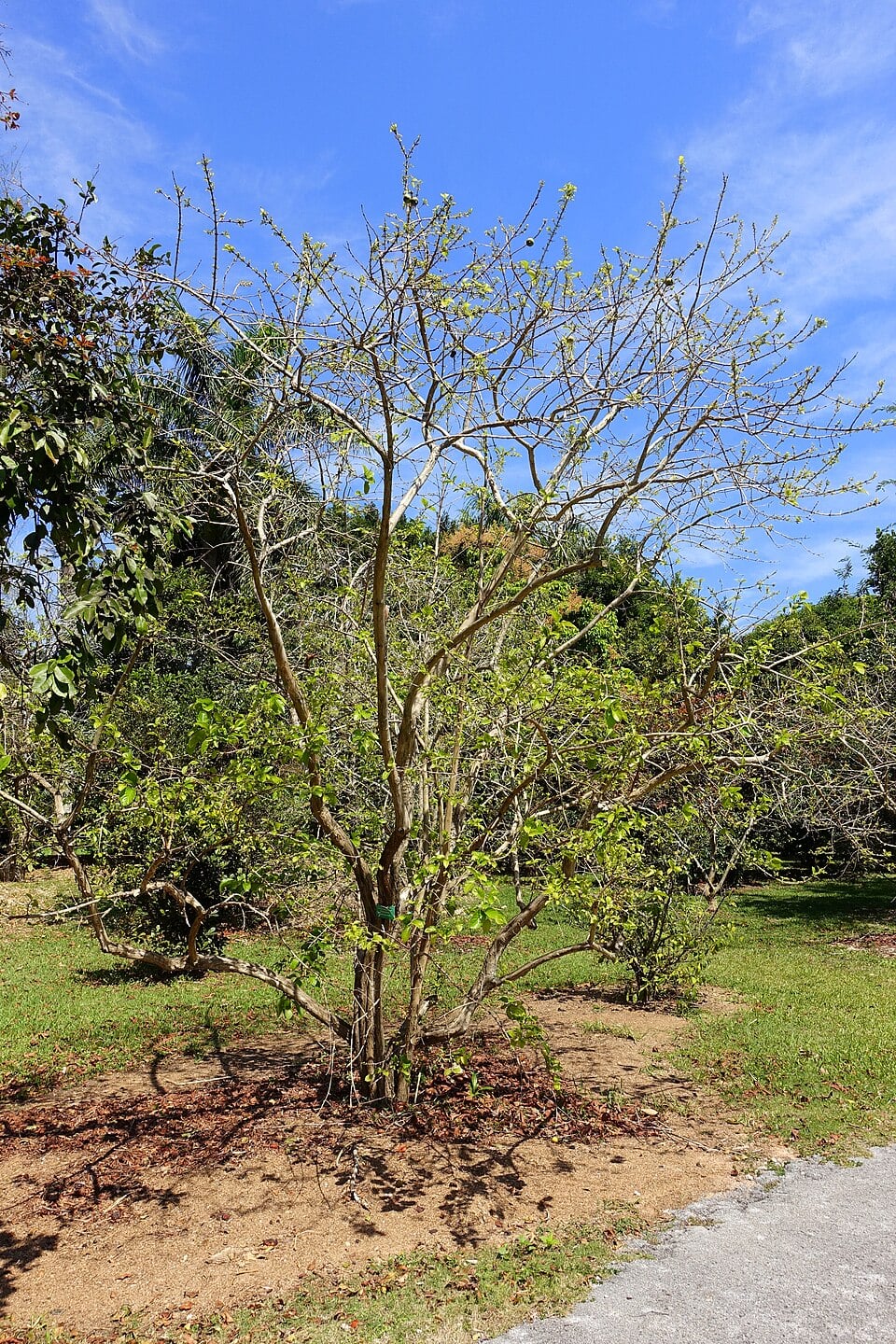
An evergreen tree. It grows 13 m tall. The bark is brownish. The leaves are leathery and oblong. They are 8-10 cm long and 1-6 cm wide. There are 10-20 pairs of secondary veins. The flowers are small and white. They occur as 15-100 in a group. The tree has an aroma. The fruit are round and 5-15 mm wide. There are 1-4 seeds.
Edible Uses
The leaves are distilled to produce an oil used for flavoring soups, meats, and condiments. The bark and fruit are also used as condiments and spices.
Traditional Uses
The oil is distilled from the leaves and used to flavour food. It is used for soups, meats and condiments. The bark and fruit are used as condiments.
Medicinal Uses
Bay rum tree has many uses in traditional medicine, mostly based on the antibiotic properties of the phenols in the essential oil. Bay Rum (the leaves distilled in rum) has been used in folk medicine for treating sore muscles, strains, and sprains. A tea from the leaves is drunk as a stimulant and as a treatment for flatulence, colds and fever. The essential oil from the leaves is used as a remedy for stomach pains, and is applied externally to treat skin diseases.
Known Hazards
It is used in cooking and an essential oil is distilled to produce a fragrant cologne called bay rum; although the name is similar to names of flavored alcoholic beverages, the concentrated essential oil from the fruit is toxic and renders the product undrinkable. The leaves are also used for herbal teas.
Distribution
A tropical plant. It is native to tropical America. It does well in seasonally moist and dry climates. It needs an average, well-drained soil. It needs full sun. It suits hardiness zones 10-12.
Where It Grows
Africa, Antigua & Barbuda, Antilles, Asia, Australia, Caribbean*, Central America, Colombia, Cook Islands, Cuba, Dominican Republic, Ecuador, Fiji, Grenada, Guiana, Guianas, Haiti, Hawaii, Honduras, India, Indonesia, Jamaica, Pacific, Puerto Rico, SE Asia, South America, Sri Lanka, St. Kitts and Nevis, St Lucia, Suriname, USA, Venezuela*, Virgin Islands, West Indies,
Cultivation
Plants can be grown from seeds and by budding.
Propagation
Seed - best sown as soon as it is ripe. Germination generally takes 2 - 6 weeks. Seedlings are ready for transplanting to the field in 18 - 24 months. Before planting the stem is topped to 15 cm and the taproot is pruned to 7 cm to encourage lateral rooting. Vegetative propagation is rarely practised, but budding which is applied successfully to Pimenta dioica is probably suitable for this species as well.
Other Uses
The leaves contain up to 5% essential oil - the highest content occurring in regions of lower rainfall (1,100 mm annually), the lowest in more humid areas (2,200 mm annually). It is used in perfumery, making soaps, toilet waters etc. The essential oil contains eugenol, myrcine, chavicol and methyl-eugenol. To some people the sensory properties of the oil can be quite offensive, sickly sweet and nauseating; others perceive it as quite fresh and pleasant. Its flavour is warm, almost pungent, spicy and somewhat bitter. A yield of 500g of oil per 45 kilos of leaves has been obtained. Traditionally, the leaves are distilled with rum to produce bay rum, which has soothing and antiseptic properties and was formerly a very popular toilet water and hair tonic. In the production of terpeneless bay leaf oil, the terpenes (mostly the monoterpenes with a low boiling point) are removed by vacuum distillation. Myrcene is the most important compound removed. Terpeneless bay leaf oil is a pale straw-coloured to brownish-orange liquid with an intensely sweet, deep and mellow spicy-balsamic odour and lemon-like top note that is less pronounced than in the 'crude' oil. It is easily dissolved in diluted alcohol, which is an advantage as it is often used in preparation with a low alcohol content, such as hair lotions. An absolute can be prepared by extracting the 'crude' oil with alcohol. The absolute contains neither monoterpene nor sesquiterpene hydrocarbons. Two different oils distilled from var. Racemosa have been reported: a 'lemon' type and an 'anise' type. Both types are reported from the Caribbean island Guadeloupe and may have been introduced into Java in the 1880s. The 'lemon' type is rich in citral (geranial and neral); the 'anise' type contains mainly methyl eugenol and estragol (methyl chavicol). Samples of var. Hispaniolensis were characterized by thymol and 'GAMMA'-terpinene, 1,8-cineole and methyl eugenol, 1,8-cineole and methyl chavicol or 1,8-cineole and terpinen-4-ol. Samples from var. Ozua were high in 1,8-cineole and 'ALFA'-terpineol. The essential oil from var. Grisea was characterized by trans-methyl isoeugenol, methyl eugenol or geraniol. Var. Grisea is so common and has such a negative effect on the quality of the oil that it is called 'false bay rum tree'. The essential oil is used as an insect repellent. The sapwood is light brown, and the heartwood brownish red or blackish and mottled. The wood is very hard, very heavy, strong, tough, durable and fine-grained. It is resistant to attack by dry-wood termites. The wood is used in carpentry, for making walking sticks, and for posts. It splits easily and is an excellent fuel.
Other Information
It is cultivated.
Synonyms
Also Known As
Asuau, Ausu, Ausubo, Auzua, Auzubo, Bay Oil, Bayrumboom, Berron, Bwa berom, Canelilla, Canelillo, Limoncillo, Malagueta, Malaqueta, Pohon bai rum, West Indian bay, White clove
References (37)
- Ambasta, S.P. (Ed.), 2000, The Useful Plants of India. CSIR India. p 456
- Barwick, M., 2004, Tropical and Subtropical Trees. A Worldwide Encyclopedic Guide. Thames and Hudson p 322
- Bernice P. Bishop Mus. Bull. 102:33. 1933
- Bodkin, F., 1991, Encyclopedia Botanica. Cornstalk publishing, p 798
- Bodkin, F., 1991, Encyclopedia Botanica. Cornstalk publishing, p 798 (As Pimenta acris)
Show all 37 references Hide references
- Bremness, L., 1994, Herbs. Collins Eyewitness Handbooks. Harper Collins. p 74 (As Pimenta acris)
- Bremness, L., 1994, Herbs. Collins Eyewitness Handbooks. Harper Collins. p 74
- Cobley, L.S. (rev. Steele, W.M.) 2nd Ed., 1976, An Introduction to the Botany of Tropical Crops. Longmans. p 329
- Facciola, S., 1998, Cornucopia 2: a Source Book of Edible Plants. Kampong Publications, p 159
- Grandtner, M. M., 2008, World Dictionary of Trees. Wood and Forest Science Department. Laval University, Quebec, Qc Canada. (Internet database http://www.wdt.qc.ca)
- Grandtner, M. M. & Chevrette, J., 2013, Dictionary of Trees, Volume 2: South America: Nomenclature, Taxonomy and Ecology. Academic Press p 499
- Hermandez Bermejo, J.E., and Leon, J. (Eds.), 1994, Neglected Crops. 1492 from a different perspective. FAO Plant Production and Protection Series No 26. FAO, Rome. p 18
- Heywood, V.H., Brummitt, R.K., Culham, A., and Seberg, O. 2007, Flowering Plant Families of the World. Royal Botanical Gardens, Kew. p 226
- Kermath, B. M., et al, 2014, Food Plants in the Americas: A survey of the domesticated, cultivated and wild plants used for Human food in North, Central and South America and the Caribbean. On line draft. p 657
- Lentz, D. L., 1986, Ethnobotany of the Jicaque of Honduras. Economic Botany 40(2):210-219
- Llamas, K.A., 2003, Tropical Flowering Plants. Timber Press. p 289
- Macmillan, H.F. (Revised Barlow, H.S., et al), 1991, Tropical Planting and Gardening. Sixth edition. Malayan Nature Society. Kuala Lumpur. p 374
- Martin, F.W. & Ruberte, R.M., 1979, Edible Leaves of the Tropics. Antillian College Press, Mayaguez, Puerto Rico. p 207 (As Pimenta acris)
- Miguel, E., et al, 1989, A checklist of the cultivated plants of Cuba. Kulturpflanze 37. 1989, 211-357
- Morton,
- Peter, K. V. (Ed.), 2004, Handbook of Herbs and Spices Vol. 2 Woodhead Publishing and CRC Press.
- Plants of Haiti Smithsonian Institute http://botany.si.edu/antilles/West Indies
- PROSEA handbook Volume 13 Spices. p 279
- Purseglove, J.W., 1968, Tropical Crops Dicotyledons, Longmans. p 409
- Raghavan, S., 2007, Handbook of Spices, Seasonings, and Flavourings. Second Edition. CRC Press p 70
- Roa, J. A. G. & Boada, D. S. G., 2018, Fundación para el Fortalecimiento de la Fruticultura y Plantas Alimenticias no Convencionales en Colombia.
- Smith, A.C., 1985, Flora Vitiensis Nova, Lawaii, Kuai, Hawaii, Volume 3 p 306
- Staples, G.W. and Herbst, D.R., 2005, A tropical Garden Flora. Bishop Museum Press, Honolulu, Hawaii. p 428
- Sukarya, D. G., (Ed.) 2013, 3,500 Plant Species of the Botanic Gardens of Indonesia. LIPI p 448
- Tanaka,
- Torre, de la, L., et al, 2008, Enciclopedia de las Plantas Útiles del Ecuador. Herbario QCA. Pontificia Universidad Católica del Ecuador. p 469
- van Wyk, B., 2005, Food Plants of the World. An illustrated guide. Timber press. p 295
- Wiersema, J. H. & Leon, B., 2013, World Economic Plants. A Standard Reference CRC Press. 2nd Ed. p 527
- Williams, C.N., Chew, W.Y., and Rajaratnam, J.A., 1989, Tree and Field Crops of the Wetter Regions of the Tropics. Longman, p 223
- Williams, C.N., Chew, W.Y., and Rajaratnam, J.A., 1989, Tree and Field Crops of the Wetter Regions of the Tropics. Longman, p 223 (As Pimenta acris)
- World Checklist of Useful Plant Species 2020. Royal Botanic Gardens, Kew
- Zeven, A. C. & de West, J. M. J., 1982, Dictionary of cultivated plants and their regions of diversity. Wageningen. p 61