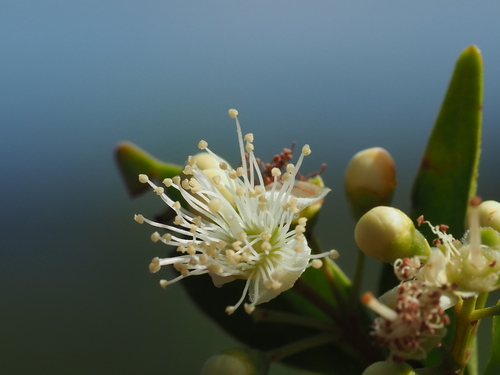
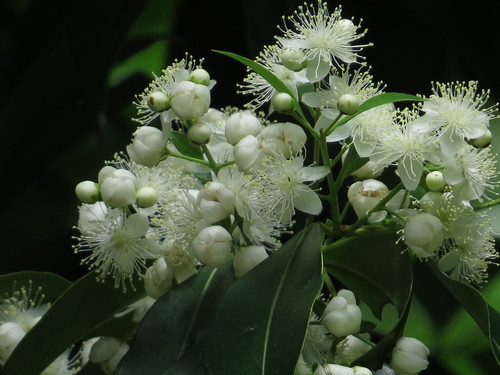
Eugenia rhombea
(O. Berg) Krug & Urb,
Spiceberry eugenia
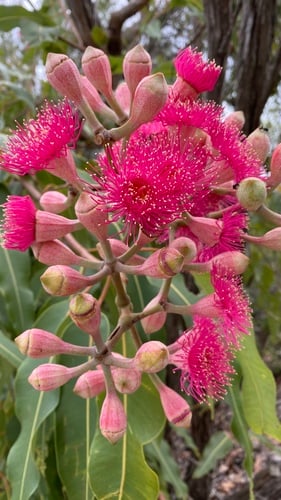
iNaturalist· cc-by-nc
(c) Frank Izaguirre, some rights reserved (CC BY-NC)
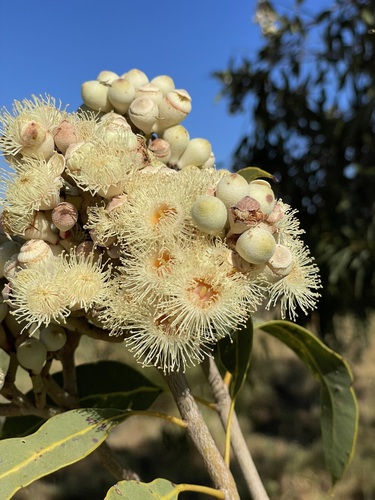
iNaturalist· cc-by-nc
(c) Steve Maldonado Silvestrini, some rights reserved (CC BY-NC)
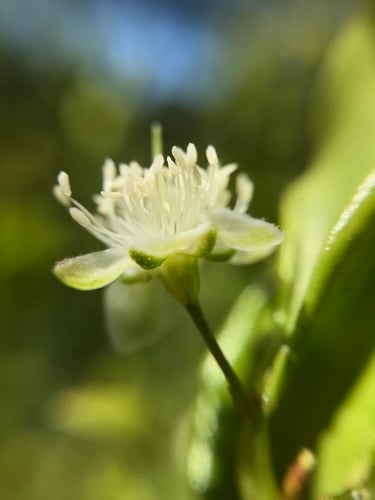
iNaturalist· cc-by-nc
(c) ipaddress2001, some rights reserved (CC BY-NC)
Summary
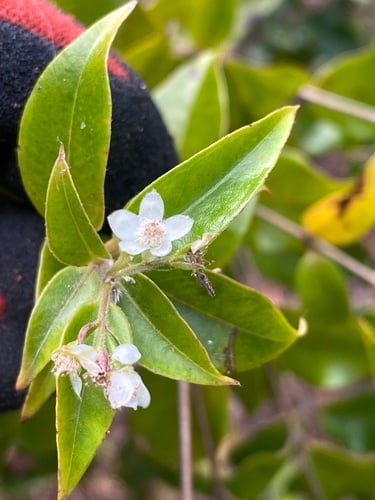
Source: WikipediaEugenia rhombea, the red stopper, is a species of flowering plant in the family Myrtaceae. It is native to southern Florida, Mexico, Central America, the Caribbean, and northern Venezuela. A shrub or tree reaching 12 ft (3.7 m) with white flowers, it is typically found in rockland hammocks.
Description
An evergreen shrub or small tree. The crown is oval. It can grow 6 m tall. The fruit is round and red and 1 cm across.
This description is brief — help expand it
Edible Uses
Fruit - raw or cooked. Fleshy. A thin, dry flesh. The round fruit is red/black when fully ripe and about 10 - 15mm in diameter.
Distribution
It is a tropical plant. It grows in deciduous forest and scrub. It grows between 700-1,500 m above sea level. It is best in an open sunny position but can tolerate some shade. Once established in is drought tolerant.
Where It Grows
Bahamas, Belize, Central America, Colombia, Costa Rica, Cuba, Dominican Republic, El Salvador, Greater Antilles, Guadeloupe, Guatemala, Haiti, Honduras, Mexico, Nicaragua, North America, Panama, Puerto Rico, South America, USA, Venezuela, West Indies,
Cultivation
It can be grown as a hedge.
Other Uses
The light brown heartwood is heavy, hard, close-grained and strong. It is not durable in the ground. Because of its usually small dimensions, it is mainly used for posts and stakes but is also used locally for cabinet work when large enough pieces are available. The wood is used for fuel. Amenable to trimming, the plant can be grown as a hedge.
Synonyms
Also Known As
Arraijan, Arrayan, Bwa mit, Escobilla, Escobon, Guairaje, Guayabilla de costa, Guayabillo, Hoja menuda, Mije.
References (8)
- Ekman Herbarium records Haiti
- Fern, K., 2012, Tropical Species Database http://theferns.info/tropical/
- Grandtner, M. M., 2008, World Dictionary of Trees. Wood and Forest Science Department. Laval University, Quebec, Qc Canada. (Internet database http://www.wdt.qc.ca)
- Grandtner, M. M. & Chevrette, J., 2013, Dictionary of Trees, Volume 2: South America: Nomenclature, Taxonomy and Ecology. Academic Press p 242
- Kermath, B. M., et al, 2014, Food Plants in the Americas: A survey of the domesticated, cultivated and wild plants used for Human food in North, Central and South America and the Caribbean. On line draft. p 358
Show all 8 references Hide references
- Plants of Haiti Smithsonian Institute http://botany.si.edu/antilles/West Indies
- Roa, J. A. G. & Boada, D. S. G., 2018, Fundación para el Fortalecimiento de la Fruticultura y Plantas Alimenticias no Convencionales en Colombia.
- Segura, S., et al, 2018, The edible fruit species in Mexico. Genet Resour Crop Evol (2018) 65:1767–1793