Pilidiostigma tropicum
L.S. Sm.
Apricot Myrtle
iNaturalist· cc-by-nc
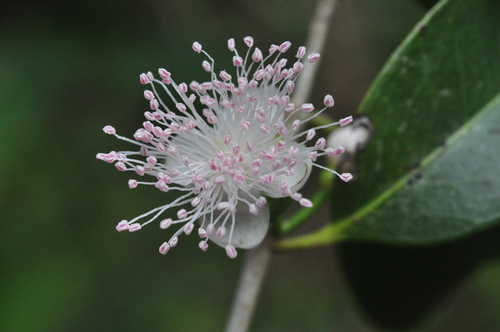
(c) Rene, some rights reserved (CC BY-NC)
iNaturalist· cc-by-nc
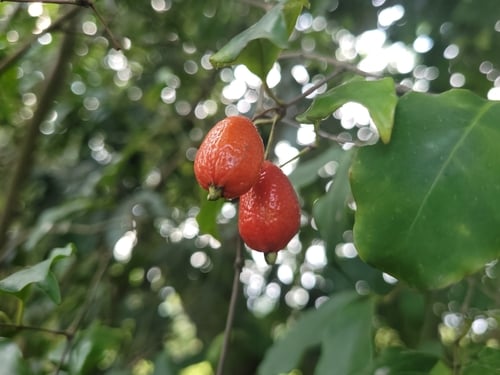
(c) Rene, some rights reserved (CC BY-NC)
iNaturalist· cc-by-nc
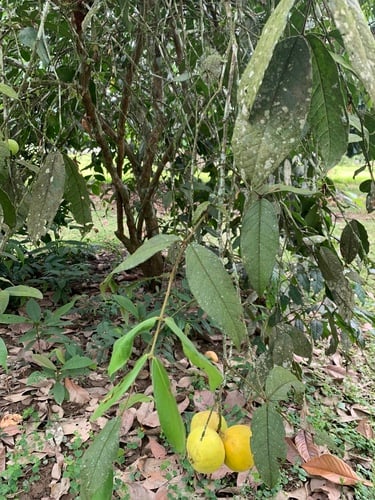
(c) Rene, some rights reserved (CC BY-NC)
Description
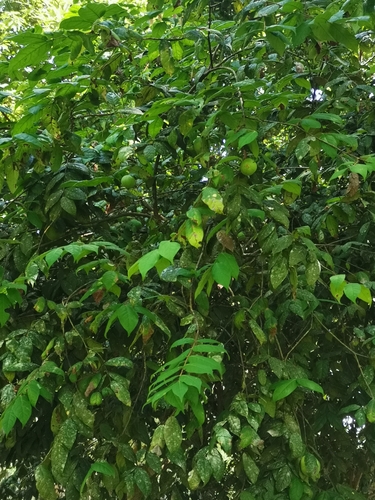
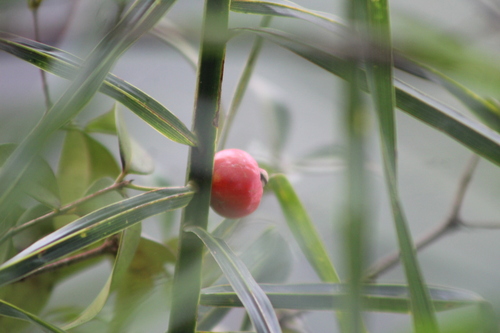
A tree up to 8-12 m tall. It spreads 3-5.5 m wide. Young growth is apricot coloured. The bark is flaky. There are many branches are they are flattened or 4 angled. The leaves are simple and 4-9 cm long by 1-3 cm wide. The leaves taper to the base. They are opposite. The edges are wavy. The twigs are reddish. The flowers are 1.3 cm across. They are white, cream or pink. There are 2-6 flowers together in the axils of leaves. The fruit are 12-22 mm long by 11-14 mm wide. They occur singly or in bunches. They can be in the axils of leaves or at the ends of branches. The fruit are purple to black. Squashed fruit smell like green peas. The seeds are 7-8 mm long by 6-7 mm wide. The flesh of the fruit is edible.
Edible Uses
The flesh of the fruit is edible and can be eaten fresh.
Distribution
A tropical plant. They grow naturally in rainforest in NE Queensland. It grows both in the lowlands and highlands. In tropical Queensland it grows from sea level to 1100 m altitude. They need moist but freely draining acid soils. They can grow in the sun or light shade.
Where It Grows
Australia*,
Cultivation
Plants are grown from fresh seed.
References (4)
- Cooper W & Cooper W T, 1994, Fruits of the Rain Forest. RD Press p 220
- Cooper, W. and Cooper, W., 2004, Fruits of the Australian Tropical Rainforest. Nokomis Editions, Victoria, Australia. p 351
- Elliot, W.R., & Jones, D.L., 1997, Encyclopedia of Australian Plants suitable for cultivation. Vol 7. Lothian. p 297
- Jackes, B.R., 2001, Plants of the Tropics. Rainforest to Heath. An Identification Guide. James Cook University. p 68