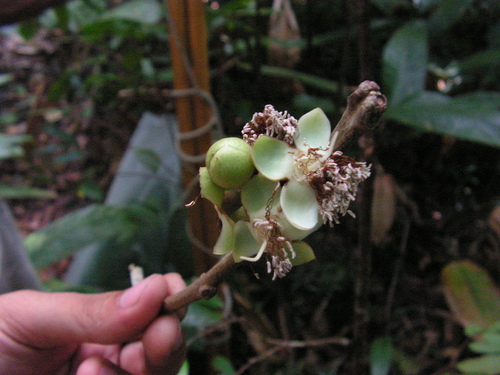
Eucalyptus punctata
DC.
Grey Gum
iNaturalist· cc-by-nc
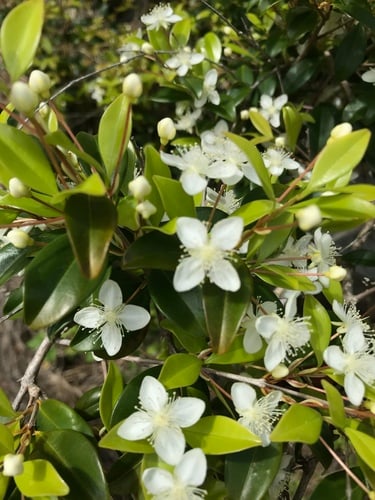
(c) polyscias099, some rights reserved (CC BY-NC)
iNaturalist· cc-by-nc
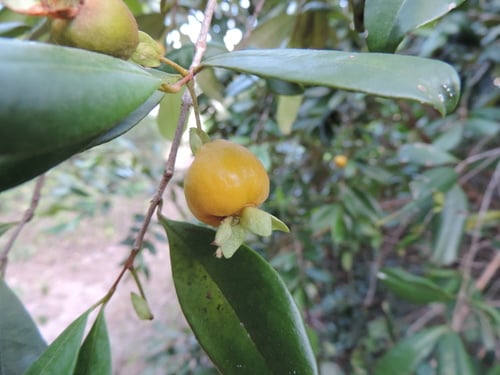
(c) stellap, some rights reserved (CC BY-NC), uploaded by stellap
iNaturalist· cc-by-nc
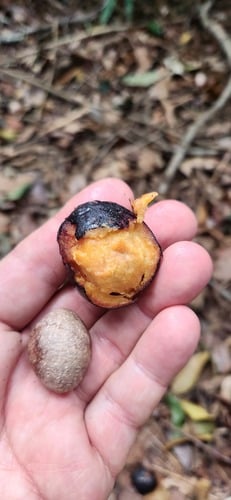
(c) P+B, some rights reserved (CC BY-NC), uploaded by P+B
Summary
Source: WikipediaEucalyptus punctata, commonly known as grey gum, is a small to medium-sized tree that is endemic to eastern Australia. It has smooth grey bark that is shed in patches, lance-shaped, curved or egg-shaped adult leaves flower buds in groups of seven, white flowers and hemispherical or cup-shaped fruit. Its leaves are one of the favoured foods of the koala.
Description
A medium sized tree. It grows 30 m high. The trunk is straight. The bark is smooth. It has a fairly dense crown of shiny dark green leaves. These are 15 cm long. The flowers are small and white.
Edible Uses
The stem produces a sweet, edible manna.
Medicinal Uses
None known
Known Hazards
Citronellal, an essential oil found in most Eucalyptus species is reported to be mutagenic when used in isolation. In large doses, oil of eucalyptus, like so many essential oils has caused fatalities from intestinal irritation. Death is reported from ingestion of 4 - 24 ml of essential oils, but recoveries are also reported for the same amount. Symptoms include gastroenteric burning and irritation, nausea, vomiting, diarrhoea, oxygen deficiency, ,weakness, dizziness, stupor, difficult respiration, delirium, paralysis, convulsions, and death, usually due to respiratory failure.
Distribution
It grows naturally in open forests in SE Australia. It does best on light well-drained soils. It suits hardiness zones 9-11.
Where It Grows
Africa, Australia*, East Africa, Zimbabwe,
Cultivation
Prefers a sunny position in a moderately fertile well-drained moisture retentive circum-neutral soil. Tolerates poor and dry soils, especially those low in mineral elements. Established plants are drought tolerant. This species is unlikely to be very cold-hardy, though it might succeed outdoors in the mildest areas of Britain. Eucalyptus species have not adopted a deciduous habit and continue to grow until it is too cold for them to do so. This makes them more susceptible to damage from sudden cold snaps. If temperature fluctuations are more gradual, as in a woodland for example, the plants have the opportunity to stop growing and become dormant, thus making them more cold resistant. A deep mulch around the roots to prevent the soil from freezing also helps the trees to survive cold conditions. The members of this genus are remarkably adaptable however, there can be a dramatic increase in the hardiness of subsequent generations from the seed of survivors growing in temperate zones. Eucalyptus monocultures are an environmental disaster, they are voracious, allelopathic and encourage the worst possible attitudes to land use and conservation. A polymorphic species. Plants are shallow-rooting and, especially in windy areas, should be planted out into their permanent positions when small to ensure that they do not suffer from wind-rock. They strongly resent root disturbance and should be container grown before planting out into their permanent position. The flowers are rich in nectar and are a good bee crop.
Propagation
Surface sow seed in February/March in a sunny greenhouse position. High-altitude species benefit from 6–8 weeks of cold stratification at 2°c. Pot seedlings into individual pots as soon as the second set of seed leaves appears — leaving them longer risks poor establishment. Plant out into permanent positions in early summer with some cold protection for the first winter. Alternatively, sow in June and plant out in late spring the following year. Seed remains viable for a long time.
Other Uses
None known
Notes
There are at least 500 Eucalyptus species mostly originally in Australia.
References (7)
- Cribb, A.B. & J.W., 1976, Wild Food in Australia, Fontana. p 187
- Cronin, L., 1989, The Concise Australian Flora. Reed. p 187
- Elliot, W.R., & Jones, D.L., 1992, Encyclopedia of Australian Plants suitable for cultivation. Vol 4. Lothian. p 190
- Etherington, K., & Imwold, D., (Eds), 2001, Botanica's Trees & Shrubs. The illustrated A-Z of over 8500 trees and shrubs. Random House, Australia. p 306
- Hibbert, M., 2002, The Aussie Plant Finder 2002, Florilegium. p 98
Show all 7 references Hide references
- Lazarides, M. & Hince, B., 1993, Handbook of Economic Plants of Australia, CSIRO. p 107
- Prodr. 3:217. 1828