Anadendrum montanum
Schott
iNaturalist· cc-by
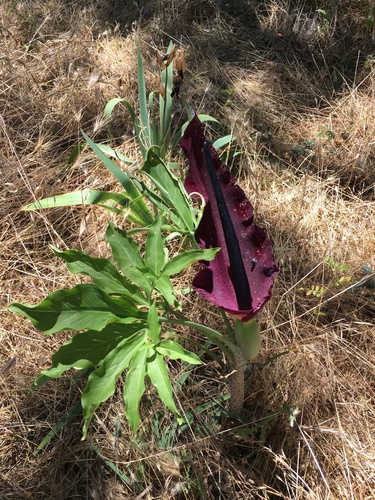
(c) pbsg, some rights reserved (CC BY), uploaded by pbsg
iNaturalist· cc-by-nc-sa
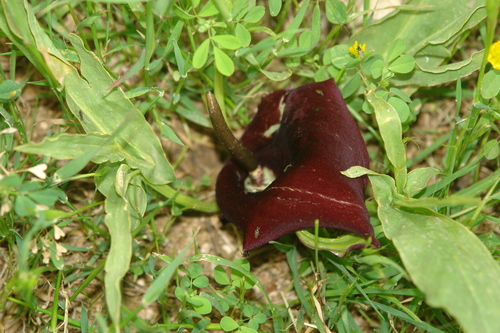
(c) Reuben C. J. Lim, some rights reserved (CC BY-NC-SA)
iNaturalist· cc-by-nc-sa
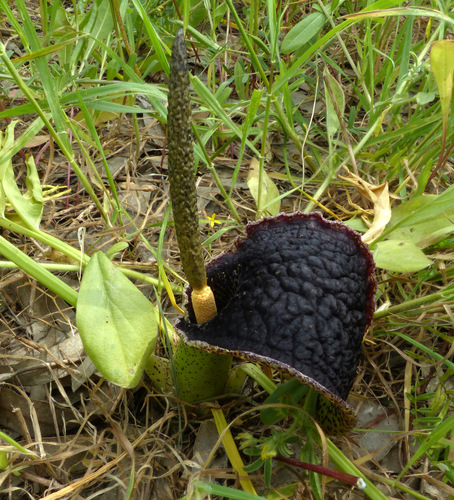
(c) Reuben C. J. Lim, some rights reserved (CC BY-NC-SA)
Description
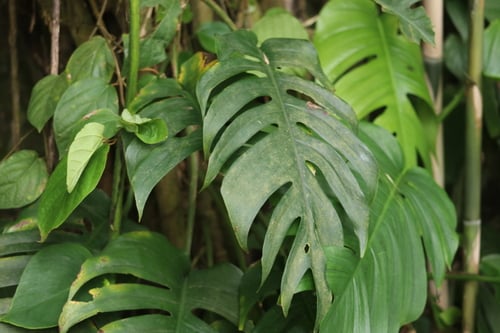
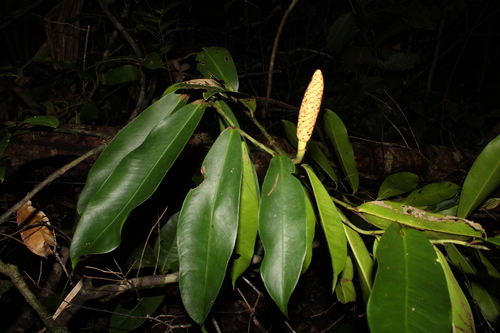
A climber. It grows attached to other plants. The stem is 4-5 mm across. The leaf stalk is 10-15 cm long. It forms a sheath at the base. The leaves are leathery and oval. They are 15-20 cm long by 5-8 cm wide.
Edible Uses
The leaves are used in curries, and the roots are eaten as a vegetable.
Traditional Uses
The leaves are used in curries. The roots are used as a vegetable.
This uses section is brief — help expand it
Known Hazards
Although no specific mention has been seen for this species, it belongs to a family where most of the members contain calcium oxalate crystals. This substance is toxic fresh and, if eaten, makes the mouth, tongue and throat feel as if hundreds of small needles are digging in to them. However, calcium oxalate is easily broken down either by thoroughly cooking the plant or by fully drying it and, in either of these states, it is safe to eat the plant. People with a tendency to rheumatism, arthritis, gout, kidney stones and hyperacidity should take especial caution if including this plant in their diet.
Distribution
A tropical plant. It grows in forests, on trees or over rocks, below 500 m in southern China. It grows attached to other objects. In Indonesia it grows from sea level to 1500 m altitude. In Yunnan.
Where It Grows
Asia, China, India, Indochina, Indonesia, Laos, Malaysia, SE Asia, Singapore, Thailand, Vietnam,
Notes
There are about 7 Anedendrum species.
Synonyms
Also Known As
Akar meroyan sembang, Akar segunja, Daun ketam, Serundang
References (7)
- Ambasta S.P. (Ed.), 2000, The Useful Plants of India. CSIR India. p 37
- Bircher, A. G. & Bircher, W. H., 2000, Encyclopedia of Fruit Trees and Edible Flowering Plants in Egypt and the Subtropics. AUC Press. p 26
- Burkill, I.H., 1966, A Dictionary of the Economic Products of the Malay Peninsula. Ministry of Agriculture and Cooperatives, Kuala Lumpur, Malaysia. Vol 1 (A-H) p 148,
- Logan, 1847, Logan's Journal 1. p 255
- Li Heng; Zhu Guanghua, ARACEAE [Draft], Flora of China
Show all 7 references Hide references
- Martin, F.W. & Ruberte, R.M., 1979, Edible Leaves of the Tropics. Antillian College Press, Mayaguez, Puerto Rico. p 176
- Ridley, 1907, Mal. Flora Mal. Penins. Monoc. 3, p37