Picea sitchensis
(Bong.) Carrière
Sitka spruce, Coast spruce, Tideland spruce, Alaska spruce
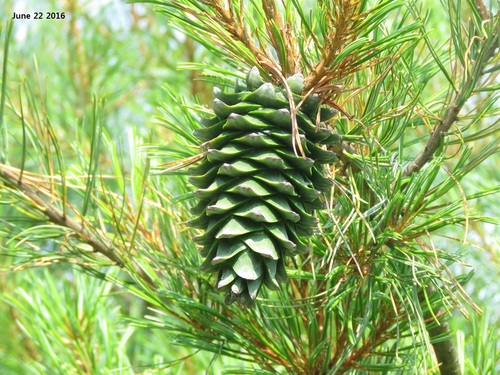
iNaturalist· cc-by-nc
(c) Christopher J. Earle, some rights reserved (CC BY-NC), uploaded by Christopher J. Earle
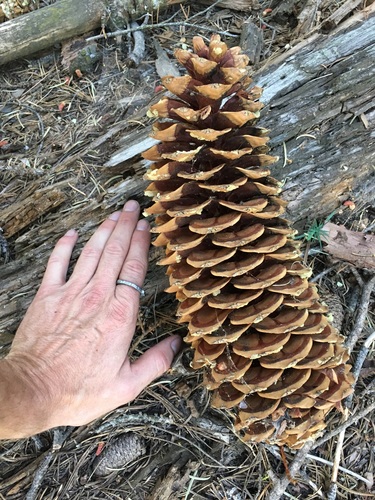
iNaturalist· cc-by-nc
(c) Maleen Mund, some rights reserved (CC BY-NC), uploaded by Maleen Mund
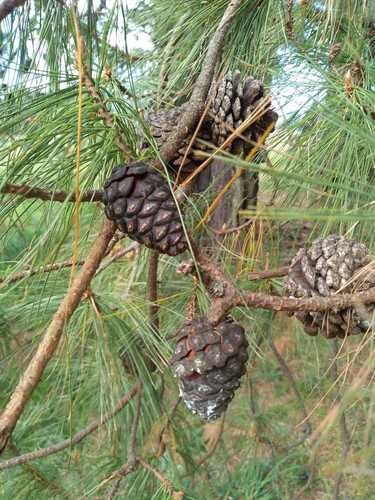
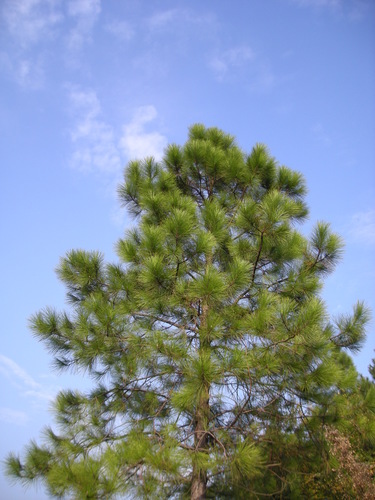
iNaturalist· cc-by
(c) Aaron Liston, some rights reserved (CC BY), uploaded by Aaron Liston
Summary
Source: WikipediaPicea sitchensis, the Sitka spruce, is a large, coniferous, evergreen tree growing to just over 100 meters (330 ft) tall, with a trunk diameter at breast height that can exceed 5 m (16 ft). It is by far the largest species of spruce and the fifth-largest conifer in the world (behind giant sequoia, coast redwood, kauri, and western redcedar), and the third-tallest tree species (after coast redwood and South Tibetan cypress). The Sitka spruce is one of only three species documented to exceed 100 m (330 ft) in height. Its name is derived from the community of Sitka in southeast Alaska, where it is prevalent. Its range hugs the western coast of Canada and the US and continues south into northern California.
Description
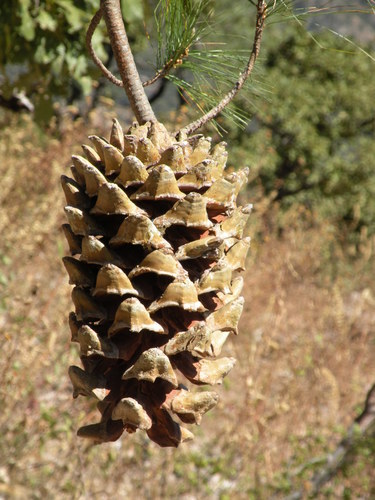
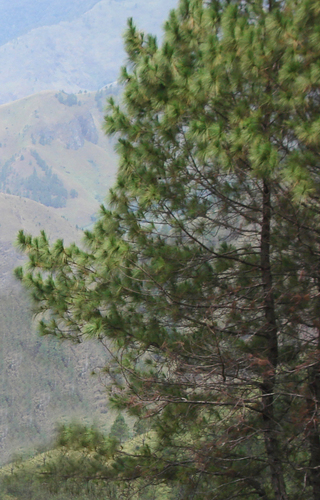
A very large tree. It grows to 55 m high and the trunk can be 200 cm across. The trunk is very large and often has buttresses at the base. The leaves are straight and flattened. They are 20-30 mm long. They are keeled underneath and have a sharp point. They are yellowish-green on the upper surface. There are prominent lines of white dots underneath. The needles tend to be at right angles to the twigs. The cones are broad and like a cylinder. They are 5-10 cm long. The scales are yellow to light brown. They are thin and brittle. They are loose fitting. They are broadest near the middle. They are wavy, irregular and toothed along the edge. Cones open in autumn and shed in the months following. The seeds are reddish-brown.
Edible Uses
Young shoots can be eaten raw, and young male catkins are edible raw or cooked, used as a flavouring. Immature female cones (6–10cm long) can be roasted; the central portion becomes sweet and syrupy. Inner bark is edible raw or cooked — dried and ground into a powder, it works as a thickener in soups or as an addition to cereals when making bread. It was typically harvested in spring, sometimes in summer, and is considered an emergency food for use only when other options are exhausted. The seeds (about 2–4mm long) can be eaten raw; they are rich in fats with a pleasant, slightly resinous flavour, but are too small and fiddly to be worth collecting except in desperate circumstances. Young shoot tips make a refreshing tea rich in vitamin C. Gum obtained from the bark can be hardened in cold water and used for chewing; it should be aged for 3 days or more before use, with the best quality gum coming from the southern side of the tree.
Traditional Uses
The sap or pitch is chewed like chewing gum. It can also be boiled. The inner bark is cooked and dried and stored for later use. The buds are used for food. The young shoots are eaten raw.
Medicinal Uses
Sitka spruce was widely used medicinally by several native North American Indian tribes, particularly for its antiseptic and pectoral qualities in treating lung complaints, wounds, and sores. It sees little or no use in modern herbalism. The inner bark is laxative and has been chewed to treat throat problems, coughs, and colds. A decoction of branch tips and bark has been used for rheumatism, stomach pains, constipation, and gonorrhoea. A decoction of the cones has been taken for pain relief, and the cones have also been used in steam baths to treat rheumatism. A bark decoction has been used as a steam bath for back aches. The resin is antiseptic and diuretic; a decoction has been used for gonorrhoea. A poultice of resin has been applied to rheumatic joints, both alone and combined with Indian Hellebore roots (Veratrum viride). The resin has also served as a dressing or poultice on cuts, broken skin, boils, wounds, infections, and suppurating sores, and has been chewed as a breath freshener and as a treatment for TB. Gum from new shoots and small branches has been placed in the eyes to treat snow blindness. A decoction of the roots has been used for diarrhoea.
Distribution
It is a temperate plant. It grows in the foggy zone along the Pacific coast in Canada and USA. It grows inland for 150 km and to about 500 m altitude. It suits wetter places. It suits hardiness zones 4-8. Arboretum Tasmania. Mt Lofty Botanical Gardens.
Where It Grows
Australia, Britain, Canada, Europe, Falklands, Faroe Islands, Germany, Iceland, North America, Slovenia, Tasmania, USA,
Cultivation
Plants are grown by seed.
Propagation
Stratification will likely improve germination, so fresh seed should ideally be sown in autumn in a cold frame. Stored seed should be sown as early in the year as possible in a cold frame, in a lightly shaded position. Seed must not be allowed to dry out and should be stored cool. Prick seedlings into individual pots when large enough to handle and grow on in a greenhouse or cold frame through their first winter. They can be planted into permanent positions in early summer the following year, or grown on in an outdoor nursery bed for a year or so. Protection from spring frosts may be needed. Cuttings of semi-ripe terminal shoots, 5–8cm long, can be taken in August in a frame with frost protection; roots form in spring. Cuttings of mature terminal shoots, 5–10cm long, taken in September/October in a cold frame take 12 months to root. Cuttings of soft to semi-ripe wood taken in early summer in a frame are slow but reliable.
Other Uses
The tough, flexible roots are used in basket making and as string. Roots were burnt over an open fire to remove bark, then dried and split to make hats, ropes, and other items. For basket construction, roots were cut into lengths of 75–90cm long and 12–25mm in diameter, then split while still sap-filled and soft into broad flat bands, which were further subdivided by knife and teeth to roughly the size of small twine. Hazel (Corylus spp) rods formed the vertical structure and bear grass (Xerophyllum tenax) provided the overlay. Several native North American tribes used these roots to weave baskets tight enough to hold water. Limbs and roots can also be pounded and shredded into rope. Pitch from the tree is used for caulking boats and waterproofing boxes; rendered pitch serves as a glue, and melted pitch can be applied as a protective varnish-like coating on wood. The wood is strong, elastic, soft, light, and straight-grained, with a resistance-to-weight ratio among the highest known, making it unsurpassed for aircraft construction. It is also used for shipbuilding, construction, packing cases, doors, and posts, and is widely valued for making musical instruments and for paper pulp. Knotted pieces of wood make good fuel and will keep a fire burning through the night.
Production
Trees live for 700-800 years.
Notes
There are between 30 and 40 species of Picea.
References (17)
- Coombes, A.J., 2000, Trees. Dorling Kindersley Handbooks. p 65
- Cundall, P., (ed.), 2004, Gardening Australia: flora: the gardener's bible. ABC Books. p 1042
- Farrar, J.L., 1995, Trees of the Northern United States and Canada. Iowa State University press/Ames p 98
- Grandtner, M. M., 2008, World Dictionary of Trees. Wood and Forest Science Department. Laval University, Quebec, Qc Canada. (Internet database http://www.wdt.qc.ca)
- Harris, E & J., 1983, Field Guide to the Trees and Shrubs of Britain. Reader's Digest. p 236
Show all 17 references Hide references
- Hibbert, M., 2002, The Aussie Plant Finder 2002, Florilegium. p 233
- http://www.botanic-gardens-ljubljana.com/en/plants
- Kermath, B. M., et al, 2014, Food Plants in the Americas: A survey of the domesticated, cultivated and wild plants used for Human food in North, Central and South America and the Caribbean. On line draft. p 656
- Kuhnlein, H. V. and Turner, N. J., 1991, Traditional Plant Foods of Canadian Indigenous Peoples. Food and Nutrition in History and Anthropology Volume 8. Gordon and Breach. p 36
- Lord, E.E., & Willis, J.H., 1999, Shrubs and Trees for Australian gardens. Lothian. p 86
- MacKinnon, A., et al, 2009, Edible & Medicinal Plants of Canada. Lone Pine. p 30
- Marinelli, J. (Ed), 2004, Plant. DK. p 147
- Moerman, D. F., 2010, Native American Ethnobotany. Timber Press. p 401
- Plants for a Future database, The Field, Penpol, Lostwithiel, Cornwall, PL22 0NG, UK. http://www.scs.leeds.ac.uk/pfaf/
- Traite gen. conif. 260. 1855
- Turner, N., 1995, Food Plants of Coastal First Peoples. Royal BC Museum Handbook p 32
- Upson, R., & Lewis R., 2014, Updated Vascular Plant Checklist and Atlas for the Falkland Islands. Falklands Conservation and Kew.