Picea pungens
Engelm.
Blue spruce, Colorado spruce, Silver spruce
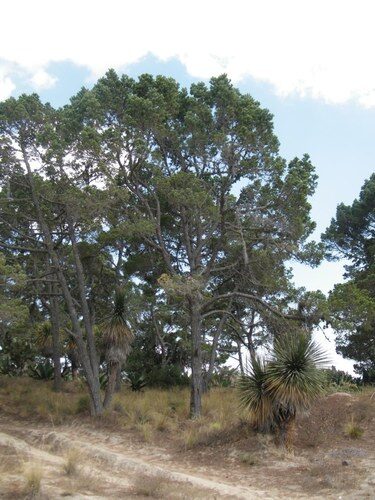
iNaturalist· cc-by-nc
(c) Jeff Bisbee, some rights reserved (CC BY-NC), uploaded by Jeff Bisbee
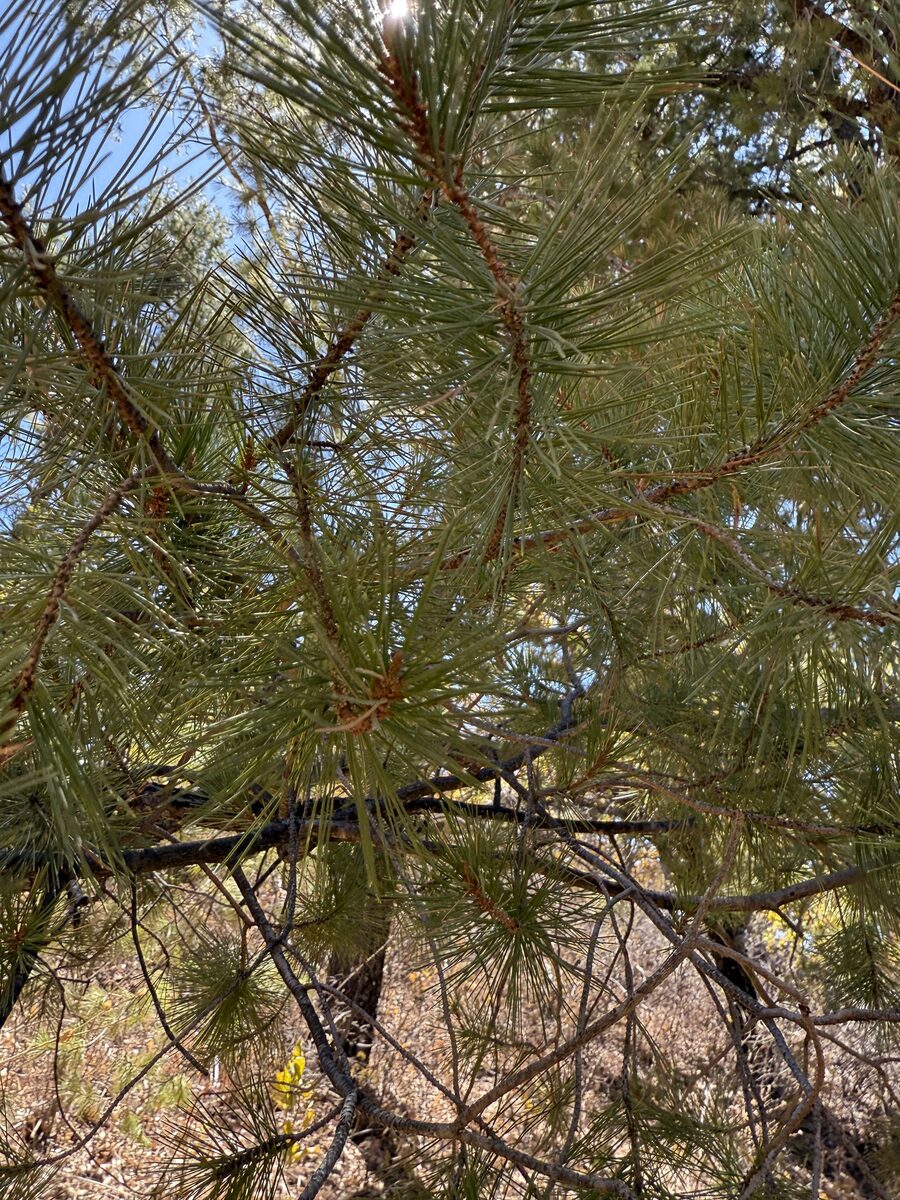
iNaturalist· cc-by-nc
(c) Jeff Bisbee, some rights reserved (CC BY-NC), uploaded by Jeff Bisbee
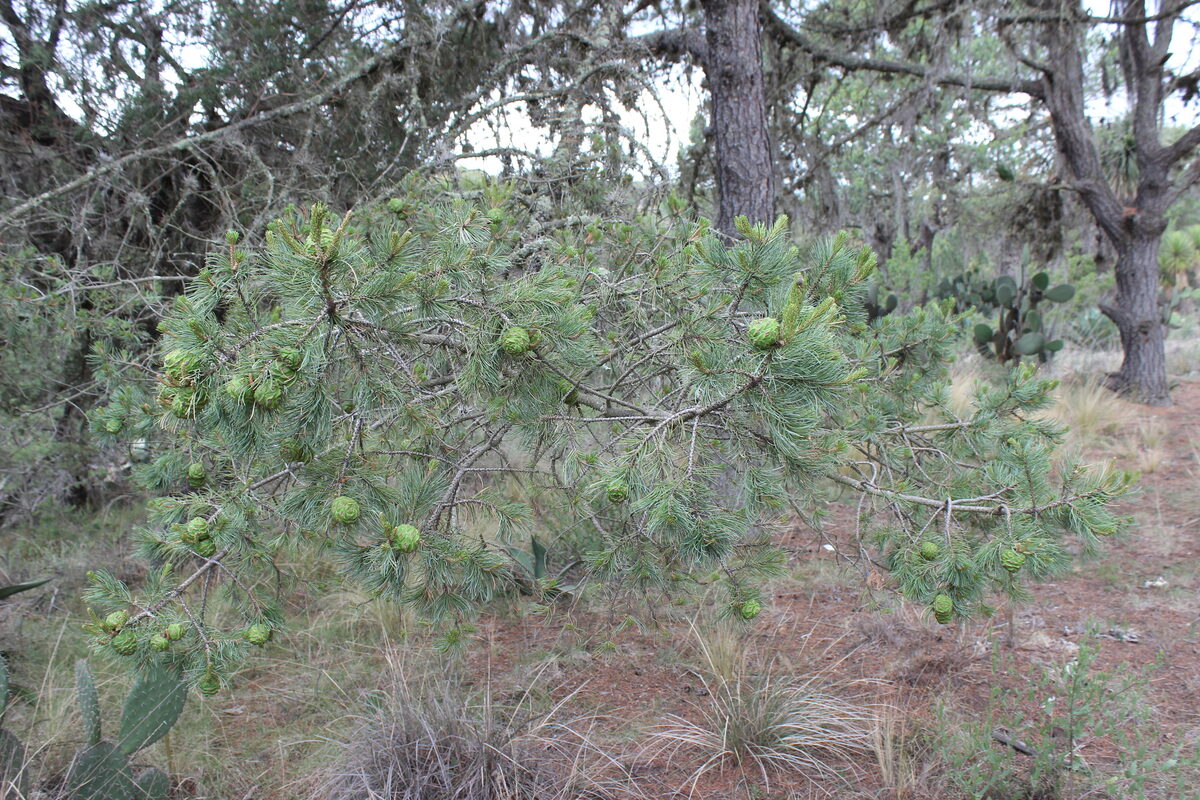
iNaturalist· cc-by-nc
(c) Hannah Floyd, some rights reserved (CC BY-NC), uploaded by Hannah Floyd
Summary
Source: WikipediaA medium-growth evergreen tree reaching 20 m tall and 5 m wide. Hardy to UK zone 3. Monoecious with wind pollination. Seeds ripen September to October. Tolerates light sandy, medium loamy, and heavy clay soils, including nutrient-poor conditions and very acidic soil. Requires full sun and adapts to dry or moist soil. Endures strong winds but not coastal exposure or air pollution.
Description
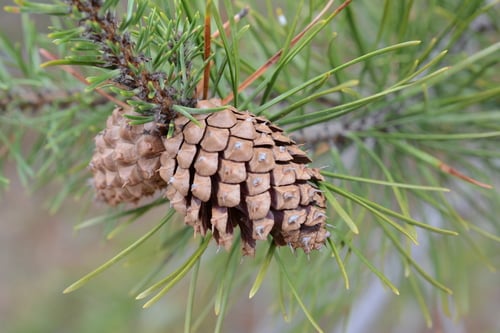
A medium sized tree. It grows 15-30 m high and spreads 3.7-5.5 m wide. The trunk is 90 cm across. It is cone shaped. The leaves are blue-green. The needles are single and stiff. They are 15-30 mm long with a very sharp point. They spread out all around the twigs. They tend to sweep upwards and curve forward. The twigs are stout. The seed cones are cylindrical and taper to the tip. They are 5-12 cm long. The scales are shiny and light brown. They are thin and flexible and loose fitting.
Edible Uses
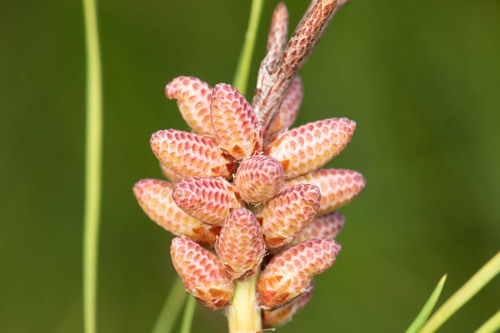
Young male catkins can be eaten raw or cooked and used as a flavouring. Immature female cones are edible when cooked — the central portion becomes sweet and syrupy when roasted; the cones are about 7cm long. The inner bark can be dried and ground into a powder for use as a soup thickener or bread additive, though it is an emergency food used only when nothing else is available. The seed is raw-edible, about 2–4mm long, rich in fats, and has a pleasant slightly resinous flavour, but it is too small and fiddly to be worthwhile except in desperate circumstances. Young shoot tips make a refreshing tea rich in vitamin C.
Traditional Uses
The needle tips are used to make jelly that is served with lamb or venison. It is also eaten with breakfast muffins.
This uses section is brief — help expand it
Medicinal Uses
The young shoot tips provide a tea rich in vitamin C. No other medicinal uses are known.
Distribution
It is a temperate plant. It is frost hardy. They are drought tolerant. They can grow on a variety of soils. It grows high in the Rocky Mountains in North America. It can tolerate drier soils than other spruces. It can also grow in damp ground. It suits hardiness zones 2-10. Arboretum Tasmania. Hobart Botanical Gardens.
Where It Grows
Australia, Britain, Canada, Europe, North America, Slovenia, Tasmania, USA,
Cultivation
Likes abundant moisture at the roots, if grown in drier areas it must be given a deep moist soil. Tolerates poor peaty soils. Prefers a cold dry high mountain site. Succeeds in wet cold and shallow soils but is not very wind-firm in shallow soils. Resists wind exposure to some degree. This species has a deeply penetrating root system that firmly anchors the tree against winds. Prefers a pH between 4 to 6. Dislikes shade. Intolerant of atmospheric pollution. A long-lived but slow-growing tree in the wild, with specimens 800 years old recorded. It is planted as a timber tree in N. and C. Europe. Most trees in Britain are grafted and these are slow growing. The few trees of seedling origin tend to be fairly fast growing after a slow start. Annual increases of 30 - 40cm are not uncommon in some of the larger trees. Trees should be planted into their permanent positions when they are quite small, between 30 and 90cm. Larger trees will check badly and hardly put on any growth for several years. This also badly affects root development and wind resistance. Seed production is usually good, with heavy crops every 2 - 3 years. In some upland areas, especially over granitic or other base-poor soils, growth rate and health have been seriously affected by aluminium poisoning induced by acid rain. Plants are strongly outbreeding, self-fertilized seed usually grows poorly. They hybridize freely with other members of this genus. There are several named forms, selected for their ornamental value. Trees are very subject to severe damage by aphids in mild winter areas where temperatures do not regularly fall below -8°c. All parts of the plant emit a powerful pungent smell when bruised.
Propagation
Sow fresh seed in autumn in a cold frame to benefit from natural stratification, or sow stored seed as early in the year as possible under the same conditions. Light shade is preferable. Keep seed moist and cool during storage. Prick out seedlings into individual pots once large enough to handle and overwinter in a greenhouse or cold frame. Plant out into permanent positions in early summer the following year, or grow on in an outdoor nursery bed for a further season. Spring frost protection may be needed. Semi-ripe terminal shoot cuttings, 5–8cm long, taken in August in a frame, protected from frost, root in spring. Mature terminal shoot cuttings, 5–10cm long, taken September/October in a cold frame, take 12 months to root. Soft to semi-ripe wood cuttings taken in early summer in a frame are slow but reliable.
Other Uses
A fairly wind-resistant tree, it is suitable for inclusion in shelterbelt plantings. The wood is light, soft, close-grained, weak, brittle, and often knotty, giving it little commercial value, but it is used for construction and is valued in the pulp industry for paper production.
Production
Trees can live for 600 years.
Notes
There are between 30 and 40 species of Picea.
Also Known As
Srebrna bodeča smreka
References (12)
- Coombes, A.J., 2000, Trees. Dorling Kindersley Handbooks. p 65
- Cundall, P., (ed.), 2004, Gardening Australia: flora: the gardener's bible. ABC Books. p 1041
- Facciola, S., 1998, Cornucopia 2: a Source Book of Edible Plants. Kampong Publications, p 169
- Farrar, J.L., 1995, Trees of the Northern United States and Canada. Iowa State University press/Ames p 109
- Gard. Chron. ser. 2, 11:334. 1879
Show all 12 references Hide references
- Harris, E & J., 1983, Field Guide to the Trees and Shrubs of Britain. Reader's Digest. p 234
- Hibbert, M., 2002, The Aussie Plant Finder 2002, Florilegium. p 233
- http://www.botanic-gardens-ljubljana.com/en/plants
- Joyce, D., 1998, The Garden Plant Selector. Ryland, Peters and Small. p 172
- Lord, E.E., & Willis, J.H., 1999, Shrubs and Trees for Australian gardens. Lothian. p 86
- Plants for a Future database, The Field, Penpol, Lostwithiel, Cornwall, PL22 0NG, UK. http://www.scs.leeds.ac.uk/pfaf/
- Schuler, S., (Ed.), 1977, Simon & Schuster's Guide to Trees. Simon & Schuster. No. 28