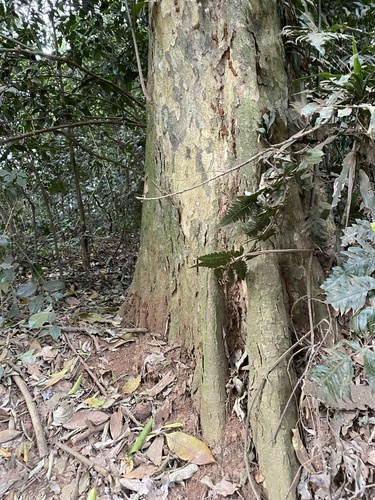
Anacolosa frutescens
(Blume) Blume
Galo nut
iNaturalist· cc-by-nc
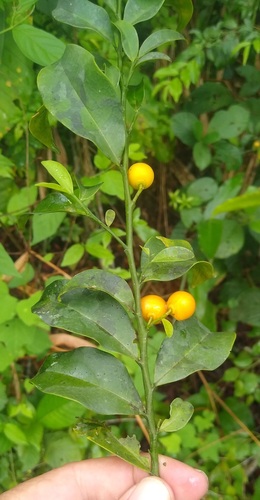
(c) Akmal Idham, some rights reserved (CC BY-NC), uploaded by Akmal Idham
iNaturalist· cc-by-nc
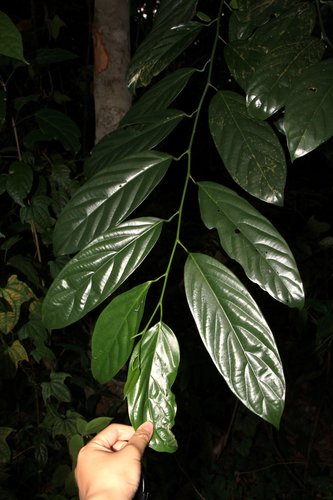
(c) Akmal Idham, some rights reserved (CC BY-NC), uploaded by Akmal Idham
iNaturalist· cc-by-nc-sa
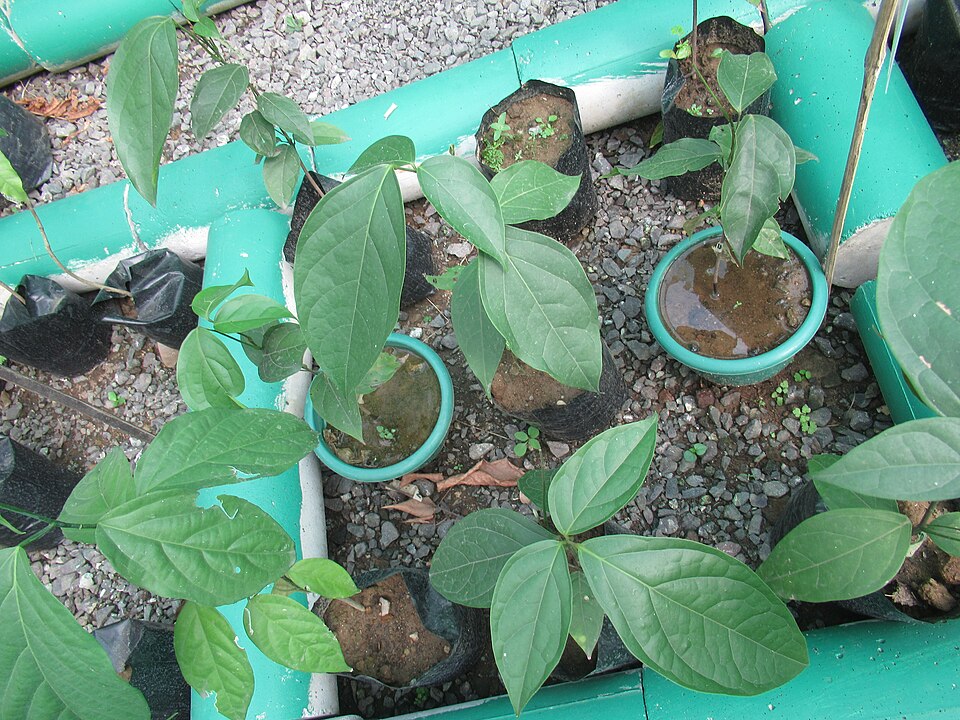
(c) filibot.web, some rights reserved (CC BY-NC-SA)
Summary
Source: WikipediaAnacolosa frutescens, also known as galo or galonut, is a plant in the family Olacaceae. The specific epithet frutescens is from the Latin frutex meaning 'shrub'. It produces edible fruits and nuts eaten in the Philippines.
Description
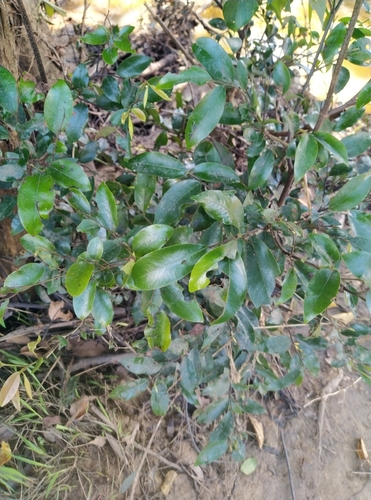
A medium sized tree. It grows 5-25 m tall. The leaves are alternate and somewhat pointed at both ends. They vary in shape. Leaves can be 7-15 cm long by 4-6.5 cm wide but can be larger or smaller. The leaf stalks is 5-7 mm long. The flowers are small and yellow and occur in small clusters. They are on small lumps. There can be 5-15 flowers per lump. The fruit is fleshy with a stone inside. The fruit is a nut produced in the axils of leaves. It has a thin shell and is about 2 cm long and across. The fruit are yellow to orange. They are on stout stalks 8 mm long. The pulp of the fruit is 4-9 mm thick. There is one seed.
Edible Uses
The seeds (nuts) can be eaten raw or cooked. Thin-shelled and considered good quality, they are said to taste like a combination of sweet corn and chestnuts, and contain 3.9–11.1% protein, 1.8–8% fat, and 33.4–39.5% carbohydrate. The fruit is also edible raw or cooked — young fruits are particularly delicious when boiled, and the pulp of mature fruits can be eaten cooked. The yellow or orange drupe is 15–25 mm long and 12–20 mm in diameter, with a thin layer of pulp up to 6 mm thick surrounding a single seed.
Traditional Uses
The kernels of the nuts are eaten raw. They can be roasted. The pulp of the fruit can be eaten fresh but is usually boiled to enhance the flavour.
This uses section is brief — help expand it
Medicinal Uses
None known.
Distribution
A tropical plant. It grows well at low and medium altitudes up to 700 m. It can grow to 1400 m altitude. It does best in a shady location and in places without a pronounced dry season. They occur only in Cagayan, Benguet, Mt Province, Nueva Viscaya, Bataan, Cavite, Batangas, Mindoro and Masbate in the Philippines.
Where It Grows
Andamans, Asia, India, Indochina, Indonesia, Malaysia, Myanmar, Pacific, Philippines, SE Asia, Thailand,
Cultivation
Plants are grown from seed. Seed take over 100 days to germinate. It can be grown by air-layering. This takes 4 months until separation. Cleft grafting can be used.
Propagation
Seed germinates in more than 100 days. Cleft-grafting onto seedlings that are at least one year old is highly successful. Air layering is also effective and takes approximately 4 months.
Other Uses
The wood is pale reddish-brown, hard and heavy, but not durable. It is used for house posts.
Production
Germination and early growth is slow. A mature fruit weighs 8-16 g. A kernel weighs 0.8-2.8 g.
Notes
There are 17 Anacolosa species. The nuts are 3.9-11.1% protein.
Nutrition
| Part | Moisture | kJ | kcal | Protein | Vit A | Vit C | Iron | Zinc |
|---|---|---|---|---|---|---|---|---|
| Nuts | 44.9 | 957 | 229 | 3.6 | — | — | 1 | — |
| Fruit | 74.3 | 422 | 101 | 3.2 | — | — | 1.3 | — |
Synonyms
Also Known As
Aluloi, Belian landak, Kopi gunung, Matoboto, Pohon kopi gunung, Salungugapit, Tangki leuweung, Yupa
References (22)
- Arora, R. K., 2014, Diversity in Underutilized Plant Species - An Asia-Pacific Perspective. Bioversity International. p 90
- Bircher, A. G. & Bircher, W. H., 2000, Encyclopedia of Fruit Trees and Edible Flowering Plants in Egypt and the Subtropics. AUC Press. p 26
- Brown, W.H., 1920, Wild Food Plants of the Philippines. Bureau of Forestry Bulletin No. 21 Manila. p 48
- Burkill, I.H., 1966, A Dictionary of the Economic Products of the Malay Peninsula. Ministry of Agriculture and Cooperatives, Kuala Lumpur, Malaysia. Vol 1 (A-H) p 147 (As Anacolosa luzonensis)
- Coronel, R.E., 1982, Fruit Collections in the Philippines. IBPGR Newsletter p 8 (As Anacolosa luzoniensis)
Show all 22 references Hide references
- Facciola, S., 1998, Cornucopia 2: a Source Book of Edible Plants. Kampong Publications, p 162 (As Anacolosa luzoniensis)
- Food Composition Tables for use in East Asia FAO http://www.fao.org/infoods/directory No. 308 (As Anacola luzoniensis)
- Giesen, W., 2013, Paludiculture: sustainable alternatives on degraded peat land in Indonesia (revised draft)
- Menninger, E.A., 1977, Edible Nuts of the World. Horticultural Books. Florida p 8
- Milow, P., et al, 2013, Malaysian species of plants with edible fruits or seeds and their evaluation. International Journal of Fruit Science. 14:1, 1-27
- Monsalud, M.R., Tongacan, A.L., Lopez, F.R., & Lagrimas, M.Q., 1966, Edible Wild Plants in Philippine Forests. Philippine Journal of Science. p 511 (As Anacolosa luzoniensis)
- Mus. Bot. 1:251, fig. 46. 1850
- PROSEA (Plant Resources of South East Asia) handbook, Volume 2, 1991, Edible fruits and nut. p 64
- Saw, L.G., LaFrankie, J. V. Kochummen, K. M., Yap S. K., 1991, Fruit Trees in a Malaysian Rain Forest. Economic Botany, Vol. 45, No. 1, pp. 120-136
- Schatz, G.E., 2001, Generic Tree Flora of Madagascar. Royal Botanical Gardens, Kew and Missouri Botanical Garden. p 292 (Genus)
- Slik, F., www.asianplant.net
- Sukarya, D. G., (Ed.) 2013, 3,500 Plant Species of the Botanic Gardens of Indonesia. LIPI p 125
- Uphof,
- USDA, ARS, National Genetic Resources Program. Germplasm Resources Information Network - (GRIN). [Online Database] National Germplasm Resources Laboratory, Beltsville, Maryland. Available: www.ars-grin.gov/cgi-bin/npgs/html/econ.pl (10 April 2000)
- Wickens, G.E., 1995, Edible Nuts. FAO Non-wood forest products. FAO, Rome. p 75, 145
- Wiersema, J. H. & Leon, B., 2013, World Economic Plants. A Standard Reference CRC Press. 2nd Ed. p 49
- World Checklist of Useful Plant Species 2020. Royal Botanic Gardens, Kew