Alkekengi officinarum
Moench
Winter cherry, Redflesh Cape Gooseberry
iNaturalist· cc-by-nc-sa
(c) Nicole, some rights reserved (CC BY-NC-SA)
iNaturalist· cc-by-nc
(c) Leslie Flint, some rights reserved (CC BY-NC), uploaded by Leslie Flint
iNaturalist· cc-by-nc-sa
(c) Nicole, some rights reserved (CC BY-NC-SA)
Description
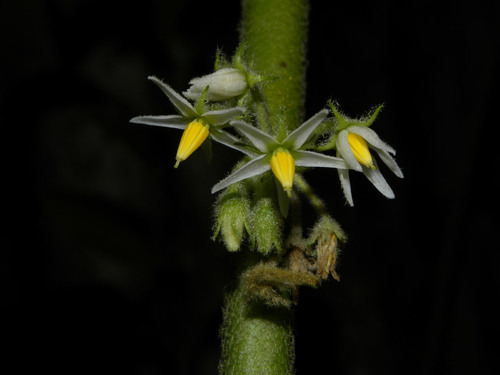
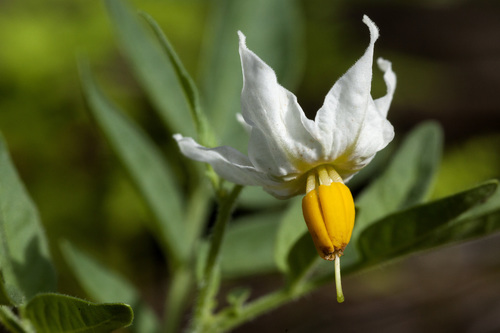
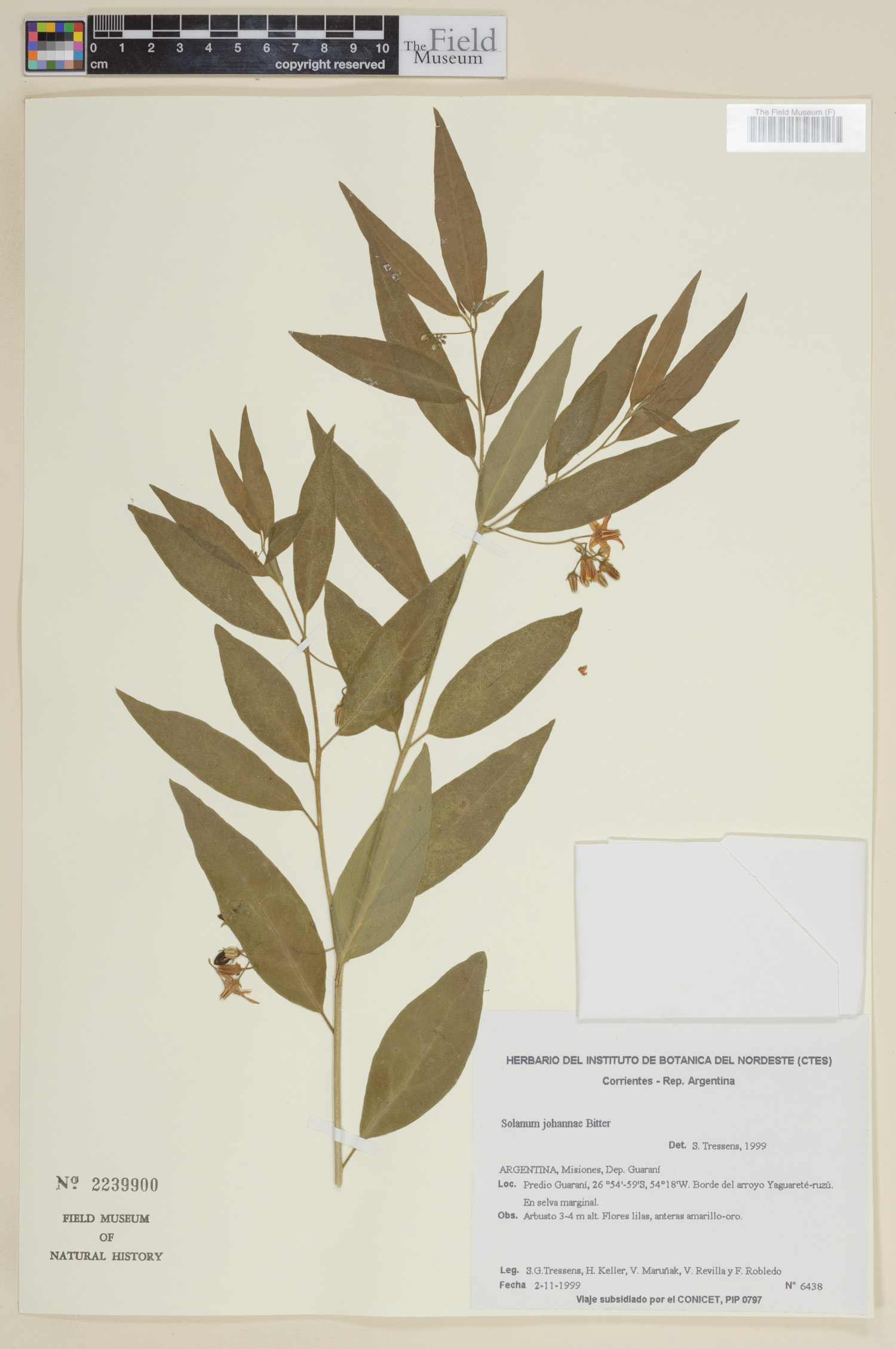
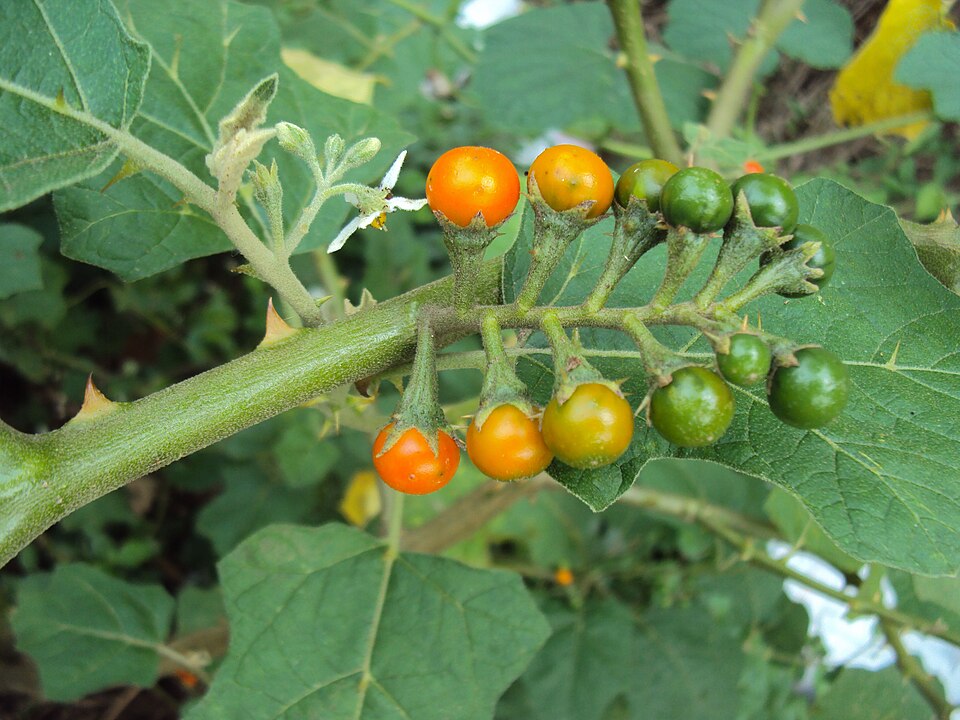
A perennial herb. The stems are 40-80 cm tall. They are slightly woody at the base. The plant is little branched and is swollen at the nodes. The leaf stalks are 1-3 cm along. The flowers are produced in the axils of leaves. The fruit is shiny orange red and round. They are enclosed in an inflated calyx. The seeds are pale yellow and 2 mm across.
Edible Uses
The fruits are edible and used for syrups. The leaves and stems are also edible; leaves are documented as a famine food in China. It is commercially cultivated as a vegetable.
Traditional Uses
The fruit are edible. They are also used for syrups.
This uses section is brief — help expand it
Known Hazards
The plant is sensitive to drought conditions.
Distribution
It is a temperate plant. It does best in a rich, well-drained soil in a protected sunny position. It is resistant to frost but sensitive to drought. It suits hardiness zones 4-9.
Where It Grows
Albania, Arabia, Armenia, Asia, Australia, Austria, Azerbaijan, Balkans, Bosnia, Britain, Bulgaria, Canada, Cape Verde, Caucasus, Central Asia, China, Cuba, Czech Republic, Eurasia, Europe, Georgia, Germany, Greece, Hungary, India, Iran, Italy, Japan, Macedonia, Mediterranean, Middle East, Moldova, North America, Pakistan, Poland, Romania, Russia, Slovakia, Slovenia, Spain, Switzerland, Tajikistan, Tasmania, Turkey, Türkiye, Turkmenistan, Ukraine, West Indies, Yugoslavia,
Cultivation
Plants are grown from ripened seed or by division.
Other Information
It is a commercially cultivated vegetable. The leaves are listed as a famine food in China.
Notes
There are about 75-100 Physalis species.
Synonyms
Also Known As
Denglonghua, Denglonghuacai, Guajindeng, Hong Guniang, Lantern flower, Ljoskavac, Navadno volčje jabolko, Red girl, Sour paste, Suan jiang, Teleme otu, Ont'k'opa
References (31)
- Abbet, C., et al, 2014, Ethnobotanical survey on wild alpine food plants in Lower and Central Valais (Switzerland). Journal of Ethnopharmacology 151 (2014) 624–634 (As Physalis alkekengi)
- Ambasta, S.P. (Ed.), 2000, The Useful Plants of India. CSIR India. p 452 (As Physalis alkekengi)
- Blamey, M and Grey-Wilson, C., 2005, Wild flowers of the Mediterranean. A & C Black London. p 404 (As Physalis alkekengi)
- Bodkin, F., 1991, Encyclopedia Botanica. Cornstalk publishing, p 791 (As Physalis alkekengi var. alkekengi)
- Brickell, C. (Ed.), 1999, The Royal Horticultural Society A-Z Encyclopedia of Garden Plants. Convent Garden Books. p 792 (As Physalis alkekengi var. alkekengi)
Show all 31 references Hide references
- Bussman, R. W., et al, 2016, A comparative ethnobotany of Khevsureti, Samtskhe-Javakheti, Tusheti, Svaneti, and Racha-Lechkhumi, Republic of Georgia (Sakartvelo), Caucasus. Journal of Ethnobiology and Ethnomedicine. (As Physalis alkekengi)
- Bussman, R. W., et al, 2021, Unity in diversity—food plants and fungi of Sakartvelo (Republic of Georgia), Caucasus. Journal of Ethnobiology and Ethnomedicine (2021) 17:72 p 15
- Cerne, M., 1992, Wild Plants from Slovenia used as Vegetables. Acta Horticulturae 318 (As Physalis alkekengi)
- Cundall, P., (ed.), 2004, Gardening Australia: flora: the gardener's bible. ABC Books. p 1036 (As Physalis alkekengi)
- Duarte, M. C., et al, 2022, Diversity of Useful Plants in Cabo Verde Islands: A Biogeographic and Conservation Perspective. Plants 2022, 11, 1313 p 16
- Flora of Pakistan. www.eFloras.org (As Physalis alkekengi)
- Flowerdew, B., 2000, Complete Fruit Book. Kyle Cathie Ltd., London. p 110 (As Physalis alkekengi)
- Gunes, S. et al, 2018, Survey of wild food plants for human consumption in Karaisali (Adana-Turkey). Indian Journal of Traditional Knowledge. Vol. 17(2), April 2018, pp 290-298 (As Physalis alkekengi)
- Hedrick, U.P., 1919, (Ed.), Sturtevant's edible plants of the world. p 490 (As Physalis alkekengi)
- Hermandez Bermejo, J.E., and Leon, J. (Eds.), 1994, Neglected Crops. 1492 from a different perspective. FAO Plant Production and Protection Series No 26. FAO, Rome. p 117 (As Physalis alkekengi)
- Heywood, V.H., Brummitt, R.K., Culham, A., and Seberg, O., 2007, Flowering Plant Families of the World. Royal Botanical Gardens, Kew. p 306 (As Physalis alkekengi)
- Hibbert, M., 2002, The Aussie Plant Finder 2002, Florilegium. p 232 (As Physalis alkekengi)
- http://www.botanic-gardens-ljubljana.com/en/plants (As Physalis alkekengi)
- Kang, Y., et al, 2012, Wild food plants and wild edible fungi in two valleys on the Qinling Mountains (Shaanxi, central China) Journal of Ethnobiology and Ethnomedicine; 9:26 (As Physalis alkekengi)
- Kays, S. J., and Dias, J. C. S., 1995, Common Names of Commercially Cultivated Vegetables of the World in 15 languages. Economic Botany, Vol. 49, No. 2, pp. 115-152 (As Physalis alkekengi)
- Lazarides, M. & Hince, B., 1993, Handbook of Economic Plants of Australia, CSIRO. p 188 (As Physalis alkekengi var. alkekengi)
- Lyle, S., 2006, Discovering fruit and nuts. Land Links. p 325 (As Physalis alkekengi)
- Plants for a Future database, The Field, Penpol, Lostwithiel, Cornwall, PL22 0NG, UK. http://www.scs.leeds.ac.uk/pfaf/ (As Physalis alkekengi var. alkekengi)
- Plants for a Future database, The Field, Penpol, Lostwithiel, Cornwall, PL22 0NG, UK. http://www.scs.leeds.ac.uk/pfaf/ (As Physalis alkekengi)
- Redzic, S. J., 2006, Wild Edible Plants and their Traditional Use in the Human Nutrition in Bosnia-Herzegovina. Ecology of Food and Nutrition, 45:189-232 (As Physalis alkekengi)
- Samuels, J., 2015, Biodiversity of Food Species of the Solonaceae Family: A Preliminary Taxonomic Inventory of Subfamily Solanoideae. Resources 2015, 4. 277-322 (As Physalis alkekengi)
- Simkova, K. et al, 2014, Ethnobotanical review of wild edible plants used in the Czech Republic. Journal of Applied Botany and Food Quality 88, 49-67 (As Physalis alkekengi)
- Sp. pl. 1:183. 1753 (As Physalis alkekengi)
- USDA, ARS, National Genetic Resources Program. Germplasm Resources Information Network - (GRIN). [Online Database] National Germplasm Resources Laboratory, Beltsville, Maryland. Available: www.ars-grin.gov/cgi-bin/npgs/html/econ.pl (10 April 2000) (As Physalis alkekengi var. alkekengi)
- Valder, P., 1999, The Garden Plants of China. Florilegium. p 378 (As Physalis alkekengi)
- World Checklist of Useful Plant Species 2020. Royal Botanic Gardens, Kew