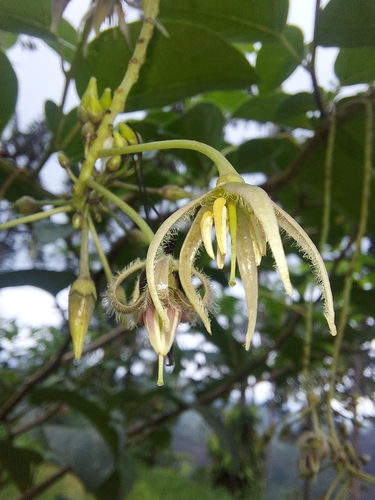
Solanum supinum
Dunal
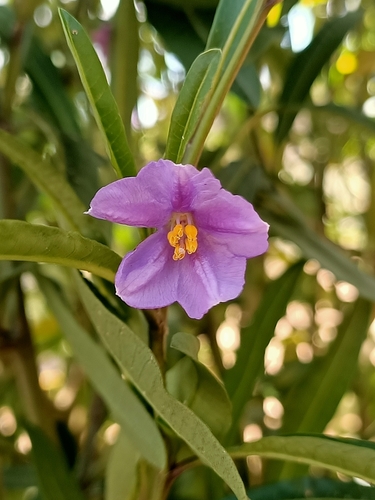
iNaturalist· cc-by-nc
(c) Gigi Laidler, some rights reserved (CC BY-NC), uploaded by Gigi Laidler
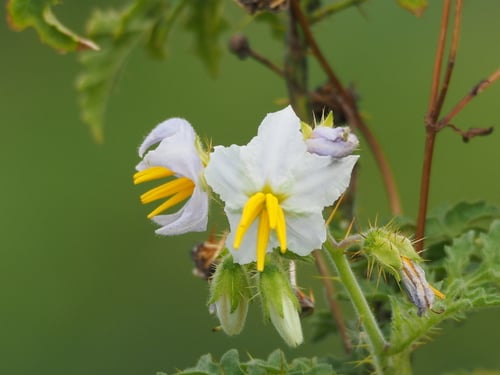
iNaturalist· cc-by-nc-sa
(c) David Hoare, some rights reserved (CC BY-NC-SA), uploaded by David Hoare
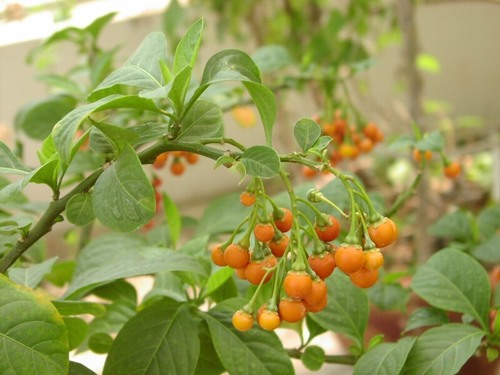
iNaturalist· cc-by-sa
(c) Nicola van Berkel, some rights reserved (CC BY-SA), uploaded by Nicola van Berkel
Description
A shrub. It is partly erect or lies along the ground. It has broad leaves. It takes 2 years to complete its lifecycle. It grows 50 cm high. It has spines. The leaves are wavy along the edge. They have a bluish covering. The flowers are yellow or blue-white. They have 5 lobes. They are in the axils of leaves. The fruit are berries 2 cm across. They have cream stripes along them and turn yellow when ripe.
Edible Uses
The fruit are used in dairy-like preparations and to curdle milk.
Traditional Uses
The fruit are used for dairy like preparations. They are used to curdle milk.
This uses section is brief — help expand it
Known Hazards
Member of Solanaceae family; specific toxicity data not provided but caution typical for this family is warranted.
Distribution
It is a subtropical plant. It grows in hot arid places with a marked dry season lasting 6-11 months. It grows in well drained soil. It grows between 900-1,800 m above sea level. It can tolerate some shade. It can grow in arid places.
Where It Grows
Africa, Botswana, Lesotho, Namibia, South Africa*, Southern Africa,
Synonyms
References (4)
- Royal Botanic Gardens, Kew (1999). Survey of Economic Plants for Arid and Semi-Arid Lands (SEPASAL) database. Published on the Internet; http://www.rbgkew.org.uk/ceb/sepasal/internet [Accessed 11th June 2011]
- Ruiters-Welcome, A. K., 2019, Food plants of southern Africa. Ph.D. thesis. Univ. of Johannesburg p 104
- Welcome, A. K. & Van Wyk, B.-E., 2019, An inventory and analysis of the food plants of southern Africa. South African Journal of Botany 122 (2019) 136–179
- World Checklist of Useful Plant Species 2020. Royal Botanic Gardens, Kew