Solanum surattense
Burm. f.
Yellow-berried nightshade
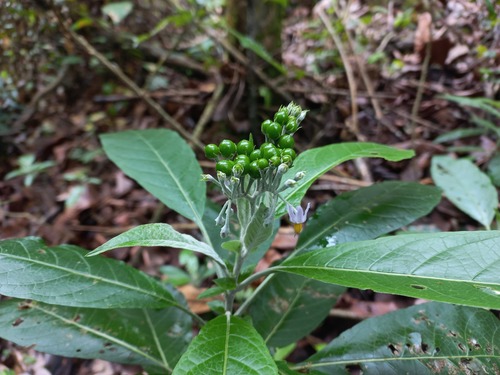
iNaturalist· cc-by-nc
(c) geo_napoli, some rights reserved (CC BY-NC)
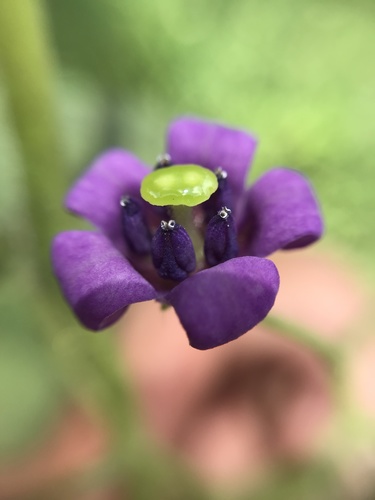
iNaturalist· cc-by-nc
(c) geo_napoli, some rights reserved (CC BY-NC)
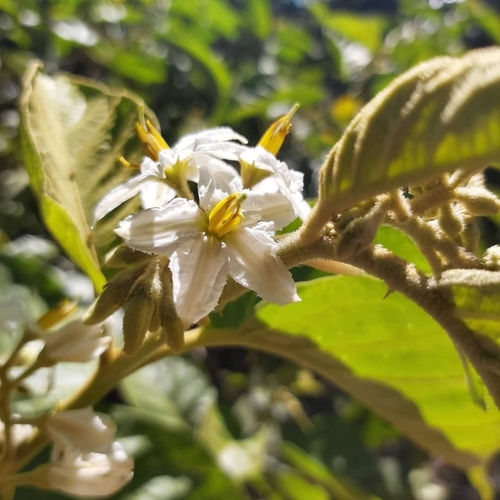
iNaturalist· cc-by-nc
(c) geo_napoli, some rights reserved (CC BY-NC)
Description
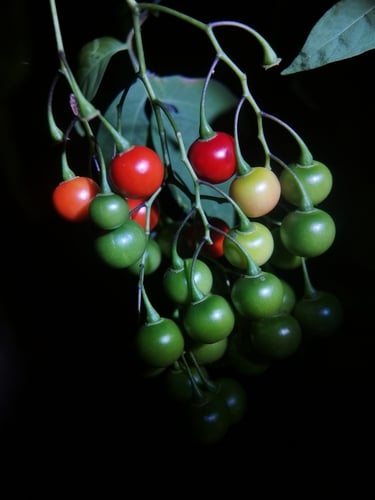
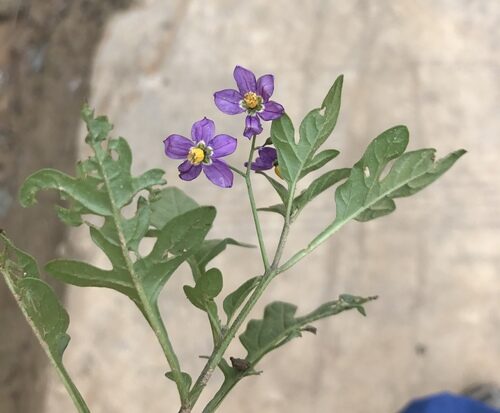
A prickly herb. It lies along the ground. The prickles are 15 mm long and yellow. The stems and branches can have hairs. The leaves are 3-8 cm long by 3-5 cm wide. The are oval and deeply divided into unequal lobes. There are 2-4 purple flowers together. The fruit is a round berry 1-2 cm wide. The seeds are disk shaped.
Edible Uses
The leaves are eaten as a green vegetable. The fruit are cooked in curries, eaten raw, or sun-dried and stored for later use. The seeds are also eaten.
Traditional Uses
The fruit are cooked and used in curries. The seeds are also eaten. The fruit are also eaten raw. The leaves are eaten as a green vegetable. The berries can be sun-dried and stored.
Distribution
It is a tropical plant. In Pakistan it grows up to 1,300 m altitude. In Sri Lanka it grows up to 800 m above sea level.
Where It Grows
Africa, Asia, Australia, India, Nepal, North Africa, Northeastern India, Pacific, Pakistan, Polynesia, Sri Lanka,
Cultivation
The plants are grown from seed. It is best to put them in a nursery and then transplant them when 12-15 cm tall.
Production
Harvesting can start 3 months after planting and then continue to 12 months.
Notes
There are about 1400 Solanum species.
Nutrition
| Part | Moisture | kJ | kcal | Protein | Vit A | Vit C | Iron | Zinc |
|---|---|---|---|---|---|---|---|---|
| Fruit | 75.5 | 163 | 39 | 3.1 | — | — | 1.2 | — |
Synonyms
Also Known As
Ankranti, Bhatkhataya, Bheji-begun, Bhoyaringani, Bhuiringani, Buiringi, Charhenti, Choti kandiari, Cundung katrie, Ela-batu, Kandankattiri, Kanderi, Kandiari walh, Kandyali, Kantakari, Kantankathiri, Katai, Kateli, Kundiari, Mahori, Maraghone, Markondaye, Melamulaka, Mokri, Momoli, Neeli khurd katai, Nella molunga, Nidigadhika, Pinnamulaka, Rangaini janum, Rengnie, Ringani, Speenazghai, Toko bhijri, Vaddu vattu, Vankuda, Warumba
References (14)
- Ajain, M., Ali, T., & Siddiqui, M.F., 2015, A Survey of Ethnobotanically Important Herbaceous Plants of Tehsil Jatoi,District Muzaffar Garh, Punjab, Pakistan. Int. J. Biol. Res., 3(2): 87-92, 2015.
- Ambasta, S.P. (Ed.), 2000, The Useful Plants of India. CSIR India. p 582
- Dangol, D. R. et al, 2017, Wild Edible Plants in Nepal. Proceedings of 2nd National Workshop on CUAOGR, 2017.
- Dey, A. & Mukhererjee, A., 2015, Living and Survival Amidst Hunger: Wild Edible Botanicals as a Prime Forest Productivity in the Rural Purulia District, West Bengal, India from Colonial to Present. Research Journal of Forestry 9(3): 71-86
- Fl. indica 57. 1768
Show all 14 references Hide references
- Flora of Pakistan. www.eFloras.org
- Kannan, M., et al, 2015, Ethnobotanical survey on wild edible plants of Kalrayan Hills, Salem District, Tamil Nadu, India. Global J. Res. Med Plants & Indigen. med. 4(12): 236-246
- Khan, D. & Shaukat, S.S., 2006, The Fruits of Pakistan: Diversity, Distribution, Trends of Production and Use. Int. J. Biol. Biotech., 3(3):463-499
- Patiri, B. & Borah, A., 2007, Wild Edible Plants of Assam. Geethaki Publishers. p 91
- Ramachandran, V. S., 2007, Wild edible plants of the Anamalais, Coimbatore district, western Ghats, Tamil Nadu. Indian Journal or Traditional Knowledge. 6(1) pp 173-176
- Sasi, R. & Rajendran, A., 2012, Diversity of Wild Fruits in Nilgiri Hills of the Southern Western Ghats - Ethnobotanical Aspects. IJABPT, 3(1) p 82-87
- SHORTT, (As Solanum jacquini)
- Singh, H.B., Arora R.K.,1978, Wild edible Plants of India. Indian Council of Agricultural Research, New Delhi. p 40
- WATT, (As Solanum jacquini)