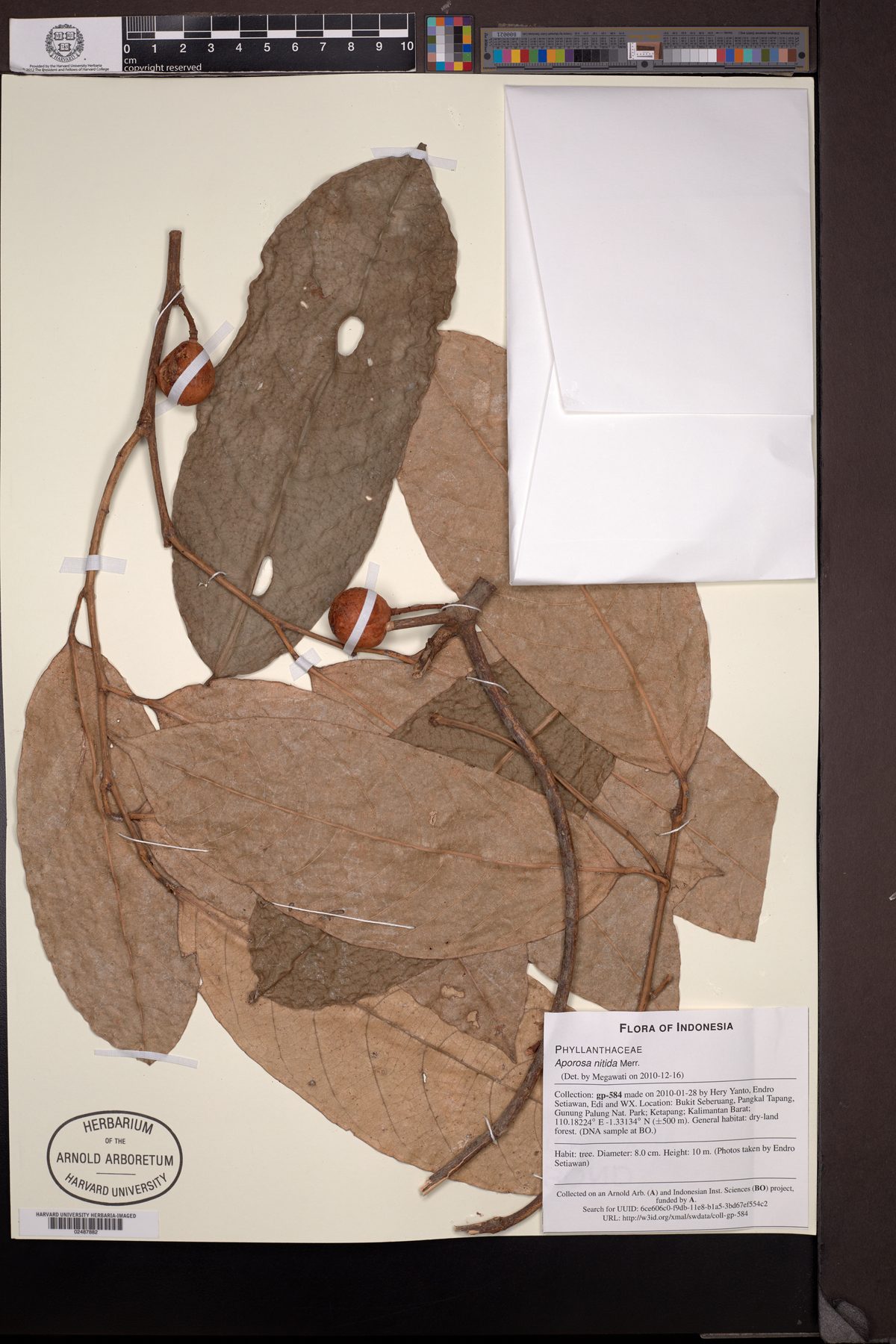
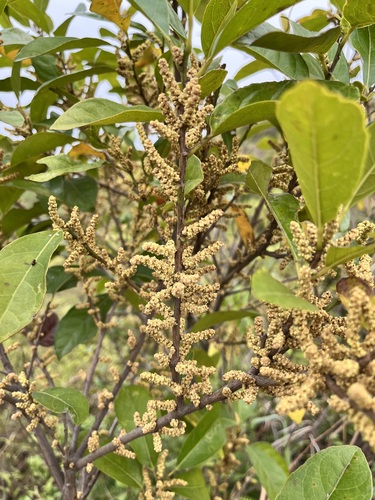
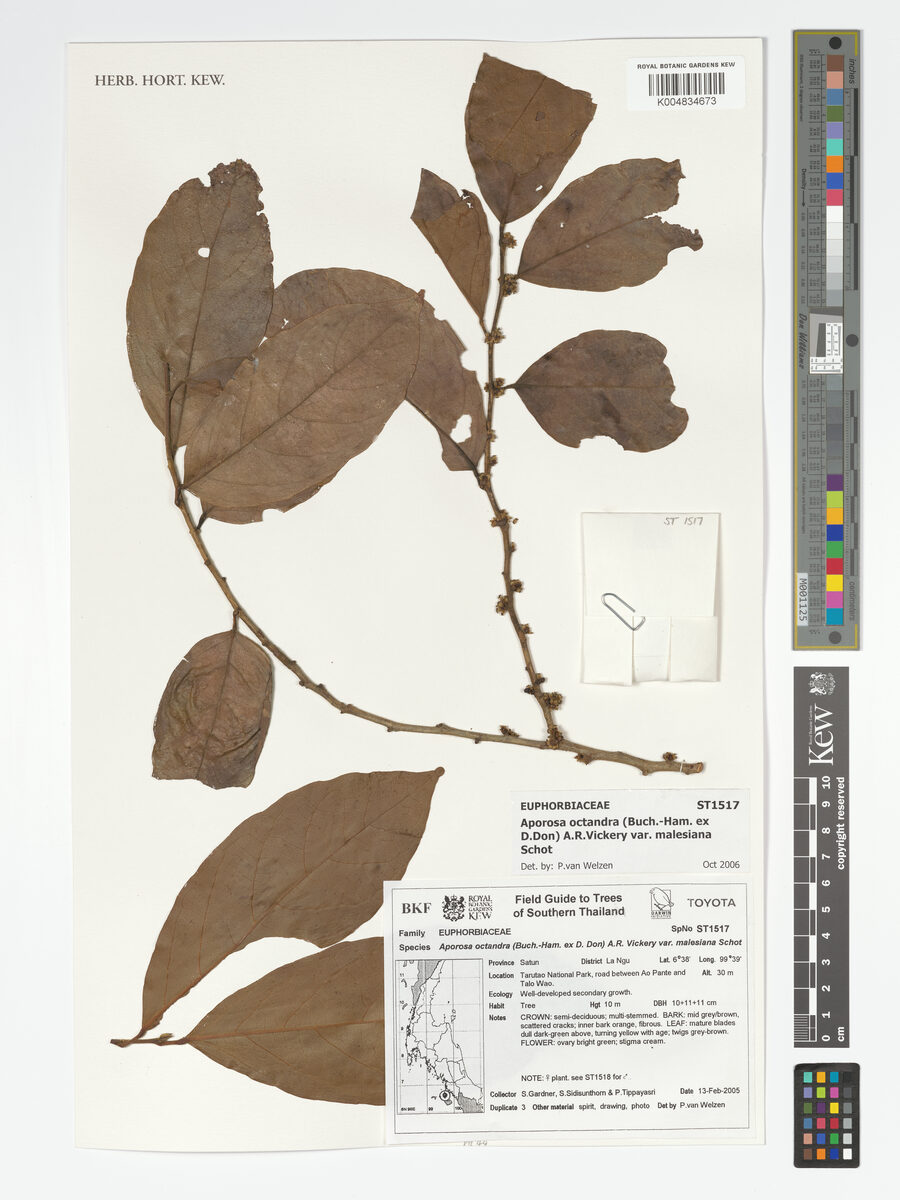
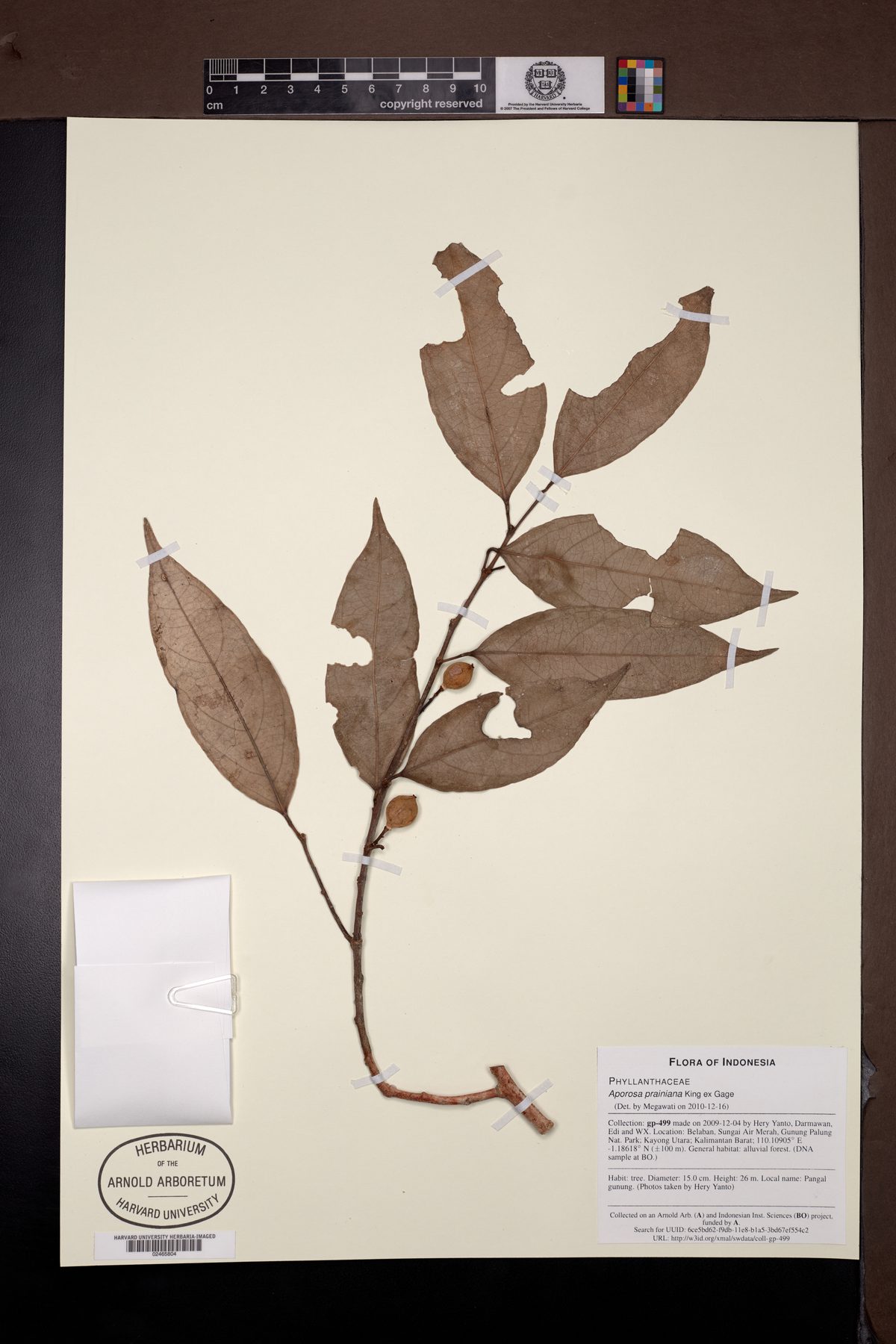
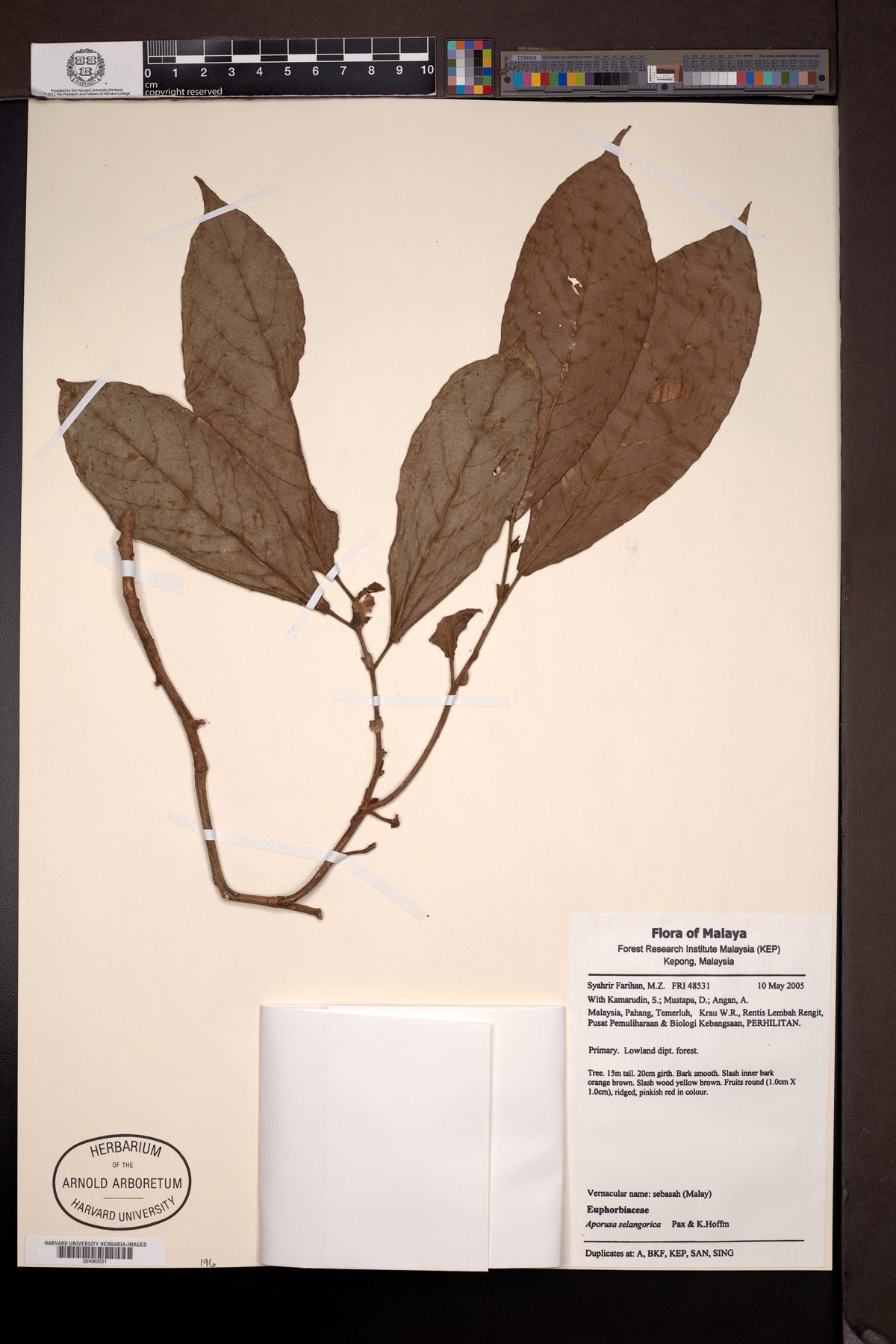
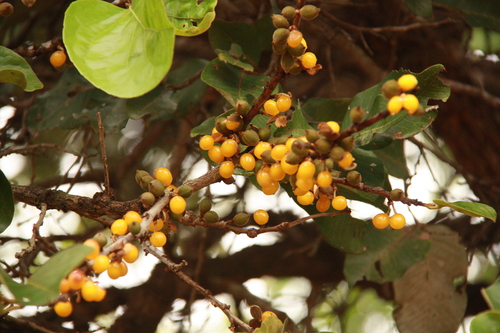
Phyllanthus gomphocarpus
Hook.f.
Chermela
gbif· cc0
President and Fellows of Harvard College
gbif· cc0
President and Fellows of Harvard College
gbif· cc0
President and Fellows of Harvard College
Description
A shrub. It grows 3 m tall. The leaves are broadly sword shaped. They are 1-6 cm long by 1-3 cm wide. The male flowers are small and in a group and the female flowers are large and occur singly. The fruit is a flattened round capsule with 3 lobes. It is 1-2 cm across. It has small seeds.
Edible Uses
The sour fruit are eaten.
Traditional Uses
The sour fruit are eaten.
This uses section is brief — help expand it
Medicinal Uses
The crushed young leaves are used to heal wounds. A decoction from the boiled roots of this plant was traditionally claimed to enhance human health among local traditional practitioners and the Orang Asli community in Malaysia. The roots and the leaves have been shown to contain flavonoids, saponins, tannins, and terpenoids.
Distribution
A tropical plant. It grows in hilly areas in shady forests up to 800 m above sea level.
Where It Grows
Asia, Indochina, Indonesia, Malaysia, Myanmar, SE Asia, Thailand,
Notes
There are about 750 Phyllanthus species. They are mostly in the tropics.
Synonyms
Also Known As
Chermela hutan
References (4)
- Burkill, I.H., 1966, A Dictionary of the Economic Products of the Malay Peninsula. Ministry of Agriculture and Cooperatives, Kuala Lumpur, Malaysia. Vol 2 (I-Z) p 1747
- Milow, P., et al, 2013, Malaysian species of plants with edible fruits or seeds and their evaluation. International Journal of Fruit Science. 14:1, 1-27
- PROSEA No. 2
- World Checklist of Useful Plant Species 2020. Royal Botanic Gardens, Kew