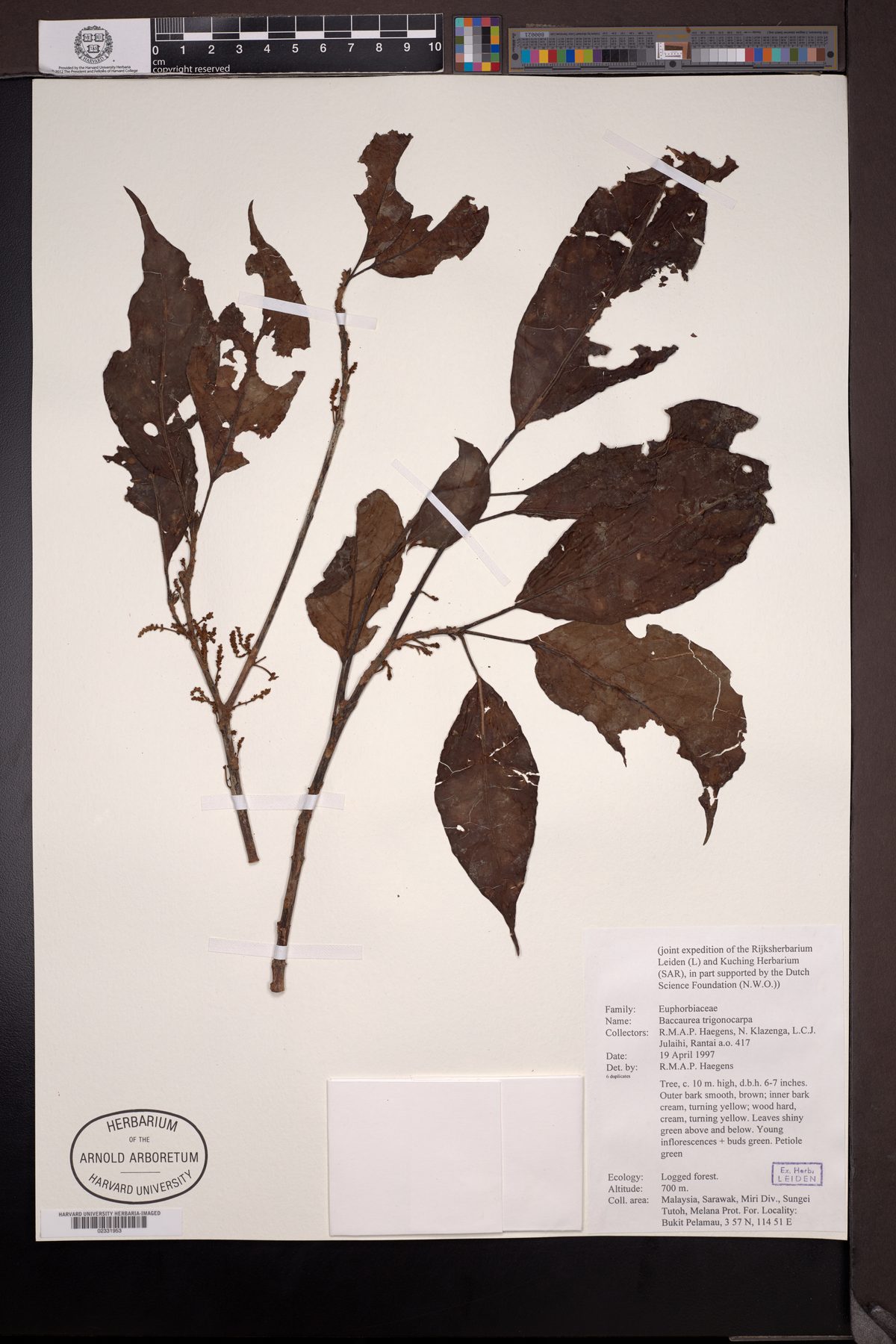
Aporosa octandra var. malesiana
Schot.
gbif· cc-by
Royal Botanic Gardens, Kew
gbif· cc-by
Royal Botanic Gardens, Kew
gbif· cc-by
Royal Botanic Gardens, Kew
Summary
Source: WikipediaAporosa octandra is a species of plant in the family Phyllanthaceae found from Queensland and New Guinea to Indonesia, China and India. It is a highly variable plant with 4 named varieties. Its wood is used in construction and to make implements, its fruit is edible. The Karbi people of Assam use the plant for dyeing.
Description
A tropical shrub or small tree in the Phyllanthaceae family with edible fruit.
This description is brief — help expand it
Medicinal Uses
The tree/shrub provides fodder for domesticated animals, timber for house construction (particularly house-posts), wood for fuel. The bark yields a red dye, while a decoction of the leaves is used to dye clothes black in northeast India. The fruits are edible. The bark is chewed as a kind of betel In India, the wood (called kokra or coco wood) is used, it is described as durable, hard and close-grained. It is used in construction, and for house-posts, rafters, rice pounders, and furniture. The Karbi people in Karbi Anglong district (Assam, India) use the twigs and leaves of what they call tamsir as a mordant when using black minerals to dye yarn black. The leaves are additionally used to prevent the yarn making contact with the dyeing vessel, which is held to make the yarn brittle. This latter use also occurs when dyeing with the lac insect Kerria lacca, to make pink yarn. There are many recorded uses of the species in traditional medicine in Asia, including in old Ayurvedic medical practices. In Cambodia the bark is a component of a folk-remedy to relieve tooth-ache, while the roots are used in another folk-medicine mixture to be used "against women diseases after delivery". In Mizoram it is recorded as treating many ailments. A. octandra var. malesiana has hard wood that is used for planks in houses, and for beams or furniture.
Distribution
A tropical plant.
Where It Grows
Asia, Cambodia, Indochina, Indonesia, Malaysia, Philippines, SE Asia, Thailand,
Notes
These were previously included in the Euphorbiaceae. There are about 75 Aporosa species.
Synonyms
References (1)
- Martin, M.A., 1971, Introduction L'Ethnobotanique du Cambodge. Centre National de la Recherche Scientifique. Paris. (As Aporosa aurita)