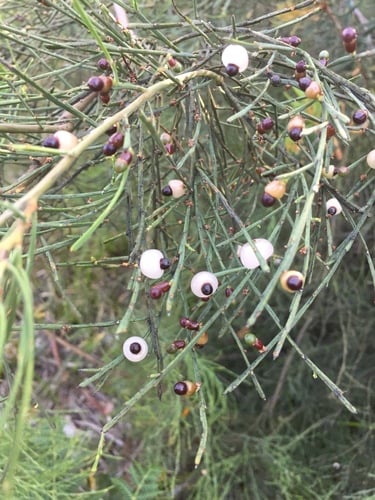
Phoradendron juniperinum
Engelm.
Mistletoe, Juniper mistletoe
iNaturalist· cc-by-nc
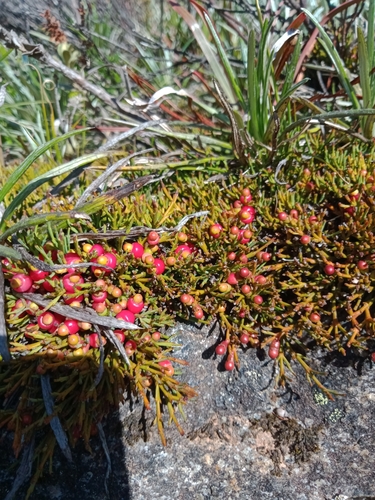
(c) Tony Iwane, some rights reserved (CC BY-NC), uploaded by Tony Iwane
iNaturalist· cc-by
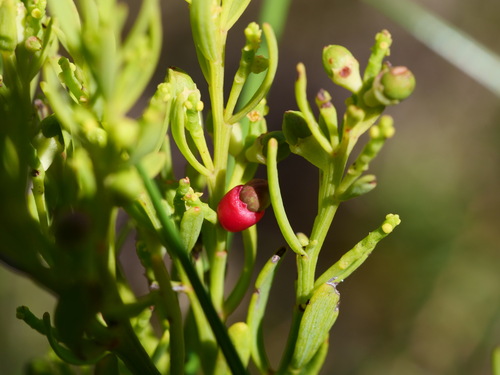
(c) Ken-ichi Ueda, some rights reserved (CC BY), uploaded by Ken-ichi Ueda
iNaturalist· cc0
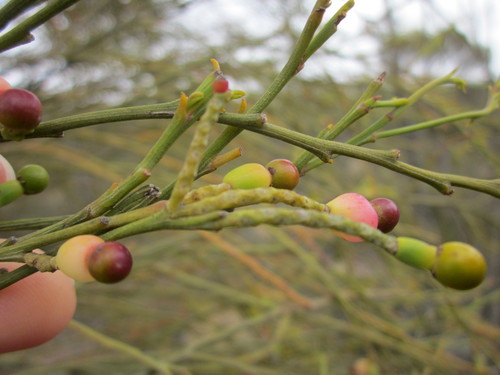
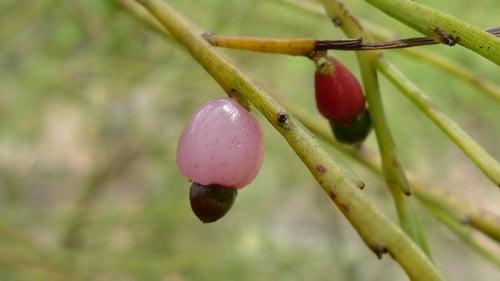
no rights reserved, uploaded by aiwendil
Summary
Source: WikipediaPhoradendron juniperinum is a species of flowering plant in the sandalwood family known by the common name juniper mistletoe. It is native to the southwestern United States and northern Mexico, where it grows in various types of woodland habitat. It has been reported from California, Nevada, Arizona, New Mexico, Oregon, Utah, Texas, Chihuahua and Sonora. This mistletoe parasitizes species of juniper, including Utah (Juniperus osteosperma), Rocky Mountain (J. scopulorum), and western juniper (J. occidentalis). It is a shrub producing many erect and spreading yellow-green branches 20 to 40 centimeters long from a woody base where it attaches to its host tree, tapping the xylem for water and nutrients. It is hemiparasitic, meaning it contains some chlorophyll and can photosynthesize some energy for itself as well. The smooth, noded branches have flattened, scale-like leaves. The plant is dioecious, with male and female individuals producing different forms of inflorescence with knobby flower clusters. Female flowers yield shiny light pink spherical berries each about 4 millimeters wide. Birds eat the fruits and excrete the undigested seeds on tree branches, where they root.
Description
A yellow-green mistletoe. It grows attached to several species of Juniper. The fruit are round berries which let the light through.
This description is brief — help expand it
Edible Uses
The round berries are eaten as food. The stems are used to make a tea drink, and the seeds can be roasted as a coffee substitute.
Traditional Uses
The fruit have been reported as food. They are used in medicine. The stems are used to make a tea drink.
This uses section is brief — help expand it
Medicinal Uses
Several Native American tribes used this mistletoe for medicinal purposes, for teas, and at times for food. Among the Zuni people, an infusion of whole plant is used for stomachaches. A compound infusion of plant taken to promote muscular relaxation at birth, and a simple or compound infusion of twigs taken after childbirth to stop blood flow.
Known Hazards
This is a famine food, suggesting limited palatability or potential concerns with regular consumption.
Distribution
It is a warm temperate plant.
Where It Grows
Mexico, North America, USA,
Cultivation
The sticky seeds are spread by birds to other trees.
Other Information
It is a famine food.
Notes
There are about 234 Phoradendron species in tropical America. Also put in the family Viscaceae.
Synonyms
References (8)
- Beckstrom-Sternberg, Stephen M., and James A. Duke. "The Foodplant Database." http://probe.nalusda.gov:8300/cgi-bin/browse/foodplantdb.(ACEDB version 4.0 - data version July 1994)
- Etkin, N.L. (Ed.), 1994, Eating on the Wild Side, Univ. of Arizona. p 71
- Kermath, B. M., et al, 2014, Food Plants in the Americas: A survey of the domesticated, cultivated and wild plants used for Human food in North, Central and South America and the Caribbean. On line draft. p 642
- Kiple, K.F. & Ornelas, K.C., (eds), 2000, The Cambridge World History of Food. CUP p 1794
- Mem. Amer. Acad. Arts ser. 2, 4:58. 1849
Show all 8 references Hide references
- Moerman, D. F., 2010, Native American Ethnobotany. Timber Press. p 393
- MINNIS,
- SWANK,