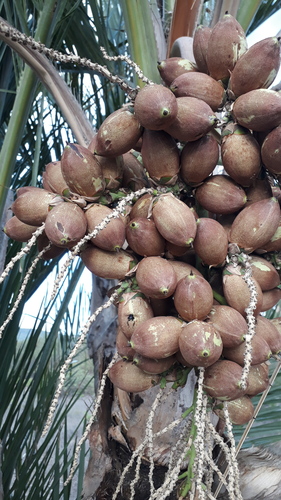
Phoenix zeylanica
Trimen
Ceylon Date
iNaturalist· cc-by-nc
(c) Aravind_PS, some rights reserved (CC BY-NC)
iNaturalist· cc-by
(c) Aravinth, some rights reserved (CC BY)
iNaturalist· cc-by-nc
(c) Aravind_PS, some rights reserved (CC BY-NC)
Description
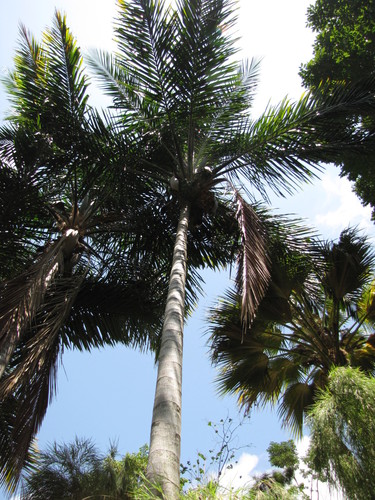
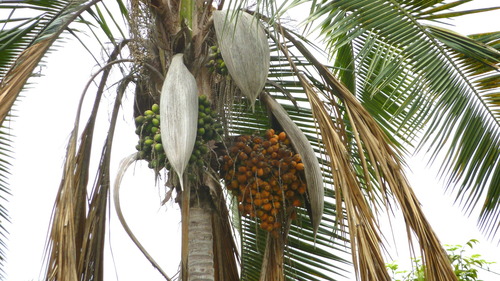
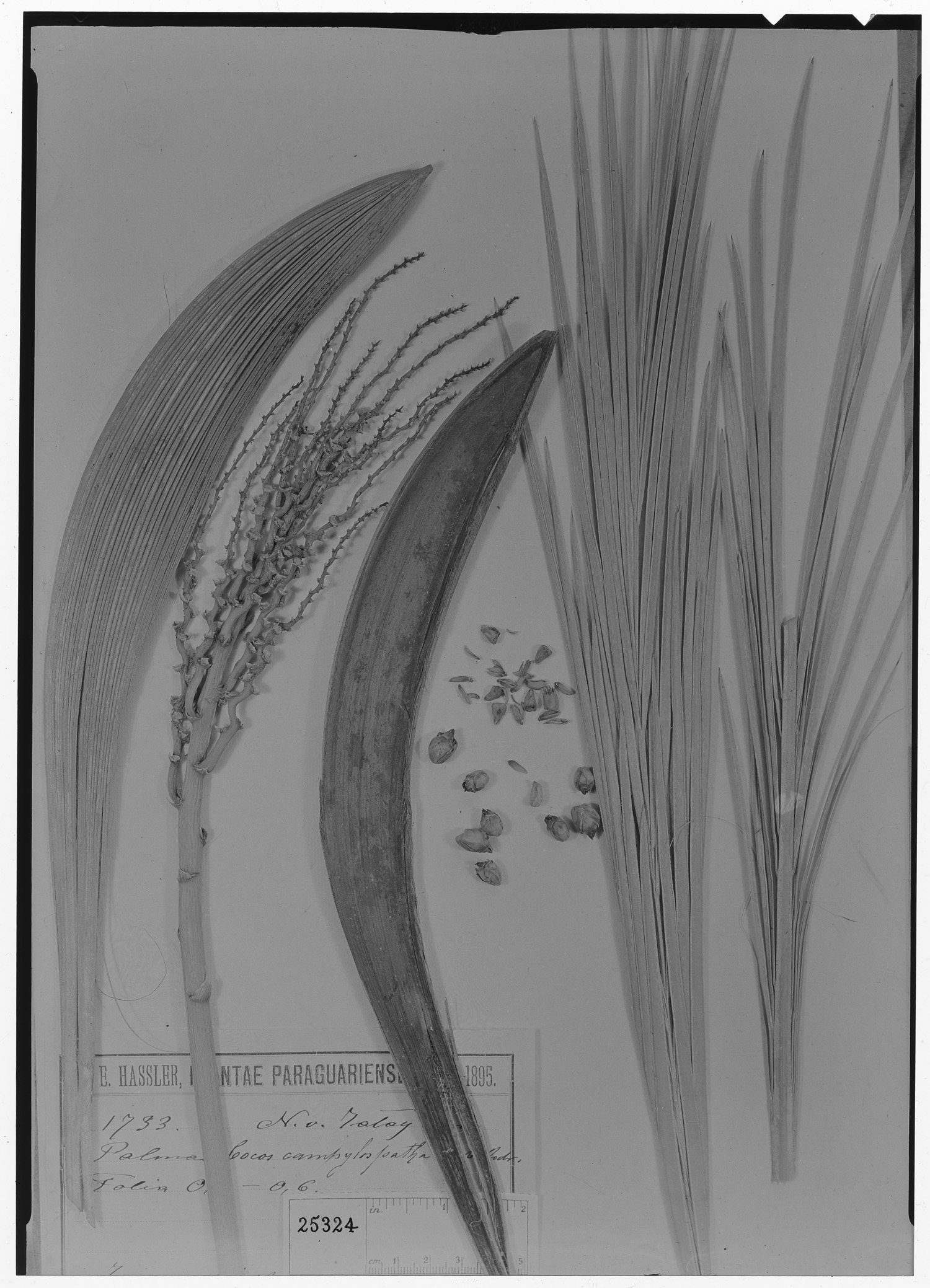
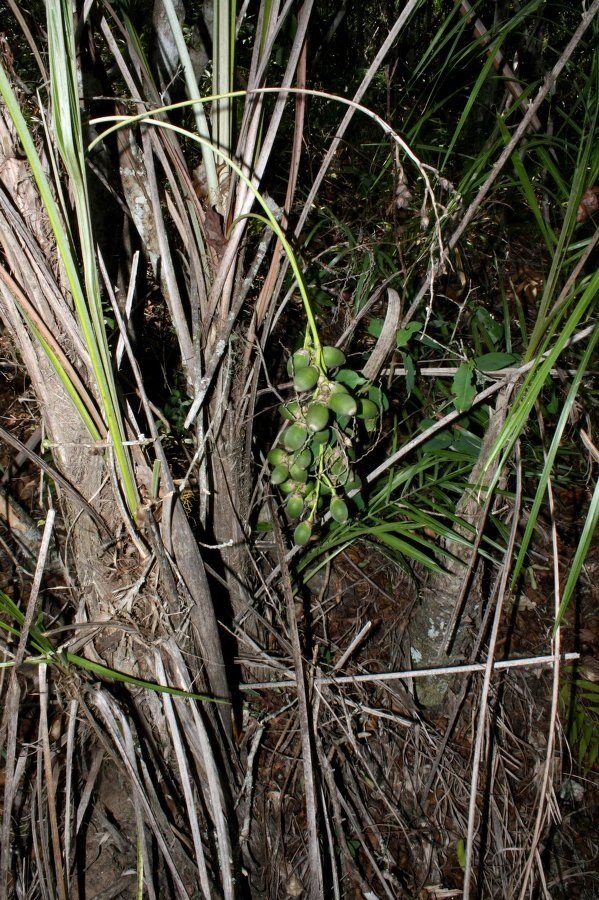
A slender palm. It has a single trunk. The trunk is 6 m high and 20-30 cm across. It is densely covered with old leaf bases. The crown is compact. The leaves are sharp and tend to hang down. The leaves are 2 m long. The leaflets are many and light green and stiff. They are sharply pointed. Leaflets are well spaced along the midrib. They arise in different planes. This gives the leaves a feathery appearance. The flowering stalks are much branched and spreading. The flowers are cream to yellow. The fruit are red to purplish-black. They are oval and 12 mm long.
Edible Uses
The sweet edible fruit is the primary edible portion. The stem pith can be used for starch in times of scarcity.
Traditional Uses
The fruit are sweet and edible. The pith of the stem can be used for starch in times of scarcity.
This uses section is brief — help expand it
Distribution
A tropical plant. It grows near the sea.
Where It Grows
Asia, India, Sri Lanka,
Notes
There are 17 Phoenix species.
Synonyms
Also Known As
Indi
References (6)
- Ambasta, S.P. (Ed.), 2000, The Useful Plants of India. CSIR India. p 449
- Ashton, M. S., et al 1997, A Field Guide to the Common Trees and Shrubs of Sri Lanka. WHT Publications Ltd. p 81
- Blomberry, A. & Rodd, T., 1982, Palms. An informative practical guide. Angus & Robertson. p 142
- Haynes, J., & McLaughlin, J., 2000, Edible palms and Their Uses. University of Florida Fact sheet MCDE-00-50-1 p 11
- Johnson, D.V., 1998, Tropical palms. Non-wood Forest products 10. FAO Rome. p 42
Show all 6 references Hide references
- J. Bot. 23:267. 1885