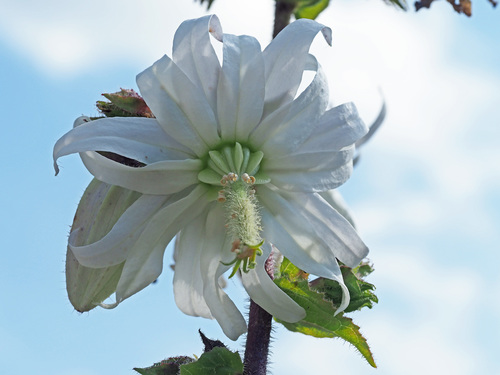
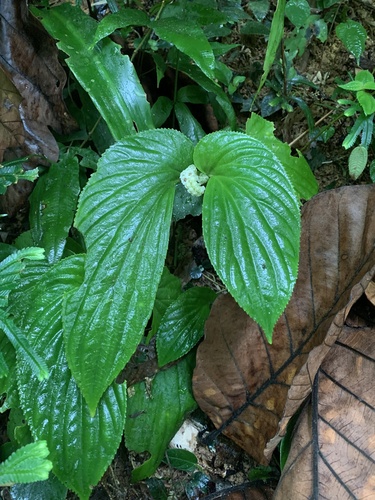
Peracarpa carnosa
(Wall.) Hook.f. & Thom.
iNaturalist· cc0
no rights reserved, uploaded by 葉子
iNaturalist· cc0
no rights reserved, uploaded by 葉子
iNaturalist· cc0
no rights reserved, uploaded by 葉子
Summary
Source: WikipediaA perennial plant reaching only 0.2 m in height. Hermaphroditic. Suitable for light sandy, medium loamy, and heavy clay soils with mildly acid, neutral, and basic pH levels. Grows in semi-shade (light woodland) or full sun. Prefers moist soil.
Description
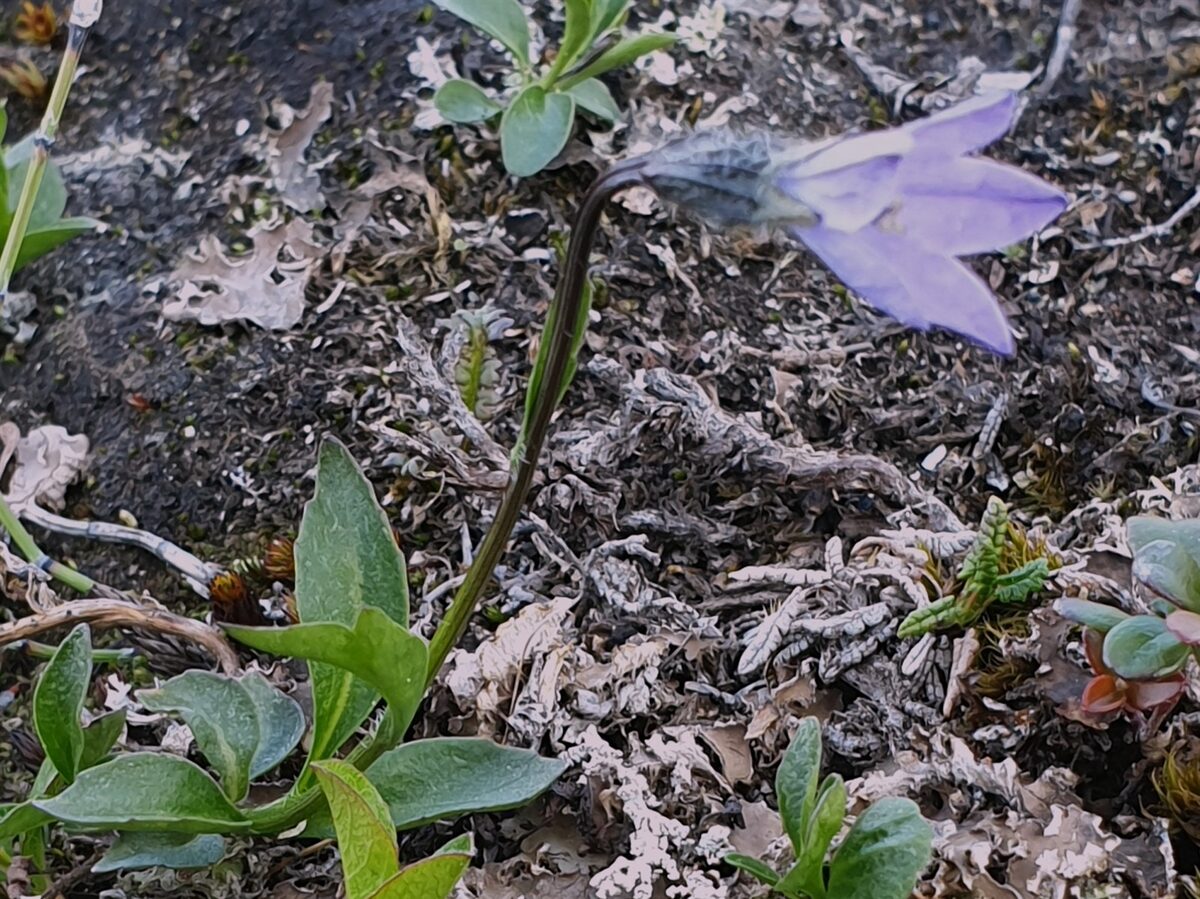
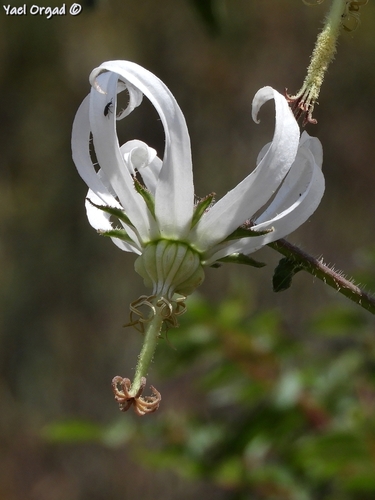
A delicate herb. It has creeping rhizomes. The stems can be erect or lying along the ground. They are 4-25 cm tall. They can form roots at the nodes. The leaves are crowded towards the tips. They are 3-38 mm long by 3-28 mm wide. There can be teeth along the edge. The flowers occur singly in the axils of the leaves. They are funnel shaped and white or blue-purple.
Edible Uses
Young leaves are eaten cooked.
Medicinal Uses
None known
Distribution
It is a subtropical plant. It grows in forests and amongst moist rocks near streams between 1,300-3,800 m above sea level. In Sichuan and Yunnan.
Where It Grows
Asia, Bhutan, China, Himalayas, India, Indochina, Japan, Korea, Myanmar, Nepal, Papua New Guinea, PNG, Philippines, Russia, SE Asia, Taiwan, Thailand, Tibet,
Propagation
Propagate by seed.
Other Uses
None known Special Uses
Notes
There is only one Peracarpa species.
References (1)
- Plants for a Future database, The Field, Penpol, Lostwithiel, Cornwall, PL22 0NG, UK. http://www.scs.leeds.ac.uk/pfaf/