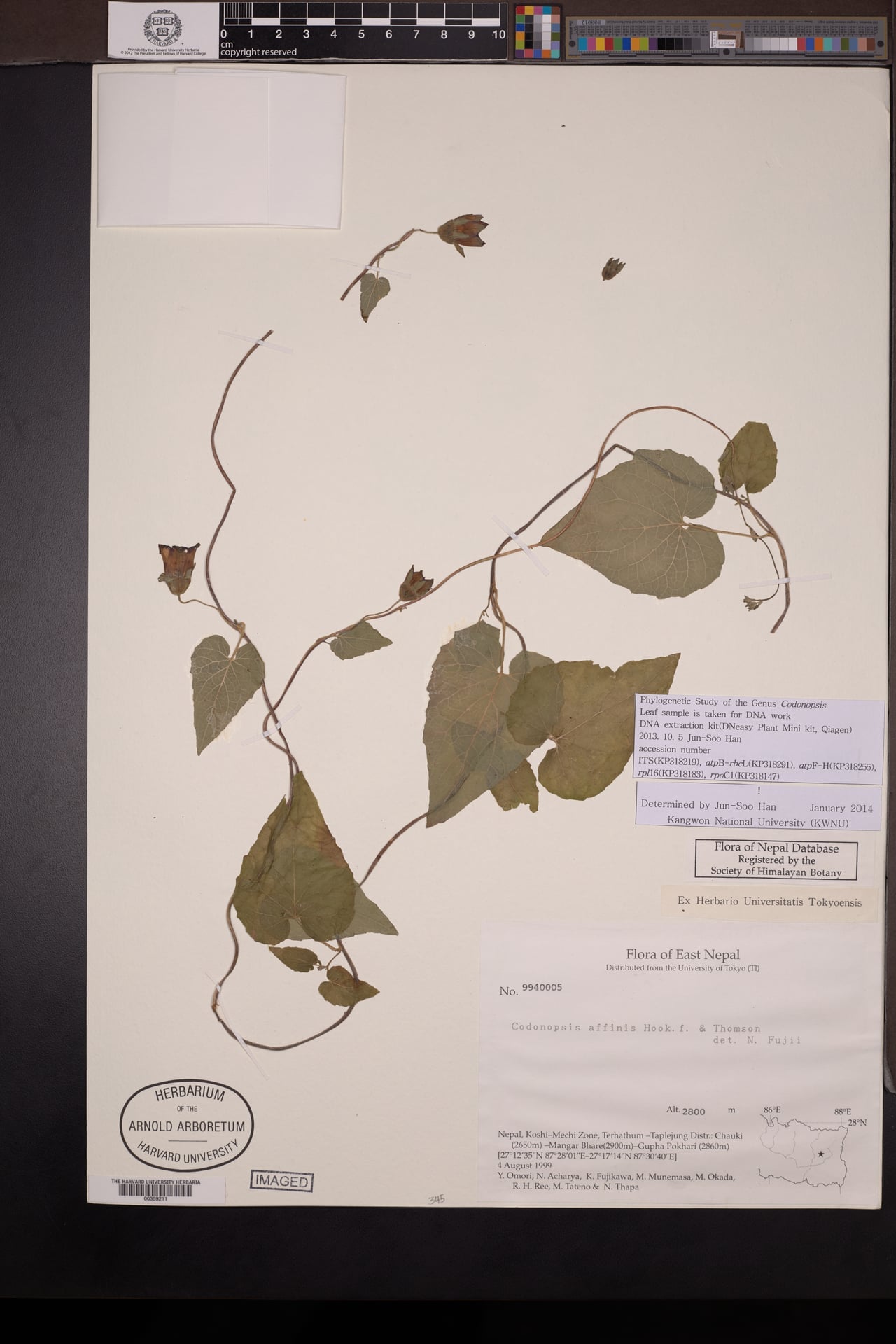
Campanula latifolia
L.
Giant bellflower, Great bellflower
iNaturalist· cc-by-nc
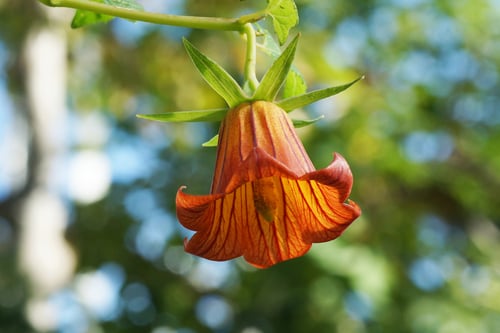
(c) Almantas Kulbis, some rights reserved (CC BY-NC), uploaded by Almantas Kulbis
iNaturalist· cc-by-nc
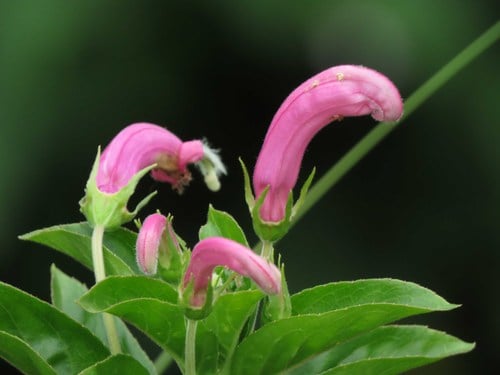
(c) Nicolas Schwab, some rights reserved (CC BY-NC)
iNaturalist· cc-by-nc
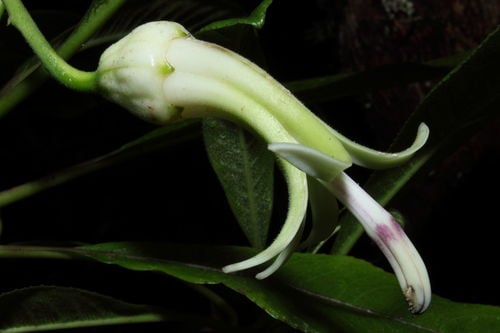
(c) Nicolas Schwab, some rights reserved (CC BY-NC)
Summary
Source: WikipediaCampanula latifolia, the giant bellflower, is a species of bellflower in the family Campanulaceae. It is also known as the large campanula and the wide-leaved bellflower. It is native to Europe and western Asia and is widely grown as an ornamental plant.
Description
A perennial herb. It grows 1.2-1.5 cm high and 45-60 cm wide. The stems are leafy and are straight and stiff. These arise from a clump of rich green leaves. The leaves are broad and pointed and slightly velvety. There are teeth along the edge. The flowers are in a spike and are large and blue or white and bell shaped.
Edible Uses
Young shoots can be eaten raw or cooked and contain up to 400mg% of vitamin C. The root can be eaten raw, though this report is vague and warrants further investigation. The flowers are edible raw or cooked and have a pleasant sweetness.
Traditional Uses
The leaves are eaten raw or cooked. The flowers are eaten raw or cooked.
This uses section is brief — help expand it
Medicinal Uses
The flowers are emetic. The plant is also noted as a source of vitamin C.
Distribution
It is a temperate plant. It does best with rich, well-drained soils. It needs a protected and slightly shady location. It is frost hardy. It is sensitive to drought. It suits hardiness zones 4-9.
Where It Grows
Australia, Austria, Britain*, Europe, Himalayas, India, Iran, Kashmir, Middle East, Pakistan, Norway, Scandinavia, Slovenia, Sweden, Tasmania, Turkey, Türkiye,
Cultivation
A very robust plant, capable of succeeding in the wild garden and tolerating considerable neglect. It succeeds in most fertile well-drained soils, though it prefers a moist but well-drained rich sandy loam and a neutral or alkaline soil in sun or partial shade. Prefers a humus-rich soil in shade or partial shade. Grows well in cool moist woodlands with light shade where it can spread freely. Plants occasionally grow in old walls and also succeed in the dry shade of trees. Plants are hardy to at least -15°c. The species in this genus do not often hybridize and so seed can generally be relied upon to come true. The plants are self-fertile. Members of this genus are rarely if ever troubled by browsing deer or rabbits. A very ornamental plant, there are some named varieties. The species can be quite invasive, though most of the cultivars that have been selected for flower colour are less rampant.
Propagation
Surface sow seed in spring in a cold frame. Pre-chilling the seed for three or four weeks improves germination rates. Germination typically takes 2–4 weeks at 18°C. Prick seedlings out into individual pots when large enough to handle and grow on in a cold frame for at least their first winter, then plant out in late spring or early summer after the last expected frosts. Seed can also be sown directly outdoors in situ during spring. For basal cuttings in spring, harvest shoots at about 10–15cm long with plenty of underground stem, pot individually, and keep in light shade in a cold frame or greenhouse until rooting well, then plant out in summer. Division in spring or autumn is very easy; larger clumps can be replanted directly into permanent positions, while smaller clumps are better potted up and grown on in a cold frame until well rooted, then planted out in summer or the following spring.
Other Uses
None known
Notes
There are about 300 Campanula species.
Also Known As
širokolistna zvončica, Storklokke
References (12)
- Bodkin, F., 1991, Encyclopedia Botanica. Cornstalk publishing, p 208
- Brickell, C. (Ed.), 1999, The Royal Horticultural Society A-Z Encyclopedia of Garden Plants. Convent Garden Books. p 221
- Christanell, A., et al, 2010, The Cultural Significance of Wild Gathered Plant Species in Kartitsch (Eastern Tyrol, Austria) and the Influence of Socioeconomic Changes on Local Gathering Practices. Chapter 3 in Ethnobotany in the New Europe. Berghahn Books.
- Crawford, M., 2012, How to grow Perennial Vegetables. Green Books. p 79
- Cundall, P., (ed.), 2004, Gardening Australia: flora: the gardener's bible. ABC Books. p 320
Show all 12 references Hide references
- Flora of Pakistan. www.eFlora.org
- Girard, N. J., 2020, Sustainable Foraging of Wild Edible Plants in Norway. A Biocultural Approach. M. Sc. thesis Norwegian University. p 129
- Hibbert, M., 2002, The Aussie Plant Finder 2002, Florilegium. p 58
- Joyce, D., 1998, The Garden Plant Selector. Ryland, Peters and Small. p 214
- Mabey, R., 1973, Food for Free. A Guide to the edible wild plants of Britain, Collins. p 106
- Plants for a Future database, The Field, Penpol, Lostwithiel, Cornwall, PL22 0NG, UK. http://www.scs.leeds.ac.uk/pfaf/
- Sp. pl. 1:165. 1753