Pentaspadon motleyi
Hook.f.
White pelong tree
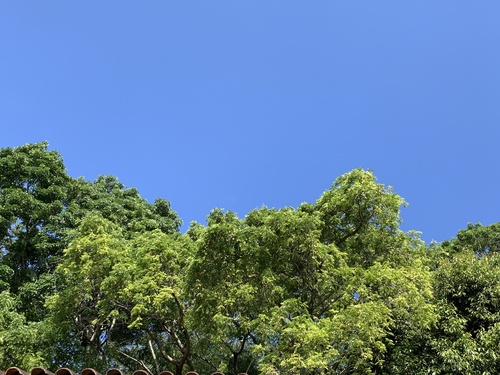
iNaturalist· cc-by-nc-sa
(c) 106611639464075912591, some rights reserved (CC BY-NC-SA), uploaded by 106611639464075912591
iNaturalist· cc-by-nc
(c) rachelteo, some rights reserved (CC BY-NC)
Summary
Source: WikipediaPentaspadon motleyi is a species of plant in the family Anacardiaceae. It is found in Indonesia, Malaysia, Papua New Guinea, and the Solomon Islands. It is threatened by habitat loss. Its fruit and its seeds are edible after cooking. Its timber is weak but still used locally for certain applications. It also abundantly produces an oil which is used for skin conditions.
Description
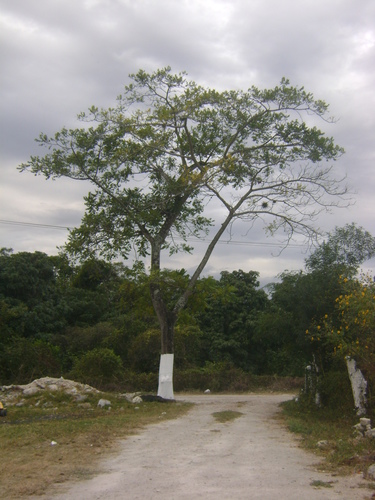
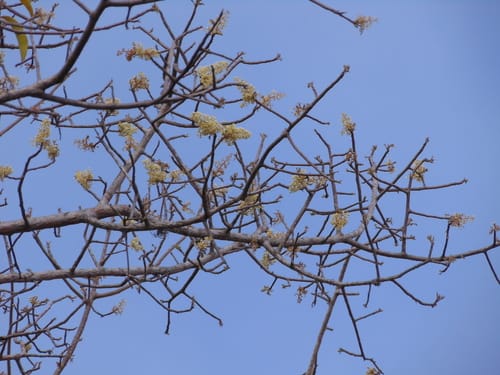
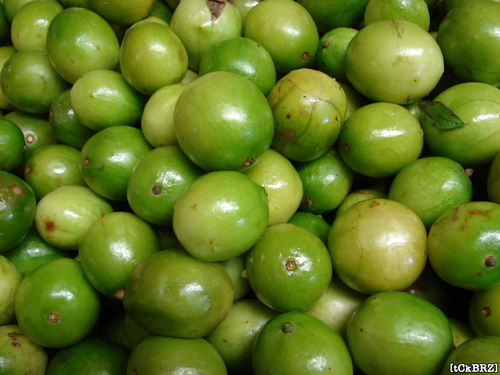
A large tree. It can be 15-50 m high. The trunk can be 70-80 cm across. The bark is smooth and light brown. The bark can be cracked along its length and flake off irregularly. It has buttresses which can be high and wide. The leaves are made up of 4-5 pairs of leaflets. These are thin and rough and oblong. They can be 6-13 cm long and 2-6 cm wide or larger. The leaf tapers towards the tip. Twigs and new growth are red. The flower panicles are up to 31 cm long. The flowers are cream coloured. The fruit can be 3-5 cm long by 2-3 cm across. They have a rough surface. The seed is oval and 2-4 cm long by 1-2 cm across. Black fruit (fallen on ground). Edible fruit.
Edible Uses
The seeds are eaten fresh or roasted, and oil pressed from the seeds is used as a condiment drizzled over food.
Traditional Uses
Seeds are eaten fresh or roasted. The oil from the seeds is squeezed over food.
This uses section is brief — help expand it
Medicinal Uses
The resin obtained from the stems is a counter-irritant, used to calm itchiness of the skin. An oil obtained from the plant is used for curing certain skin diseases.
Distribution
It is a tropical plant. It grows naturally in lowland rainforest. It often occurs in places that are flooded at times during the year. It is mostly from sea level to 75 m altitude but occasionally grows up to 300 m altitude.
Where It Grows
Asia, Brunei, Indonesia, Malaysia, Pacific, Papua New Guinea, PNG, Sarawak, SE Asia, Solomon Islands,
Cultivation
Plants can be grown from seeds.
Other Uses
The wood contains an abundant oil (resin?) which is heavy and misty brown in colour and is said to resemble motor lubricating oil as used for cylinders. It is obtained from the plant by hacking a basin-like cavity in one side of the trunk and allowing the oil to drain slowly into it, exactly as damar is collected from Dipterocarpus trees. It is used mdicinally. The heartwood is light yellow-green, darkening to grey-green on exposure and not clearly defined from the sapwood which is white or light yellow. The wood is fairly hard and heavy, moderately durable. The texture is fine and even, the grain straight to interlocked. The wood is easy to resaw and cross-cut, planing is easy and the planed surface is smooth. It has poor nailing property. The wood is suitable for interior finishing, panelling, partitioning, moulding, skirting, flooring, veneer and plywood, and other planking works.
Production
It grows rapidly in the early stages. Flowering is March to December and fruiting from January to December.
Synonyms
Also Known As
Empelanyau, Empit, Pelajau, Pelangau, Plajau
References (12)
- Burkill, I.H., 1966, A Dictionary of the Economic Products of the Malay Peninsula. Ministry of Agriculture and Cooperatives, Kuala Lumpur, Malaysia. Vol 2 (I-Z) p 1721 (As Pentaspadon officinalis)
- Chai, P. P. K. (Ed), et al, 2000, A checklist of Flora, Fauna, Food and Medicinal Plants. Lanjak Entimau Wildlife Sanctuary, Sarawak. Forestry Malaysia & ITTO. p 166
- Ding Hou, 1978, Anacardiaceae, in Flora Malesiana Ser 1 Vol 8(3) p 524
- French, B.R., 2010, Food Plants of Solomon Islands. A Compendium. Food Plants International Inc. p 360
- Heyne,
Show all 12 references Hide references
- Milow, P., et al, 2013, Malaysian species of plants with edible fruits or seeds and their evaluation. International Journal of Fruit Science. 14:1, 1-27
- Siong, K. H., 2003, Indigenous Fruits of Sarawak. ITTO & Sarawak Forest Department. p 15
- Slik, F., www.asianplant.net
- Sukarya, D. G., (Ed.) 2013, 3,500 Plant Species of the Botanic Gardens of Indonesia. LIPI p 438
- Tankard, G., 1990, Tropical fruit. An Australian Guide to Growing and using exotic fruit. Viking p 131
- Wong, K. C., 1995, Collection and Evaluation of Under-Utilized Tropical and Subtropical Fruit Tree Genetic Resources in Malaysia. JIRCAS International Symposium Series No. 3: 27-38
- World Checklist of Useful Plant Species 2020. Royal Botanic Gardens, Kew