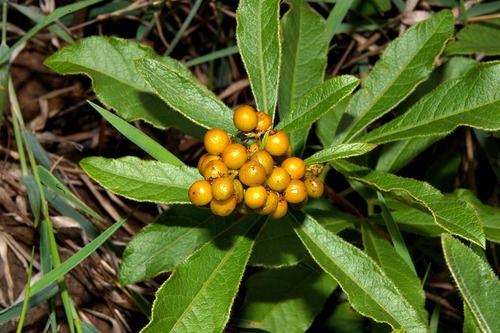
Spondias venulosa
(Engl.) Mart. ex Engl.
Hog-plum, Mombin, Spanish-plum
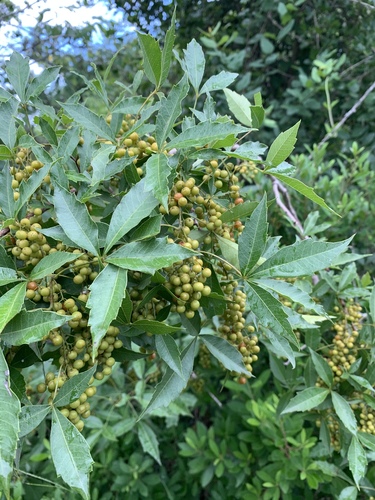
iNaturalist· cc-by-nc
(c) Diego Monsores, some rights reserved (CC BY-NC), uploaded by Diego Monsores
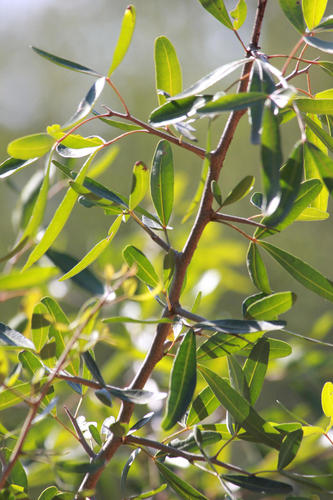
iNaturalist· cc-by-nc
(c) Martin Reith, some rights reserved (CC BY-NC)
iNaturalist· cc-by-nc
(c) Martin Reith, some rights reserved (CC BY-NC)
Description
A tree. It grows 12-18 m high. The crown is rounded. The trunk is 40-60 cm across. The bark is light coloured and slightly rough. The leaves are compound. They are 20-50 cm long. There are 7-31 leaflets along the stalk. They are 5-14 cm long by 2-6 cm wide. The flowers are in groups at the end of the stalk. They are 15-40 cm long. The flowers can be separately male or female or both sexes. The fruit are oval and rough.
Edible Uses
Fruit - raw and made into a juice. The fruit has a juicy, fibrous, acidic pulp. The pulp is sweet, but acid to the taste. The fruit is a green/yellow drupe 5cm or more long.
Traditional Uses
The fruit can be eaten. Because they are acid they are used for juice.
This uses section is brief — help expand it
Distribution
A tropical plant. They grow in the forests near the Atlantic in Brazil. It grows in Miombo woodland in Africa.
Where It Grows
Africa, Bolivia, Brazil*, Colombia, East Africa, Ecuador, Peru, South America, Zimbabwe,
Cultivation
Plants are grown from seed. The ripe fruit are harvested and put in a plastic bag to allow the pulp to rot. The seeds are removed and planted. They are washed in running water then dired in the shade. The fresh seed are planted and germinate in 4-6 weeks. They are transplanted into the field when 30-40 cm high.
Propagation
Seed - best sown as soon as it is ripe in a partially shaded position in a nursery seedbed or in individual containers. A germination rate of around 80% can be expected, with the seed sprouting within 28 - 42 days. When the seedbed-sown seedlings have 4 - 6 true leaves, pot them up into individual containers and they will be ready to plant out when 30 - 40cm tall.
Other Uses
The wood is medium-textured, straight-grained, light in weight, smooth, not very durable when exposed and susceptible to the attacks of white ants. It is only used for low value applications such as fillings, toys and light objects.
Synonyms
Also Known As
Acaipo-iba, Caja-grande, Caja-graudo, Caja-mirim, Cajarana, Cajazeira, Cuchi
References (7)
- A. L. P. P. de Candolle & A. C. de Candolle, Monogr. phan. 4:245. 1883
- Grandtner, M. M. & Chevrette, J., 2013, Dictionary of Trees, Volume 2: South America: Nomenclature, Taxonomy and Ecology. Academic Press p 626
- Lorenzi, H., 2002, Brazilian Trees. A Guide to the Identification and Cultivation of Brazilian Native Trees. Vol. 02 Nova Odessa, SP, Instituto Plantarum p 23
- Lorenzi, H., Bacher, L., Lacerda, M. & Sartori, S., 2006, Brazilian Fruits & Cultivated Exotics. Sao Paulo, Instituto Plantarum de Estuados da Flora Ltda. p 41
- Martin, F. W., et al, 1987, Perennial Edible Fruits of the Tropics. USDA Handbook 642 p 79
Show all 7 references Hide references
- Roa, J. A. G. & Boada, D. S. G., 2018, Fundación para el Fortalecimiento de la Fruticultura y Plantas Alimenticias no Convencionales en Colombia.
- www.colecionandofrutas.org