Spondias tuberosa
Arruda in Koster.
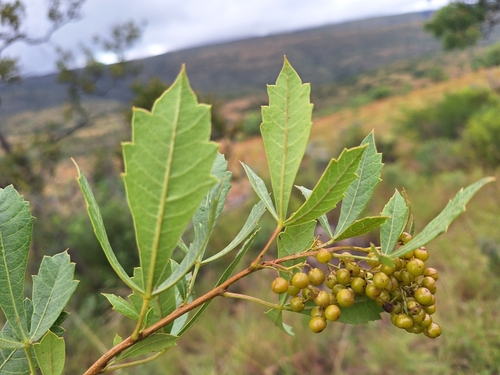
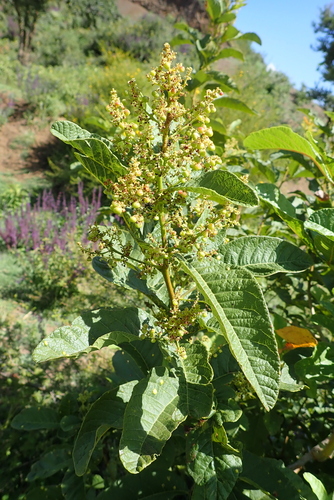
Imbu, Brazil plum, Umbu, Yellow mombin
iNaturalist· cc-by-nc-sa
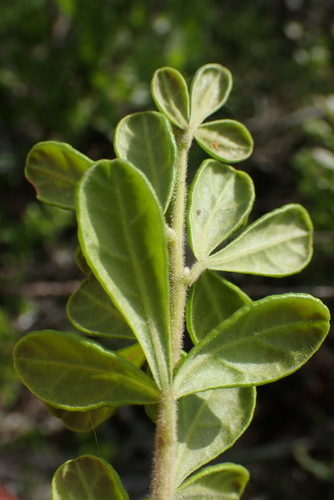
(c) Basílio Maciel, some rights reserved (CC BY-NC-SA)
iNaturalist· cc-by-nc
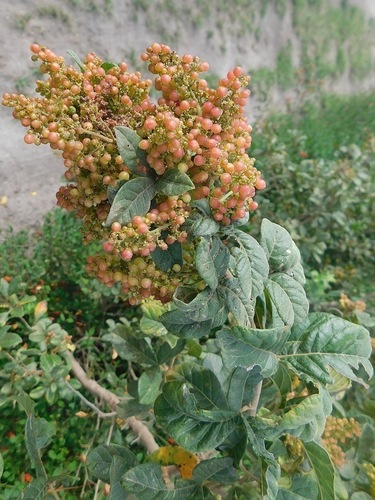
(c) Lucas C. Marinho, some rights reserved (CC BY-NC), uploaded by Lucas C. Marinho
iNaturalist· cc-by
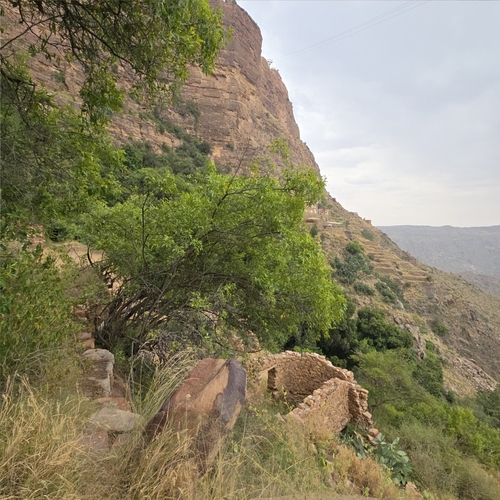
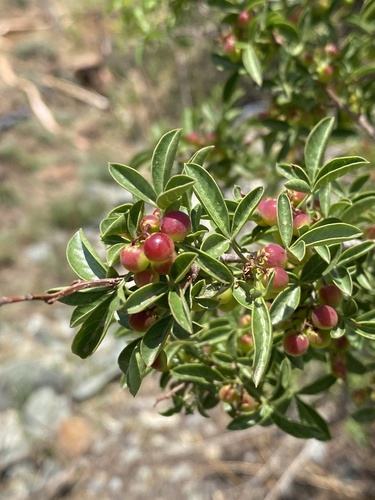
(c) Franco Folini, some rights reserved (CC BY)
Summary
Source: WikipediaSpondias tuberosa, commonly known as imbu, Portuguese pronunciation: [ũˈbu], [ĩˈbu] Brazil plum, or umbu, is a plant native to northeast Brazil, where it grows in the Caatinga, the chaparral scrub that grows wild across dry lands. The round fruit is light yellow to red, around 2–4 cm in size, and has a leathery shell. The flesh is soft and juicy, with a sweet taste and distinct aroma. The fruit comes from a small tree, seldom higher than 6 m, with an expansive crown that can reach 10 m in diameter. The fruit of the imbu are round and can be of varying size: they can be as small as cherries or as large as lemons. The peel is smooth and green or yellow when the fruit ripen, the small firm fruits are juicy and flavorful and their succulent flesh hides a large dark pit.
Description
A medium sized tree. It grows 4-7 m high. It is low and spreading. It has a short trunk that can be 40-60 cm across. The bark is smooth and grey. The root system has its own water and starch reservoir. The leaves are compound and divided into leaflets along the stalk. There are 3-7 thin leaflets. These are 6-10 cm long. The flowers are in an open panicle at the ends of the branches. They are white and have a smell. The fruit is medium sized and sweet. The fruit are about 2.5-3.5 cm long. They are in clusters of 3-4. The fruit are round and fleshy with a stone inside. The seeds is brown.
Edible Uses
The fruit can be eaten raw or cooked. The greenish-yellow, thick-skinned fruit has soft, almost liquid flesh with a pleasant subacid flavour suggestive of sweet orange. It is used to make ice creams, jams, jellies, and drinks. In northern Brazil, a custard-like dessert called imbuzada is made by adding the fruit juice to boiled sweet milk. The yellow-green, globose fruit is about 4cm in diameter and contains a single large seed.
Traditional Uses
The fruit is used fresh or cooked. The very ripe fruit are eaten. They are used for jams and jellies. It is often made into drinks and especially mixed with milk to make imbuzada. The bulb like roots are eaten cooked.
Medicinal Uses
None known
Distribution
A tropical plant. It suits the hot tropical lowlands. It grows in semi-arid regions in Brazil. It can tolerate drought but loses its leaves.
Where It Grows
Australia, Brazil*, Central America, Cuba, Honduras, Puerto Rico, South America, West Indies,
Cultivation
A plant of the 'Caatinga' dry forest region of northeast Brazil. The climate is hot and dry, there are usually 6 to 11 months without rain each year. The mean annual rainfall varies from 250 - 1,000mm, and the mean annual temperature is from 24 - 26°c. The plant grows best in the subhumid and frost-free tropics. Grows well in areas with a prolonged dry period. Requires a sunny position. Plants are not too fussy over soil, not needing very fertile conditions. However, very poor soil, or shallow land, is unsuitable. Established plants are very tolerant of dry conditions, able to withstand extended periods of drought. The plant can store starch and water in special storage organs in the roots, known as 'tuberous aquifers'. This makes it able to withstand very long periods of drought. A pH in the range 6 - 7 is ideal. A slow growing tree. Flowering Time: Late Winter/Early Spring. Spacing: White/Near White.
Propagation
Seed is best sown as soon as ripe in a sunny position in individual containers. Germination is usually fast and abundant. The plant can also be grown from quite large cuttings.
Other Uses
The wood is light in weight, soft, easy to work, and of low natural durability. It is used for internal work, crates, and boxes, and as pulp for paper-making.
Production
Tree growth is slow. Fruit are normally harvested after they fall to the ground.
Other Information
Fruit are sold in markets. It is cultivated.
Notes
Chemical composition (sap expressed from bulbs rendered 50% of the pulp): pH = 6.8. Glucose = 0.66%. Ascorbic acid = 13.2mg%. Thiamine = 30mcg%. Riboflavin: negative. Moisture = 93.3%. Protein = 0.45%. Starch = trace. Minerals = 0.96%. Fiber (crude) = 5.29%. Ash = CaO = 13.5% (0.130% in pulp). Fe2O3 = 0.13% (0.0013% in pulp). It has antioxidant properties.
Nutrition
| Part | Moisture | kJ | kcal | Protein | Vit A | Vit C | Iron | Zinc |
|---|---|---|---|---|---|---|---|---|
| Fruit | 88.5 | 168 | 40 | 0.7 | — | 15 | 0.4 | 0.3 |
| Roots | — | — | 0.45 | — | 13.2 | 0.13 | — | — |
| Fruit | 87.9 | — | — | — | — | 18.4 | — | — |
Synonyms
Also Known As
Ambu, Cajazinho, Giqui, Imbu, Imbuzeiro, Ombuzeiro, Tapereba, Umbuzeiro
References (37)
- Brazil: Biodiversity for Food and Nutrition. http://www.b4fn.org/countries/brazil/
- Burkill, I.H., 1966, A Dictionary of the Economic Products of the Malay Peninsula. Ministry of Agriculture and Cooperatives, Kuala Lumpur, Malaysia. Vol 2 (I-Z) p 2105
- Bussmann, R. W., (Ed.), 2020, Biodiverse food plants in the semiarid region of Brazil have unknown potential: A systematic review. Plos ONE 15(5): e0230936
- Cruz, M. P., et al, 2014, Local perceptions and consumption of native wild edible plants from seasonal dry forests in Brazil. Journal or Ethnobiology and Ethnomedicine 10:45
- DE CASTRO
Show all 37 references Hide references
- Etkin, N. L. (Ed.), 1994, Eating on the Wild Side, Univ. of Arizona. p 141
- Facciola, S., 1998, Cornucopia 2: a Source Book of Edible Plants. Kampong Publications, p 11
- Fagg, C. W. et al, 2015, Useful Brazilian plants listed in the manuscripts and publications of the Scottish medic and naturalist George Gardner (1812–1849). Journal of Ethnopharmacology 161 (2015) 18–29
- Grandtner, M. M. & Chevrette, J., 2013, Dictionary of Trees, Volume 2: South America: Nomenclature, Taxonomy and Ecology. Academic Press p 626
- Hedrick, U.P., 1919, (Ed.), Sturtevant's edible plants of the world. p 632
- Hermandez Bermejo, J.E., and Leon, J. (Eds.), 1994, Neglected Crops. 1492 from a different perspective. FAO Plant Production and Protection Series No 26. FAO, Rome. p14
- Hunter, D., et al, 2019, The potential of neglected and underutilized species for improving diets and nutrition. Planta (2019) 250:709-729
- Kermath, B. M., et al, 2014, Food Plants in the Americas: A survey of the domesticated, cultivated and wild plants used for Human food in North, Central and South America and the Caribbean. On line draft. p 834
- Kiple, K.F. & Ornelas, K.C., (eds), 2000, The Cambridge World History of Food. CUP p 1874
- Lim, T. K., 2015, Edible Medicinal and Non Medicinal Plants. Volume 9, Modified Stems, Roots, Bulbs. Springer p 79
- Lorenzi, H., 2002, Brazilian Trees. A Guide to the Identification and Cultivation of Brazilian Native Trees. Vol. 01 Nova Odessa, SP, Instituto Plantarum p 26
- Lorenzi, H., Bacher, L., Lacerda, M. & Sartori, S., 2006, Brazilian Fruits & Cultivated Exotics. Sao Paulo, Instituto Plantarum de Estuados da Flora Ltda. p 40
- Macmillan, H.F. (Revised Barlow, H.S., et al) 1991, Tropical Planting and Gardening. Sixth edition. Malayan Nature Society. Kuala Lumpur. p 308
- Martin, F. W., et al, 1987, Perennial Edible Fruits of the Tropics. USDA Handbook 642 p 16
- Miguel, E., et al, 1989, A checklist of the cultivated plants of Cuba. Kulturpflanze 37. 1989, 211-357
- Morton, J. F., 1987, Fruits of Warm Climates. Wipf & Stock Publishers p 247
- Nagy, S., P.E. Shaw and W.F. Wardowski. 1990. Fruits of tropical and subtropical origin. Composition, properties and uses. Florida Science Source, INC. Florida.
- Nascimento, V. T. D., et al, 2012, Famine Foods of Brazil’s Seasonal Dry Forests: Ethnobotanical and Nutritional Aspects. Economic Botany.66 (1), pp 22-34
- Nascimento, V. T. D., et al, 2013, Knowledge and Use of Wild Food Plants in Areas of Dry Seasonal Forests in Brazil. Ecology of Food and Nutrition, 52:317–343
- Nunes, E. N., et al, 2018, Local botanical knowledge of native food plants in the semiarid region of Brazil. Journal of Ethnobiology and Ethnomedicine (2018) 14:49
- Oliviera V. B., et al, 2012, Native foods from Brazilian biodiversity as a source of bioactive compounds. Food Research International 48 (2012) 170-179
- Rivero, J. A., y Brunner, B. R., 2007, Arborels frutales exoticas y poco conocidos en Puerto Rico. Universidad de Puerto Rico. p 22
- Rufina, M. S. M., et al, 2009, Free radical-scavenging behaviour of some north-east Brazilian fruits in a DPPH system. Food Chemistry 114:693-695
- Rufino, M. M., et al, 2010, Bioactive compounds and antioxidant capacities of 18 non-traditional tropical fruit from Brazil. Food Chemistry 121: 996-1002
- Tankard, G., 1990, Tropical fruit. An Australian Guide to Growing and using exotic fruit. Viking p 108
- TodaFruta.com.br
- Trav. Brazil 496. 1816
- USDA, ARS, National Genetic Resources Program. Germplasm Resources Information Network - (GRIN). [Online Database] National Germplasm Resources Laboratory, Beltsville, Maryland. Available: www.ars-grin.gov/cgi-bin/npgs/html/econ.pl (10 April 2000)
- van Wyk, B., 2005, Food Plants of the World. An illustrated guide. Timber press. p 355
- Wiersema, J. H. & Leon, B., 2013, World Economic Plants. A Standard Reference CRC Press. 2nd Ed. p 657
- World Checklist of Useful Plant Species 2020. Royal Botanic Gardens, Kew
- www.colecionandofrutas.org