Cynanchum insipidum
(E. Mey.) Liede & Khanum
African heart-vine
iNaturalist· cc-by-nc
(c) mateweindarlo, some rights reserved (CC BY-NC)
iNaturalist· cc-by-nc
(c) mateweindarlo, some rights reserved (CC BY-NC)
iNaturalist· cc-by-nc
(c) mateweindarlo, some rights reserved (CC BY-NC)
Description
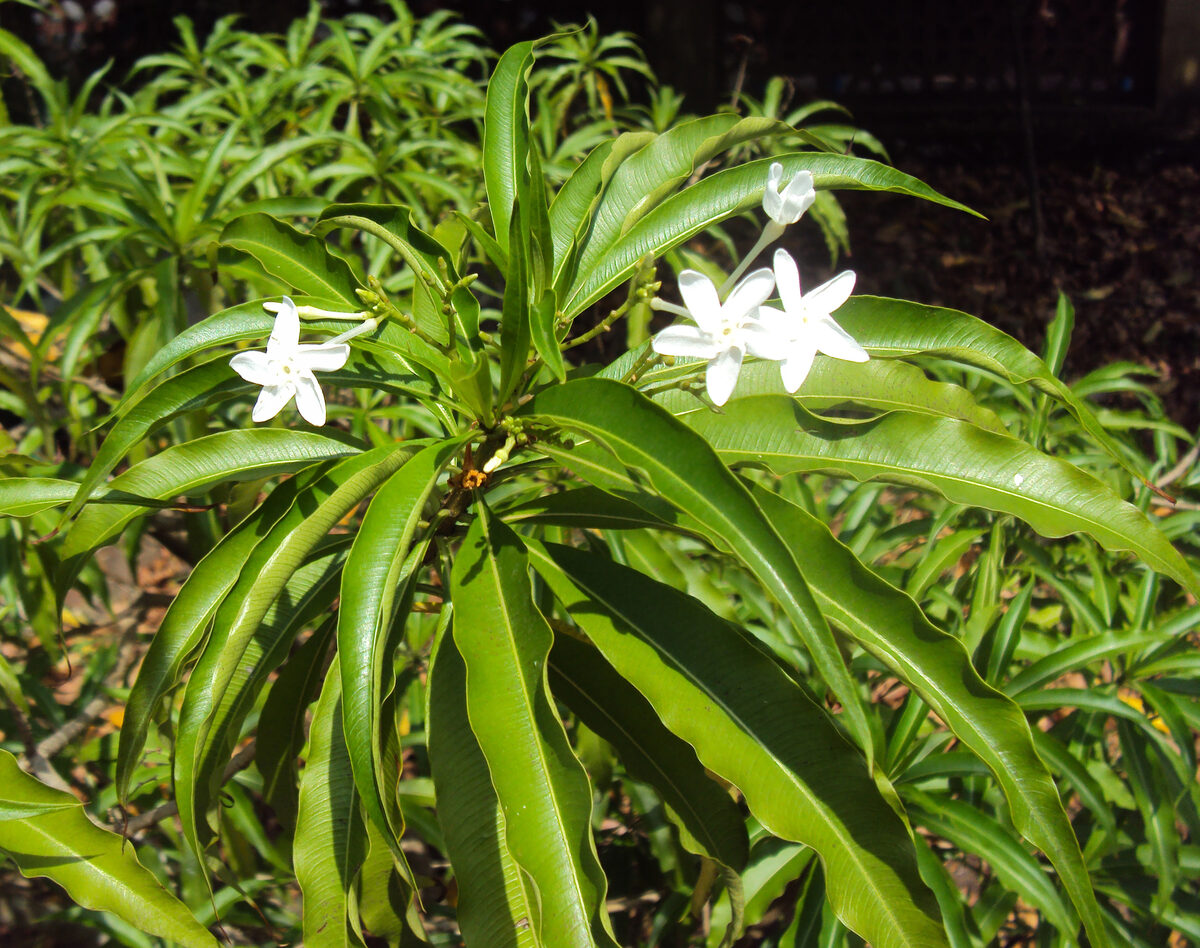
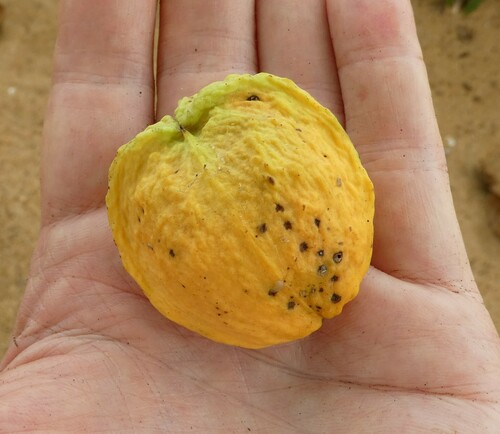
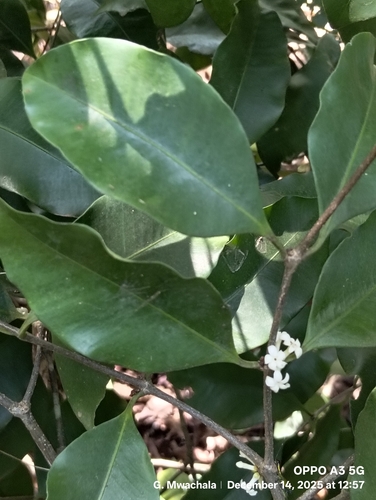
A climbing herb that keeps growing from year to year. It has milky sap. It grows 8 m long. The stems arise at intervals from a long rhizome or underground stem. The stems are 2-3 m long and the leaves are opposite and have leaf stalks. The leaves are oval or heart shaped. The leaves are 1-5 cm long. There are rounded lobes at the base. The flowers are small and yellow-green. They are in the axils of leaves. They usually occur singly. The flowers are in 2.5-8 cm long groups. The fruits are dry. They are 2.5-8 cm long. They are covered with small soft spines.
Edible Uses
The leaves are cooked as a vegetable, used in vegetable dishes, relishes, and chutneys, or pounded and eaten raw. Young fruits are eaten raw, cooked in vegetable dishes, or roasted in ashes, with the outer layer being the edible part. The stems and tendrils are used in savoury foods. The leaves and fruit are important vegetables, with young leaves containing 16.1 mg/100 gm vitamin C.
Traditional Uses
The leaves are cooked and eaten. They are also used in vegetable dishes and in relishes and chutneys. They are also pounded and eaten raw. It is a common attractive food. The young fruit are eaten raw. They are also cooked in vegetable dishes. They are also roasted in ashes. It is the outer layer of the fruit that is eaten. The stems and tendrils are used in savoury foods.
Distribution
A tropical plant. It grows on river banks. It grows in areas with a marked dry season. In southern Africa it grows from sea level to 2,200 m altitude. It is most common between 600-1,600 m above sea level. It can grow in arid places. It does not tolerate extremes of wet or dry.
Where It Grows
Africa, Botswana, Cameroon, Central Africa, East Africa, Eritrea, Eswatini, Ethiopia, Kenya, Lesotho, Malawi, Mozambique, Namibia, Somalia, South Africa, Southern Africa, Sudan, Swaziland, Tanzania, West Africa, Zambia, Zimbabwe,
Cultivation
It can be easily grown from seeds.
Production
It grows quickly.
Other Information
The fruit are eaten especially by children. The leaves and fruit are important vegetables.
Notes
There are only 2 Pentarrhinum species. Young leaves Vitamin C is 16.1 mg/100 gm. Also put in the family Asclepiadaceae.
Synonyms
Also Known As
African silkvine, Aulana, Chindewe, Donkieperske, Furana, Kakolo-wozi, Kokordota, Kokorpha, Kordota, Langarboi, Leeshah, Lefotosane, Leswa, Leswe, Lewa, Lobohoe, Mphyamafi, Phulule, Umulugwe, Xayaab
References (32)
- Addis, G., et al, 2013, Dietary values of wild and semi-wild edible plants in Southern Ethiopia. African Journal of Food, Agriculture, Nutrition and Development. 13(2) (As Pentarrhinum insipidum)
- Addis, G., Asfaw, Z & Woldu, Z., 2013, Ethnobotany of Wild and Semi-wild Edible Plants of Konso Ethnic Community, South Ethiopia. Ethnobotany Research and Applications. 11:121-141 (As Pentarrhinum insipidum)
- Addis, G., et al, 2013, The Role of Wild and Semi-wild Edible Plants in Household Food Sovereignty in Hamer and Konso Communities, South Ethiopia. Ethnobotany Research & Applications. 11:251-271 (As Pentarrhinum insipidum)
- Arnold, T.H., Wells, M.J. & Wehmeyer, A.S., Khoisan food plants: taxa with potential for future economic exploitation, in Wickens, G.E., Goodin, J.R., and Field, D.V.,(Eds.) 1985, Plants for Arid Lands. Unwin Hyman, London, p 73 (As Pentarrhinum insipidum)
- Balemie, K., & Kebebew, F., 2006, Ethnobotanical study of wild edible plants in Derashe and Kucha Districts, South Ethiopia. Journal of Ethnobiology and Ethnomedicine. (As Pentarrhinum insipidum)
Show all 32 references Hide references
- Burkill, H. M., 1985, The useful plants of west tropical Africa, Vol. 1. Kew. (As Pentarrhinum insipidum)
- Cunningham, 185, (As Pentarrhinum insipidum)
- Duguma, H. T., 2020, Wild Edible Plant Nutritional Contribution and Consumer Perception in Ethiopia. Hindawi International Journal of Food Science Volume 2020, Article ID 2958623, 16 pages
- Fowler, D. G., 2007, Zambian Plants: Their Vernacular Names and Uses. Kew. p 10
- Grivetti, L. E., 1980, Agricultural development: present and potential role of edible wild plants. Part 2: Sub-Saharan Africa, Report to the Department of State Agency for International Development. p 75
- Grubben, G. J. H. and Denton, O. A. (eds), 2004, Plant Resources of Tropical Africa 2. Vegetables. PROTA, Wageningen, Netherlands. p 411
- Heinz & Maguire, 1974,
- Ichikawa, M., 1980, The Utilization of Wild Food Plants by the Suiei Dorobo in Northern Kenya. J. Anthrop. Soc. Nippon. 88(1): 25-48
- INFOODS:FAO/INFOODS Databases
- Jardin, C., 1970, List of Foods Used In Africa, FAO Nutrition Information Document Series No 2.p 93
- Lulekal, E., et al, 2011, Wild edible plants in Ethiopia: a review on their potential to combat food insecurity. Afrika Focus - Vol. 24, No 2. pp 71-121
- Magwede, K., van Wyk, B.-E., & van Wyk, A. E., 2019, An inventory of Vhavenḓa useful plants. South African Journal of Botany 122 (2019) 57–89
- Martin, F.W. & Ruberte, R.M., 1979, Edible Leaves of the Tropics. Antillian College Press, Mayaguez, Puerto Rico. p 178
- Maundu, P. et al, 1999, Traditional Food Plants of Kenya. National Museum of Kenya. 288p
- Mutie, F. G., 2020, Conservation of Wild Food Plants and Their Potential for Combatting Food Insecurity in Kenya as Exemplified by the Drylands of Kitui County. Plants 2020, 9, 1017
- Mutie, F. M., et al, 2023, Important Medicinal and Food Taxa (Orders and Families) in Kenya, Based on Three Quantitative Approaches. Plants 2023, 12, 1145
- Peters, C. R., O'Brien, E. M., and Drummond, R.B., 1992, Edible Wild plants of Sub-saharan Africa. Kew. p 65
- Royal Botanic Gardens, Kew (1999). Survey of Economic Plants for Arid and Semi-Arid Lands (SEPASAL) database. Published on the Internet; http://www.rbgkew.org.uk/ceb/sepasal/internet [Accessed 4th April 2011]
- Ruiters-Welcome, A. K., 2019, Food plants of southern Africa. Ph.D. thesis. Univ. of Johannesburg p 26
- Story, 1958,
- Tredgold, M.H., 1986, Food Plants of Zimbabwe. Mambo Press. p 12
- van Wyk, Be., & Gericke, N., 2007, People's plants. A Guide to Useful Plants of Southern Africa. Briza. p 74
- van Wyk, B-E., 2011, The potential of South African plants in the development of new food and beverage products. South African Journal of Botany 77 (2011) 857–868
- Wehmeyer, A. S, 1986, Edible Wild Plants of Southern Africa. Data on the Nutrient Contents of over 300 species.
- Welcome, A. K. & Van Wyk, B.-E., 2019, An inventory and analysis of the food plants of southern Africa. South African Journal of Botany 122 (2019) 136–179
- Williamson, J., 2005, Useful Plants of Malawi. 3rd. Edition. Mdadzi Book Trust. p 192 (As Pentarrhinum insipidum)
- World Checklist of Useful Plant Species 2020. Royal Botanic Gardens, Kew