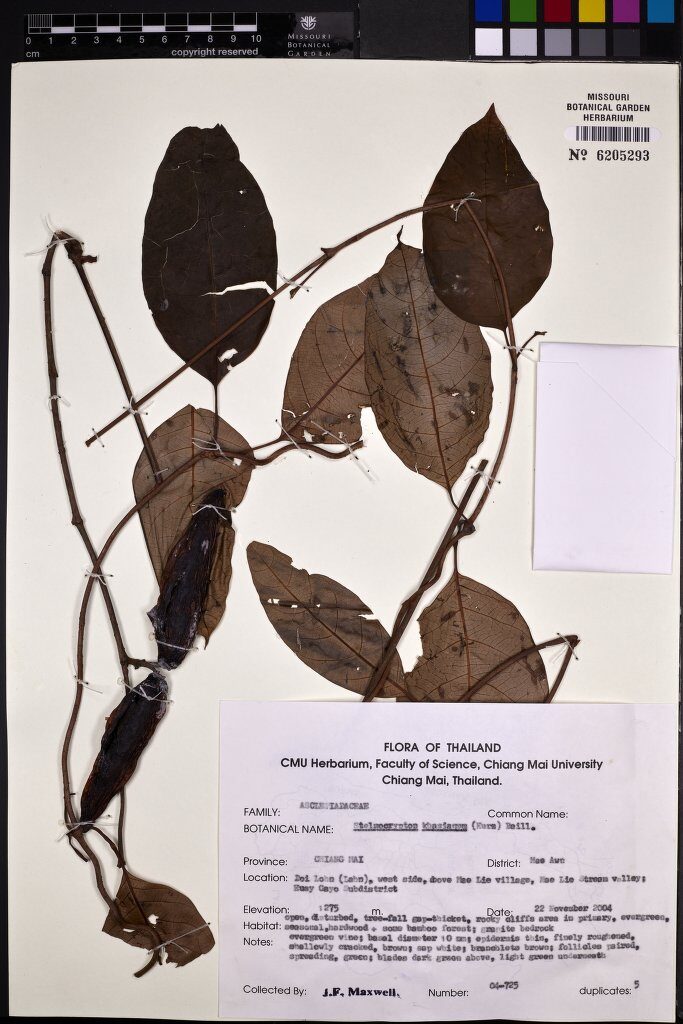
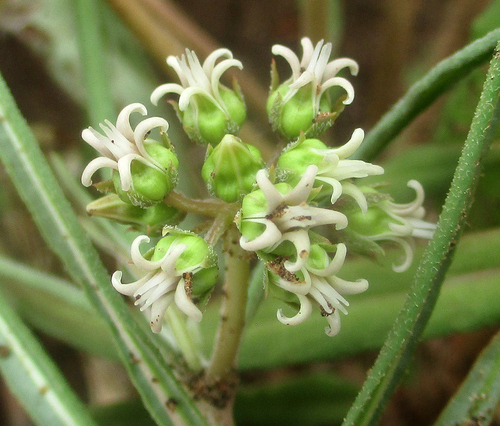
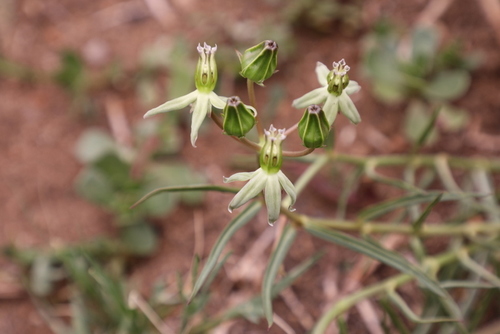
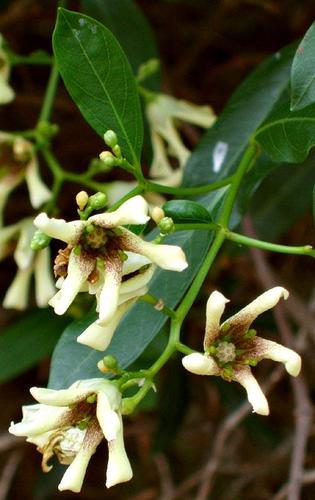
Amalocalyx microlobus
Pierre ex Spire
Maxinha, Xiyai
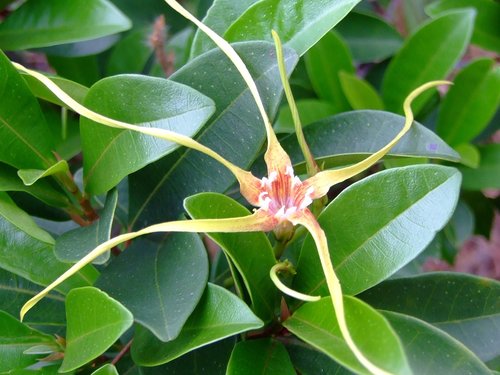
iNaturalist· cc-by-nc-sa
(c) LannaMountainsCharlie, some rights reserved (CC BY-NC-SA), uploaded by LannaMountainsCharlie
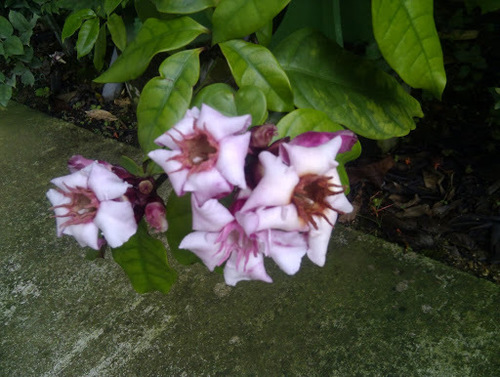
iNaturalist· cc-by-nc
(c) onidiras-iNaturalist, some rights reserved (CC BY-NC), uploaded by onidiras-iNaturalist
iNaturalist· cc-by-nc
(c) 虫虫, some rights reserved (CC BY-NC), uploaded by 虫虫
Description
A herbaceous climber. It is an evergreen vine. It has a grey covering. The leaves are narrowly oval and 5-15 cm long by 2-11 cm wide. They taper to a sharp tip. The leaf stalk is 1-2 cm long. The flowers are light purple-red. There are 15-20 flowers in a group 6-12 cm long. The fruit are follicles 11 cm long and 1 cm wide. The seeds are round with yellowish-brown hairs.
Edible Uses
The fruit are eaten mixed with seasoning or salt and sold in local markets.
Traditional Uses
The fruit is eaten mixed with seasoning or salt.
This uses section is brief — help expand it
Distribution
A tropical plant. It grows in forests, often clinging to trees between 600-1400 m altitude. In Yunnan.
Where It Grows
Asia, China, Indochina, Laos, Myanmar, SE Asia, Thailand, Vietnam,
Other Information
It is sold in local markets.
Notes
There is only one Amalocalyx species.
Synonyms
Also Known As
Long rui biu, Mak sim, Mao che teng, Mu nuo qi cha, Xin ha
References (11)
- Cao, Y., et al, 2020, Ethnobotanical study on wild edible plants used by three trans-boundary ethnic groups in Jiangcheng County, Pu’er, Southwest China. Journal of Ethnobiology and Ethnomedicine (2020) 16:66
- Delang, C. O., 2007, Ecological Succession of Usable Plants in an Eleven-Year Fallow Cycle in North Lao P.D.R., Ethnobotany Research and Applications. Vol. 5:331-350
- Ghorbani, A., et al, 2012, A comparison of the wild food plant use knowledge of ethnic minorities in Naban River Watershed Nature Reserve, Yunnan, SW China. Journal of Ethnobiology and Ethnomedicine; 8:17
- Hu, Shiu-ying, 2005, Food Plants of China. The Chinese University Press. p 629 (As Amalocalyx yunnanensis)
- Jin, Chen et al, 1999, Ethnobotanical studies on Wild Edible Fruits in Southern Yunnan: Folk Names: Nutritional Value and Uses. Economic Botany 53(1) pp 2-14 (As Amalocalyx yunnanensis)
Show all 11 references Hide references
- Luczaj, L., et al, 2021, Wild food plants and fungi sold in the markets of Luang Prabang, Lao PDR. Journal of Ethnobiology and Ethnomedicine (2021) 17:6 (As Amocalyx)
- Luo, B., et al, 2019, Wild edible plants collected by Hani from terraced rice paddy agroecosystem in Honghe Prefecture, Yunnan, China. Journal of Ethnobiology and Ethnomedicine 15:56 (As Amalocalyx yunnanensis)
- Reis, S. V. and Lipp, F. L., 1982, New Plant Sources for Drugs and Foods from the New York Botanical Garden herbarium. Harvard. p 241 (As Amalocalyx yunnanensis)
- Slik, F., www.asianplant.net
- Xu, Z., Tao, G. & Tan, J., 1988, Tropical Wild Flowers and Plants in Xishuangbanna, Agricultural Publishing House. photo 106 (As Amalocalyx yunnanensis)
- Xu, You-Kai, et al, 2004, Wild Vegetable Resources and Market Survey in Xishuangbanna, Southwest China. Economic Botany. 58(4): 647-667. (As Amalocalyx yunnanensis)