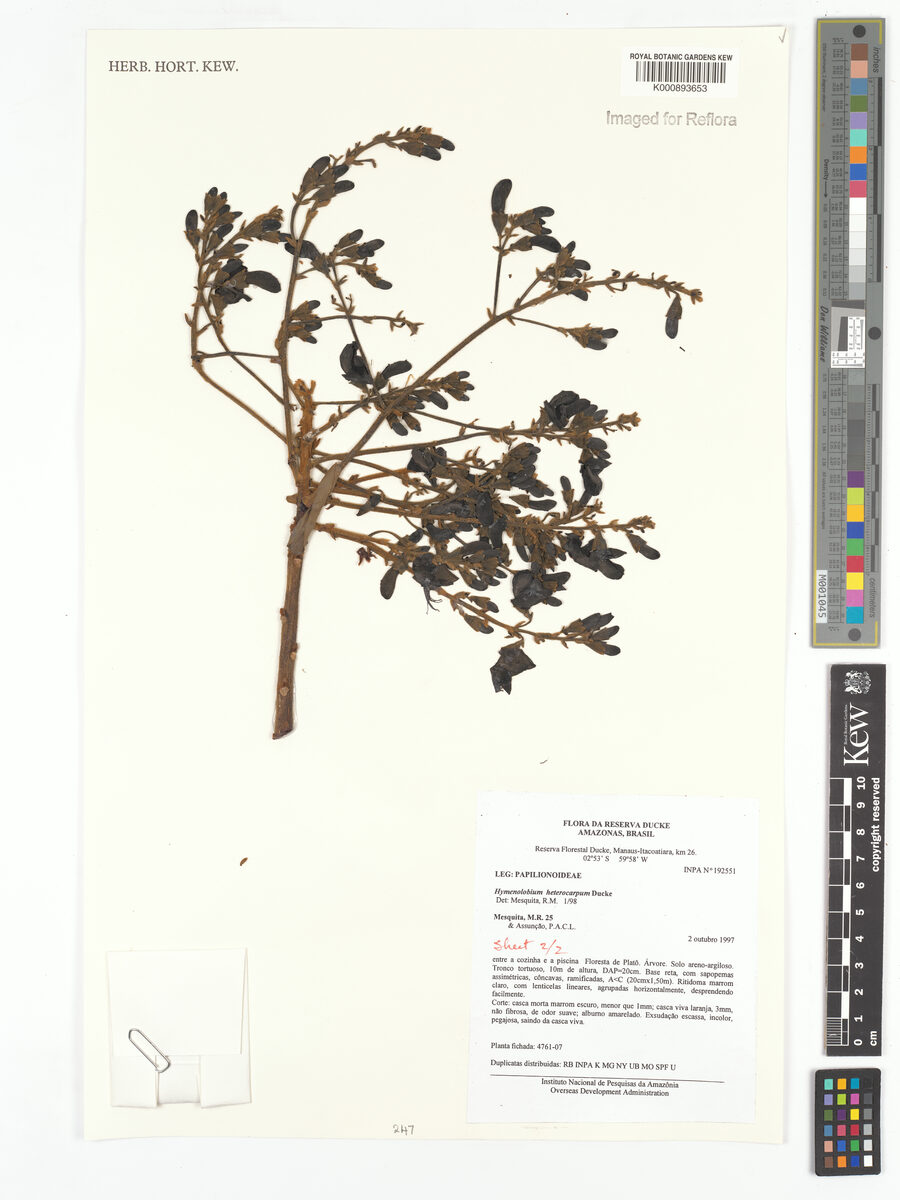
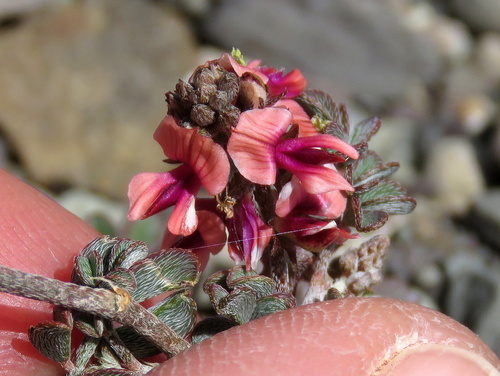
Amphicarpaea bracteata subsp. edgeworthii
(L.) Fern., (Benth.) H. Ohashi
gbif· cc0
Botanical Research Institute of Texas
gbif· cc-by
Moscow State University (copyright is managed by Dr. Alexey P. Seregin)
gbif· cc-by-sa
GBIF
Summary
Source: WikipediaAmphicarpaea bracteata (American hog peanut or hog-peanut or ground bean) is an annual to perennial vine in the legume family, native to woodland, thickets, and moist slopes in eastern North America. A. bracteata can be found in eastern North America, as well as further west into the Midwestern region, including Iowa, Indiana, Illinois, and Wisconsin.
Description
A herb. It is a climber. The leaves have 3 leaflets. The flowers are in the axils of the leaves. The pods are narrow. The seeds are produced underground.
Edible Uses
The seeds are boiled with rice as a staple food.
Traditional Uses
The seeds are boiled with rice.
This uses section is brief — help expand it
Medicinal Uses
The name 'hog-peanut" comes from the grazing of plants and consumption of the subterranean seeds by hogs and other livestock. Amphicarpaea was used by indigenous groups, like the Cherokee and Iroquois people, as an antidiarrheal, gastric medication, and cathartic, as well as a treatment for snake bites and tuberculosis.
Distribution
It is a temperate plant.
Where It Grows
Asia, China, Himalayas, India, Indochina, Japan, Korea, Nepal, SE Asia, Taiwan, Vietnam,
Nutrition
| Part | Moisture | kJ | kcal | Protein | Vit A | Vit C | Iron | Zinc |
|---|---|---|---|---|---|---|---|---|
| Seeds | 48.7 | 959 | 230 | 15.1 | — | — | 4 | — |
| Seedpod | — | — | — | — | — | — | — | — |
Synonyms
Also Known As
Aha, Saekong, Songqua Edgeworth
References (9)
- Bircher, A. G. & Bircher, W. H., 2000, Encyclopedia of Fruit Trees and Edible Flowering Plants in Egypt and the Subtropics. AUC Press. p 25
- Hedrick, U.P., 1919, (Ed.), Sturtevant's edible plants of the world. p 51
- Hwang, H., et al, 2013, A Study on the Flora of 15 Islands in the Western Sea of Jeollanamdo Province, Korea. Journal of Asia-Pacific Biodiversity Vol. 6, No. 2 281-310
- Hwang, HS, et al, 2014, Distribution characteristics of plant in the Ungseokbong Mountain, Gyeongsangnam-do, Korea. Journal of Asia-Pacific Biodiversity. 7(2014) e164-e178
- F. A. W. Miquel, Pl. jungh. 231. 1852
Show all 9 references Hide references
- ILDIS Legumes of the World http:www:ildis.org/Legume/Web
- Kuhnlein, H. V., et al, 2009, Indigenous Peoples' food systems. FAO Rome p 120
- Plants for a Future database, The Field, Penpol, Lostwithiel, Cornwall, PL22 0NG, UK. http://www.scs.leeds.ac.uk/pfaf/.
- Song, M., et al, 2013, Traditional knowledge of wild edible plants in Jeju Island, Korea. Indian Journal of Traditional Knowledge. 12(2) pp 177-194