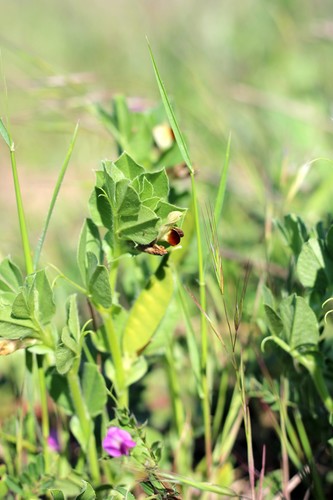
Aspalathus crenata
(L.) R. Dahlgren
iNaturalist· cc-by-nc
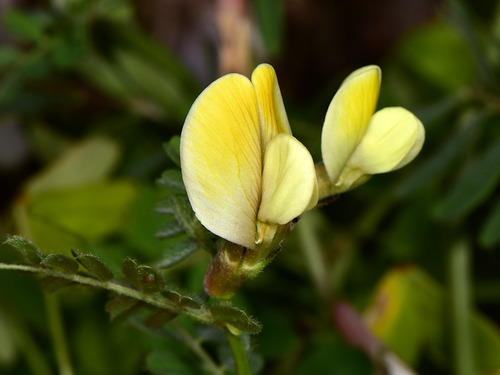
(c) Corrie du Toit, some rights reserved (CC BY-NC), uploaded by Corrie du Toit
iNaturalist· cc-by-sa
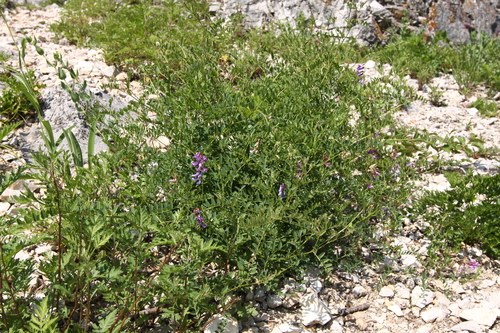
(c) magriet b, some rights reserved (CC BY-SA), uploaded by magriet b
iNaturalist· cc-by-nc
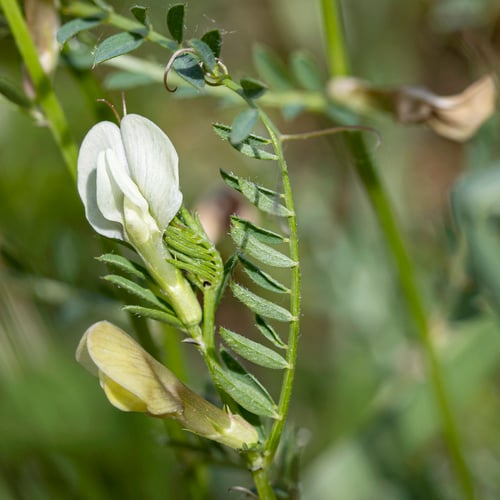
(c) Carina Lochner, some rights reserved (CC BY-NC), uploaded by Carina Lochner
Description
A shrub. It can lie along the ground. It grows 20 cm to 1.5 m tall. The leaves are 12-28 mm long by 4-18 mm wide. They are stiff and bright green. They can have a sharp tip at the end. The pod is sword shaped and 22-32 mm long by 5-6.5 mm wide. They are grey or brown when ripe.
Edible Uses
The leaves and stems are used for tea drinks and as a flavoring.
Traditional Uses
The leaves are used for tea drinks.
This uses section is brief — help expand it
Distribution
It is a subtropical plant. It grows between 200-830 m above sea level in South Africa.
Where It Grows
Africa, South Africa, Southern Africa,
Synonyms
References (3)
- Ruiters-Welcome, A. K., 2019, Food plants of southern Africa. Ph.D. thesis. Univ. of Johannesburg p 55
- van Wyk, Ben-Erik, 2019, The diversity and multiple uses of southern African legumes. Australian Systematic Botany, 2019, 32, 519–546
- Welcome, A. K. & Van Wyk, B.-E., 2019, An inventory and analysis of the food plants of southern Africa. South African Journal of Botany 122 (2019) 136–179